Lebanon – History, Culture, Sports, Geography and Important Facts
Explore Lebanon, its rich history, diverse culture, famous landmarks, sports, cuisine, geography and fascinating facts that make the country unique.
Lebanon
Lebanon is a small but historically significant country located on the eastern coast of the Mediterranean Sea in Western Asia. Despite its relatively small size, Lebanon has played an important role in the history of the Mediterranean and the Middle East. Its capital and largest city is Beirut, a major cultural, commercial and educational center.
Lebanon is bordered by Syria to the north and east and Israel to the south, while the Mediterranean Sea lies to the west. The country is known for its mountains, Mediterranean coastline, ancient cities, diverse religious communities, rich cuisine and long cultural history. Its geographical position has made it an important meeting point between different civilizations and cultures.
Table of Contents
History of Lebanon
Lebanon has a history extending back thousands of years. The ancient region was home to the Phoenicians, a maritime civilization famous for trade, navigation and the establishment of important coastal cities. Cities such as Byblos, Sidon and Tyre became major centers of commerce in the ancient Mediterranean world.
The Phoenicians established trading connections across the Mediterranean and are also associated with the development and spread of an alphabetic writing system that influenced later writing traditions.
Over the centuries, the region came under the influence or control of several major powers, including the Assyrians, Babylonians, Persians, Greeks and Romans. During the Roman period, Lebanon became an important part of the wider Mediterranean world. Roman remains can still be found in several parts of the country, including the impressive ancient temples at Baalbek.
After the rise of Islam, the region experienced various political changes and became part of several Islamic states and dynasties. Later, much of present-day Lebanon was incorporated into the Ottoman Empire, which ruled the region for centuries.
Following the First World War and the collapse of the Ottoman Empire, France received a mandate over the region. Modern Lebanon was established within this period, and the country gained independence in 1943.
Lebanon later experienced severe political and social conflict. The Lebanese Civil War, which lasted from 1975 to 1990, deeply affected the country and especially Beirut. The end of the war was followed by major reconstruction efforts, although Lebanon continued to face political, economic and regional challenges.
Geography of Lebanon
Lebanon covers an area of roughly 10,400 square kilometres, making it one of the smaller countries in the Middle East. Its landscape is remarkably varied for its size.
The country has a narrow Mediterranean coastal plain, followed by the Lebanon Mountains. To the east lies the fertile Beqaa Valley, which is situated between the Lebanon Mountains and the Anti-Lebanon Mountains. These physical features strongly influence Lebanon’s climate, agriculture and settlement patterns.
Lebanon has a Mediterranean climate. Coastal areas generally experience hot, relatively dry summers and mild, wetter winters. The higher mountain areas can receive significant snowfall during winter, making Lebanon notable for its combination of Mediterranean beaches and snow-covered mountains.
Culture of Lebanon
Lebanese culture reflects thousands of years of interaction between Mediterranean, Arab, Levantine and other civilizations. The country is known for its cultural diversity and multilingual environment.
Arabic is the official language, while French and English are also widely used. Armenian is spoken within part of the population as well. This linguistic diversity reflects Lebanon’s historical connections with different regions and communities.
Religion also forms an important part of Lebanese society. Lebanon contains numerous religious communities, including Muslims and Christians, along with the Druze community. This diversity has influenced the country’s traditions, architecture, festivals, politics and everyday life.
Lebanese families traditionally place strong importance on hospitality and social relationships. Music, dance, literature, art and theatre are important elements of cultural life. Traditional dances such as Dabke are performed at celebrations and social gatherings.
Lebanese Food and Cuisine
Lebanese cuisine is one of the country’s most recognizable cultural contributions. It is strongly associated with fresh vegetables, grains, legumes, olive oil, herbs, fruits and grilled foods.
Popular Lebanese dishes include hummus, tabbouleh, kibbeh, fattoush, manakish and falafel. Grilled meats and mezze, a selection of small dishes served together, are also important parts of Lebanese dining culture.
Lebanon is also known for traditional sweets such as baklava and maamoul. Lebanese cuisine has gained international popularity and can be found in restaurants across many countries.
Sports in Lebanon
Sports are an important part of Lebanese popular culture. Basketball is particularly popular and has achieved considerable success at both club and national levels. The Lebanese national basketball team has represented the country in major international competitions.
Football (soccer) is another widely followed sport. The Lebanese national football team competes internationally, while domestic clubs have strong support among local fans.
Other sports practiced in Lebanon include athletics, tennis, swimming, skiing and martial arts. The country’s mountainous terrain also provides opportunities for winter sports, particularly skiing during the snowy season.
Lebanese athletes have represented their country in the Olympic Games, contributing to Lebanon’s presence in international sport.
Famous Places in Lebanon
Lebanon contains numerous historical, archaeological and natural attractions.
Beirut is the country’s cultural and economic center. The city is known for its coastline, museums, universities, restaurants, galleries and vibrant urban life.
Byblos, one of Lebanon’s most famous ancient cities, has an exceptionally long history and is associated with the ancient Phoenician civilization. Its archaeological remains demonstrate the importance of the city throughout different historical periods.
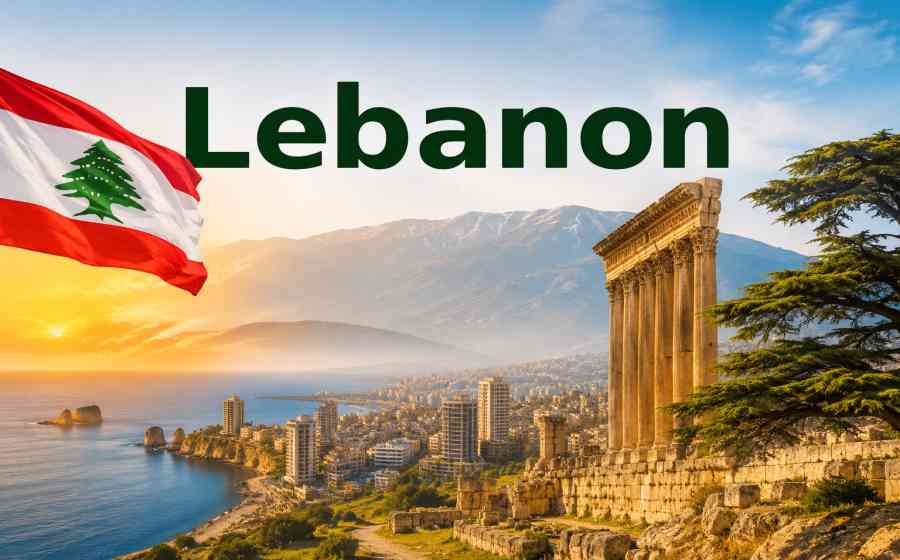
Baalbek is famous for its enormous Roman temple complex. The ancient ruins are among the most impressive archaeological sites in Lebanon.
Tyre and Sidon are historic coastal cities with strong connections to the Phoenician period. Their ancient ports and archaeological remains provide evidence of Lebanon’s important maritime history.
The Cedars of God are another important cultural and natural symbol. Cedar trees have been closely associated with Lebanon for centuries and appear prominently in the country’s national identity.
National Symbols of Lebanon
The Lebanese flag consists of horizontal red, white and red bands with a green cedar tree in the center. The cedar is a powerful national symbol associated with Lebanon’s history and natural heritage.
The country’s national identity is also strongly connected with its Mediterranean location, mountains and ancient civilizations.
Key Facts About Lebanon
- Official Name: Lebanese Republic
- Capital: Beirut
- Continent: Asia
- Region: Western Asia / Middle East
- Official Language: Arabic
- Other Widely Used Languages: French and English
- Currency: Lebanese pound
- Independence: 1943
- Coastline: Mediterranean Sea
- Neighbouring Countries: Syria and Israel
- Famous Ancient Civilization: Phoenicians
- Major Historic Cities: Byblos, Tyre and Sidon
- Famous Archaeological Site: Baalbek
- Popular Sports: Basketball and football
- National Tree/Symbol: Cedar
- Capital City: Beirut
Lebanon’s Importance
Lebanon is an excellent example of how geography, history and culture can intersect within a relatively small country. Its ancient Phoenician heritage connects it with the development of Mediterranean trade and maritime civilization, while its later history reflects the influence of Roman, Islamic, Ottoman and European powers.
The country is also notable for its cultural diversity, distinctive cuisine, historic cities and mountainous landscape. Beirut has long been an important center for education, business, journalism and the arts. Even after periods of conflict and instability, Lebanon has retained a strong cultural identity and continues to attract attention because of its historical and geographical significance.
Summary
Lebanon is a country where ancient history and modern culture exist side by side. From the Phoenician cities of Byblos, Tyre and Sidon to the Roman ruins of Baalbek and the lively streets of Beirut, the country offers a remarkable combination of historical and cultural heritage.
Its Mediterranean geography, diverse communities, distinctive cuisine, traditional music and dance, and passion for sports make Lebanon an important subject in world general knowledge. Understanding Lebanon provides a broader perspective on the history and cultural development of the Mediterranean and Middle Eastern regions.
Also Check: General Knowledge