Trinidad and Tobago – History, Tourist Places, Culture, Sports and Fascinating Facts
Explore Trinidad and Tobago’s history, culture, festivals, sports, geography, economy and key facts about this vibrant Caribbean nation.
Trinidad and Tobago
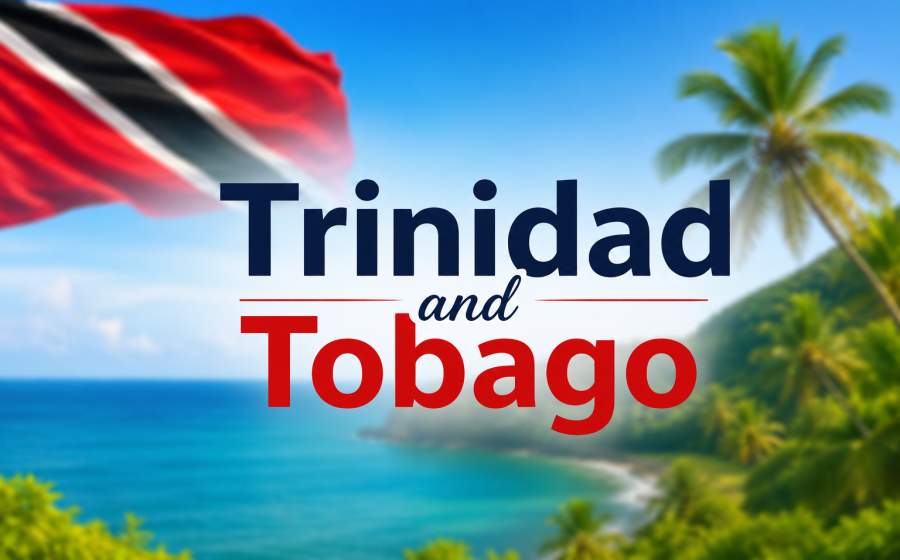
Trinidad and Tobago is a fascinating twin-island country located in the southern Caribbean, close to the coast of Venezuela. Although relatively small in size, the nation has a remarkably diverse history, culture and society. It is internationally recognized for its colorful Carnival, steelpan music, calypso and soca, while cricket and football are among its most popular sports. The country is also known for its petroleum and natural gas resources, beautiful landscapes and multicultural population.
The official name of the country is the Republic of Trinidad and Tobago. Its capital and largest city is Port of Spain, located on the island of Trinidad. The country consists of two main islands, Trinidad and Tobago, along with several smaller islands, covering approximately 5,128 square kilometres.
Table of Contents
History of Trinidad and Tobago
The history of Trinidad and Tobago goes back to the Indigenous peoples who inhabited the islands long before European arrival. Tobago’s historical records indicate that First Peoples, including groups associated with the Saladoid tradition, reached the island centuries before European colonization. Christopher Columbus sighted Tobago in 1498, after which European powers became increasingly interested in the islands.
Trinidad experienced Spanish colonial rule for centuries before Britain took control in 1797. Tobago had a particularly complicated colonial history, changing hands among European powers including the Dutch, French and British. Its strategic position and fertile land made it an important prize in Caribbean colonial competition.
The plantation economy played a major role in the islands’ development. Enslaved Africans were brought to the Caribbean and forced to work on plantations producing crops such as sugar and other commodities. After the abolition of slavery, indentured workers from India were brought to Trinidad and contributed significantly to the country’s agricultural economy and cultural development. The legacy of African and Indian communities remains a central part of Trinidad and Tobago’s identity today.
Trinidad and Tobago became politically united as one colony in the late nineteenth century. The country gradually moved toward self-government through political and labour movements. Dr. Eric Williams and the People’s National Movement played an important role in the country’s movement toward independence.
Trinidad and Tobago achieved independence from Britain on 31 August 1962, with Eric Williams becoming the country’s first Prime Minister. The country later became a Republic on 1 August 1976, replacing the British monarch as head of state with a President. Tobago received greater local administrative autonomy through the Tobago House of Assembly, re-established in 1980.
Geography and Natural Features
Trinidad is the larger and more populous of the two main islands, while Tobago is considerably smaller. The islands are situated in the southern Caribbean and lie northeast of Venezuela. Their location gives Trinidad and Tobago a distinctive geographical position between the Caribbean region and the South American mainland.
Trinidad contains a variety of landscapes, including mountains, plains, forests, wetlands and coastal areas. Tobago is especially noted for its scenic beaches, coral reefs, forests and marine environment. The country’s tropical climate supports a wide range of plant and animal life.
One of the country’s important natural attractions is the Caroni Swamp, which provides habitat for numerous species of birds and other wildlife. Tobago is also known for the Main Ridge Forest Reserve, one of the Caribbean’s notable protected rainforest areas.
Culture of Trinidad and Tobago
The culture of Trinidad and Tobago is one of its greatest strengths. Centuries of migration and interaction among African, Indian, European, Indigenous, Chinese and Middle Eastern communities have created a remarkably diverse society. The government describes the country’s cultural landscape as reflecting influences from Africa, the Americas, China, Europe, India and the Middle East.
Carnival
Trinidad and Tobago Carnival is perhaps the country’s most famous cultural celebration. It is associated with colorful costumes, elaborate performances, energetic music and large public celebrations. Carnival has become an important symbol of national identity and is widely recognized around the world.
Music
Trinidad and Tobago has made an enormous contribution to Caribbean music. Calypso, soca, chutney and steelpan music are strongly associated with the country. The steelpan, a musical instrument developed in Trinidad, is one of the nation’s most distinctive cultural contributions.
Calypso traditionally provided a powerful way for performers to comment on society, politics and everyday life. Soca developed later and became particularly associated with Carnival celebrations. The country has also produced internationally recognized performers and musicians.
Festivals and Religious Diversity
Trinidad and Tobago celebrates a wide variety of religious and cultural festivals. These include Diwali, Eid, Christmas, Hosay, Indian Arrival Day, Emancipation Day and various Hindu, Muslim, Christian and Indigenous celebrations. The country’s cultural institutions highlight the way these traditions coexist within its multicultural society.
Sports in Trinidad and Tobago
Sports are an important part of life in Trinidad and Tobago. Cricket and football are particularly popular, while athletics, cycling, boxing and swimming have also produced notable athletes.
Cricket
Cricket has a long tradition in Trinidad and Tobago and forms part of the wider sporting culture of the Caribbean. Players from the country have represented the West Indies in international cricket, contributing to the region’s rich cricketing history.
Football
Football has grown into one of the country’s most popular sports. According to the National Library and Information System Authority, football was introduced to Trinidad in 1927 and gradually expanded across social and ethnic groups.
A major moment came in 2006, when Trinidad and Tobago qualified for the FIFA World Cup for the first time. At that tournament, the team earned a draw against Sweden and became the smallest nation at the time to qualify for the competition.
Athletics
Trinidad and Tobago has also produced successful athletes in sprinting and other track-and-field events. The country’s athletes have competed on major international stages, including the Olympic Games and World Championships.
Economy
Trinidad and Tobago has historically had one of the more industrialized economies in the Caribbean. The petroleum and natural gas sectors have played a major role in national development. Energy-related industries, manufacturing, services, tourism and agriculture also contribute to the economy.
Trinidad’s energy resources have supported industrial activities and helped the country develop infrastructure and other economic sectors. Tobago has a stronger connection with tourism, with visitors attracted by its beaches, forests, marine life and relaxed island environment.
Interesting Facts About Trinidad and Tobago
- The official name is the Republic of Trinidad and Tobago.
- Port of Spain is the national capital.
- The country consists of two main islands, Trinidad and Tobago, plus smaller islands.
- Trinidad and Tobago became independent on 31 August 1962.
- It became a Republic in 1976.
- English is the official language.
- The national currency is the Trinidad and Tobago dollar (TTD).
- Trinidad and Tobago is famous for Carnival, calypso, soca and steelpan music.
- The country has a highly diverse cultural heritage shaped by African, Indian, European, Indigenous and other influences.
- The national football team qualified for the 2006 FIFA World Cup, its first appearance at the tournament.
- Tobago is famous for its beaches, forests and marine environment.
- Trinidad and Tobago is located close to Venezuela in the southern Caribbean.
Summary
Trinidad and Tobago is a small but culturally powerful Caribbean nation with a fascinating history and a strong international identity. From Indigenous heritage and colonial struggles to independence and republicanism, its history reflects centuries of change. Its multicultural society has produced distinctive traditions such as Carnival, calypso, soca, chutney and steelpan music. Sports, particularly cricket, football and athletics, have also played an important role in national life.
With its combination of cultural diversity, natural beauty, historical significance and sporting achievements, Trinidad and Tobago remains one of the most interesting countries to study in the Caribbean. Its story demonstrates how different peoples and traditions can come together to create a unique national identity.
Also Check: General Knowledge