Samoa – History, Culture, Tourism, Sports and Key Facts About This Island Country
Samoa is a beautiful Pacific island nation known for its rich Polynesian culture, fascinating history, stunning landscapes, traditions and love for rugby.
Samoa
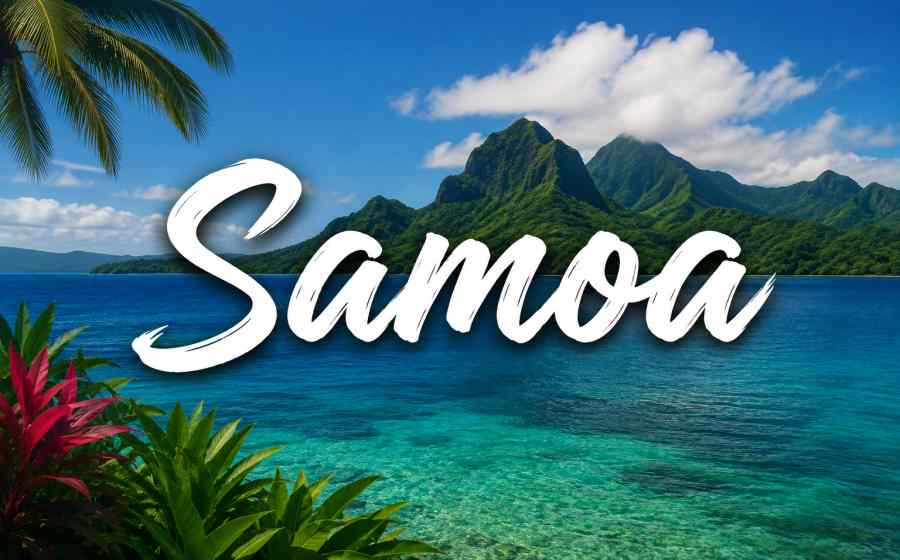
Samoa is a beautiful island country in the South Pacific Ocean, known for its rich Polynesian heritage, traditional culture, tropical landscapes and strong community values. The country consists of two main inhabited islands, Upolu and Savai‘i, along with several smaller islands. Its capital and largest urban centre is Apia, located on the island of Upolu.
Samoa has a fascinating history shaped by Polynesian settlement, European contact, colonial rule and the development of an independent modern nation. Today, it is widely recognized for its distinctive traditions, natural beauty, strong sporting culture and unique way of life.
Table of Contents
Geography of Samoa
Samoa lies in the central South Pacific, northeast of Fiji and west of American Samoa. The country is part of the Polynesian region of Oceania. Its landscape includes volcanic mountains, lush forests, waterfalls, coral reefs, beaches and fertile coastal areas.
The two principal islands are Upolu and Savai‘i. Upolu is home to Apia and contains a large proportion of Samoa’s population and economic activity. Savai‘i is larger in land area and is famous for its volcanic scenery, forests and traditional villages.
Samoa has a tropical climate, with warm temperatures throughout much of the year. Rainfall varies across the islands, and tropical cyclones can occasionally affect the country.
History of Samoa
The history of Samoa goes back many centuries. Polynesian peoples settled the islands during the great migrations across the Pacific. Over generations, Samoan communities developed distinctive traditions, social structures and systems of leadership.
European contact increased from the eighteenth century onward, following the voyages of European explorers. During the nineteenth century, Samoa became strategically important to foreign powers because of its location in the Pacific. Germany, Britain and the United States became involved in Samoan affairs.
In 1900, the Samoan islands were divided. Germany took control of the western islands, while the United States administered the eastern islands, which became known as American Samoa. New Zealand later took control of Western Samoa after the First World War.
Samoa experienced significant political and social developments during the twentieth century. The country eventually achieved independence from New Zealand on 1 January 1962, becoming the first Pacific island nation to regain independence in the modern era.
The country was officially known as Western Samoa for many years. In 1997, its name was changed to Samoa.
Samoan Culture and Traditions
Culture is one of the most important parts of Samoan life. The traditional Samoan way of life is commonly described by the term Fa‘a Samoa, meaning the Samoan way. It emphasizes family, community, respect, cooperation and responsibility.
The extended family, known as an aiga, plays an important role in society. Traditional villages often have strong community relationships, and family responsibilities can extend across generations.
Samoan traditional ceremonies are important occasions. The ava ceremony, for example, is a significant cultural practice involving the preparation and presentation of a traditional drink made from the roots of the ava plant.
Traditional Samoan dances and songs are also important expressions of cultural identity. The Siva is a well-known Samoan dance, while the Fa‘ataupati, sometimes called the Samoan slap dance, is a traditional performance involving rhythmic movements and body percussion.
Traditional clothing can also be seen during ceremonies and cultural celebrations. The lavalava, a wraparound garment, is commonly worn in Samoa.
Language and Religion
Samoan is the main traditional language of the country, while English is also widely used, particularly in education, administration and tourism.
Christianity has had a major influence on Samoan society since missionaries arrived during the nineteenth century. Today, Christian traditions are deeply integrated into community and family life, while older Polynesian cultural practices continue to influence Samoan identity.
Economy of Samoa
Samoa has a developing island economy. Important economic activities include agriculture, fishing, tourism, remittances and services.
Agriculture provides employment and produces crops such as coconuts, taro, bananas and other tropical products. Fishing also contributes to food supplies and economic activity.
Tourism is another important sector. Visitors are attracted by Samoa’s beaches, waterfalls, forests, coral reefs, villages and cultural experiences. The country’s natural environment provides opportunities for swimming, snorkeling, hiking and exploring traditional communities.
Remittances from Samoans living and working abroad also contribute significantly to household incomes and the national economy.
Sports in Samoa
Sports are an important part of Samoan society, and the country has earned international recognition particularly through rugby.
The Samoa national rugby union team, commonly known as Manu Samoa, is one of the best-known sporting teams from the Pacific. Samoan rugby players have also achieved success in professional competitions around the world.
Rugby league is another popular sport, and many Samoan athletes have represented clubs and national teams internationally.
Samoa also participates in athletics, boxing, weightlifting, swimming and other sports. The country competes in major international events, including the Olympic Games and Commonwealth Games.
Samoan athletes are especially admired for their physical strength, determination and commitment to representing their country.
Famous Places and Natural Attractions
Samoa is known for its spectacular natural scenery. To Sua Ocean Trench on Upolu is one of the country’s most famous attractions. This large natural swimming area is surrounded by lush vegetation and has become an iconic symbol of Samoa.
Papase‘ea Sliding Rocks, near Apia, is another popular natural attraction. Visitors can enjoy naturally formed rock pools and slides surrounded by tropical greenery.
Piula Cave Pool is a freshwater swimming site located near the coast, while Samoa’s many beaches provide opportunities for swimming, relaxation and water activities.
Savai‘i is particularly famous for its volcanic landscapes, lava fields and natural environment. The island offers visitors an opportunity to experience Samoa away from the country’s main urban centre.
Government and National Identity
Samoa is a sovereign parliamentary democracy. Its political system combines modern democratic institutions with traditional Samoan leadership structures.
Traditional chiefs, known as matai, have an important role within Samoan communities. The matai system is closely connected with family leadership, land and community responsibilities.
Samoa’s national identity is strongly connected with its Polynesian heritage, traditional villages, language, family structures and cultural practices.
Key Facts About Samoa
- Official Name: Independent State of Samoa
- Capital: Apia
- Region: Polynesia, Oceania
- Main Islands: Upolu and Savai‘i
- Independence: 1 January 1962
- Main Language: Samoan
- Also Widely Used: English
- Currency: Samoan tālā (WST)
- Major Religion: Christianity
- Famous Sport: Rugby
- Traditional Way of Life: Fa‘a Samoa
- Traditional Family Group: Aiga
- Traditional Leaders: Matai
- Major Natural Attraction: To Sua Ocean Trench
- National Rugby Team: Manu Samoa
Summary
Samoa is a remarkable Pacific island nation where traditional Polynesian culture and modern national life exist side by side. From its ancient Polynesian roots and complex colonial history to its independence in 1962, Samoa has developed a strong national identity. Its Fa‘a Samoa cultural traditions, extended family system, traditional ceremonies, beautiful landscapes and passion for rugby make the country particularly distinctive.
Also Check: General Knowledge