Sao Tome and Principe – History, Culture, Sports, Tourism, Geography and Key Facts
Discover Sao Tome and Principe, its history, culture, sports, geography, economy, traditions and fascinating key facts about this African island nation.
Sao Tome and Principe
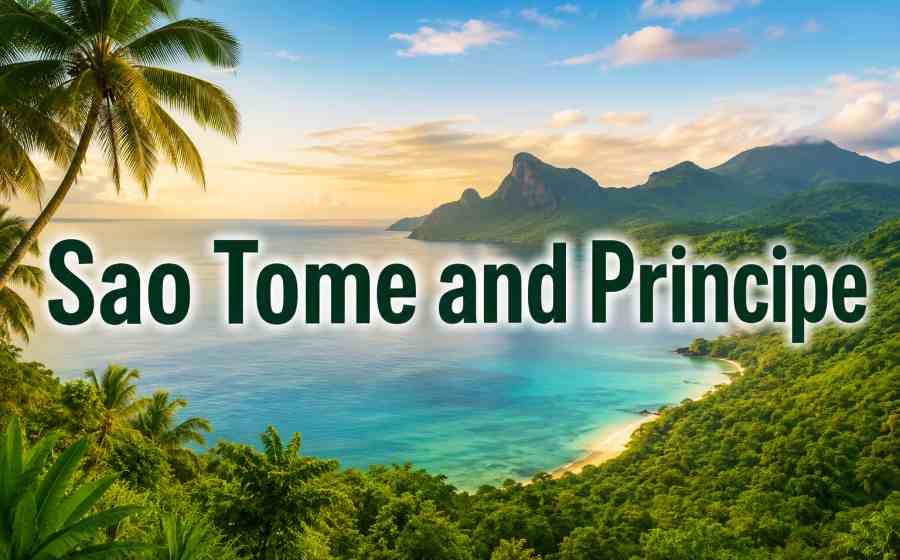
São Tomé and Príncipe is a small island nation in the Gulf of Guinea, off the west coast of Central Africa. Officially known as the Democratic Republic of São Tomé and Príncipe, the country consists mainly of two large volcanic islands, São Tomé and Príncipe, along with several smaller islets. Its capital and largest city is São Tomé. The islands are known for lush tropical forests, beautiful beaches, cocoa plantations, colonial-era architecture and a fascinating mixture of African and Portuguese cultural influences.
With an area of roughly 1,000 square kilometres and a population of a little over 200,000, São Tomé and Príncipe is one of Africa’s smallest countries. Portuguese is the official language, while several Portuguese-based Creole languages are also spoken. The national currency is the São Tomé and Príncipe dobra.
Table of Contents
Geography of São Tomé and Príncipe
São Tomé and Príncipe lies close to the Equator in the Gulf of Guinea. Both principal islands are volcanic in origin and feature mountainous landscapes, dense forests and tropical vegetation. The country’s location gives it a hot and humid tropical climate, with significant rainfall supporting its rich natural environment.
Príncipe is particularly famous for its biodiversity. The island has been recognized as a UNESCO Biosphere Reserve since 2012, reflecting its exceptional ecosystems and endemic species. The country’s natural attractions include forests, beaches, waterfalls, coastal areas and marine environments. Visitors can also experience the unusual opportunity to cross the Equator while exploring São Tomé.
History of São Tomé and Príncipe
The islands were uninhabited when Portuguese explorers reached them during the late 15th century. São Tomé was discovered in 1470, while Príncipe was reached shortly afterward. Portuguese settlement began in the following decades, establishing the foundations of colonial rule.
During the 16th century, São Tomé developed into an important sugar-producing centre. Plantation agriculture depended heavily on enslaved African labour. Over time, the sugar economy declined, but new agricultural opportunities emerged. Coffee was introduced in the 18th century, while cocoa became particularly important during the 19th century.
The plantation estates, known locally as roças, became a defining feature of the islands’ economy and landscape. By the early 20th century, São Tomé had become one of the world’s leading cocoa producers. However, the plantation system was also associated with severe exploitation and forced labour. The history of the roças therefore represents both the agricultural importance and the difficult colonial legacy of the country.
One of the most significant events in modern colonial history was the Batepá Massacre of 1953, when many African workers and residents were killed during violent repression under Portuguese colonial rule. The event remains an important part of São Tomé and Príncipe’s historical memory.
The independence movement gained strength during the 20th century. São Tomé and Príncipe finally became independent from Portugal on 12 July 1975. The country later moved toward a multiparty democratic system, with its first free elections held in 1991.
Culture and Traditions
The culture of São Tomé and Príncipe reflects centuries of interaction among African, Portuguese and other communities. The result is a distinctive Luso-African island culture expressed through language, music, dance, food, festivals and traditional performances.
Music is an important part of cultural life. Traditional genres include ússua, socopé and puita, while Dançá Congo and other performance traditions combine music, dance and storytelling. One of the country’s best-known cultural traditions is Tchiloli, a dramatic performance influenced by Portuguese theatre and local African traditions. The Auto de Floripes is another traditional folk performance associated particularly with Príncipe.
The population includes several historically distinct communities. The Forros are associated with descendants of freed enslaved people and mixed Portuguese-African populations, while the Angolares have strong historical connections with fishing and their own Creole traditions. People from Príncipe also maintain distinctive cultural traditions and speak Lung’ie, a local Creole language.
Food and Cuisine
São Toméan cuisine makes extensive use of locally available seafood, vegetables, tropical fruits and spices. Because the country is surrounded by the Atlantic Ocean, fish forms an important part of many traditional meals.
One of the most famous dishes is calúlú, a traditional stew prepared with vegetables, fish and spices. Cocoa and coffee are also strongly connected to the country’s agricultural heritage. São Tomé and Príncipe has a long history of cocoa production, and its tropical environment is particularly suitable for growing high-quality cocoa.
Sports in São Tomé and Príncipe
Football is the most prominent sport in São Tomé and Príncipe. The São Tomé and Príncipe Football Association is affiliated with the Confederation of African Football (CAF) and FIFA. The national team competes in international qualifying tournaments, including FIFA World Cup qualification.
Football is played at both national and local levels, with domestic competitions including the São Tomé Championship, Príncipe Championship and national cup competitions.
The country has faced challenges in developing sports infrastructure because of its small population and limited resources. Nevertheless, football provides an important platform for young athletes, while other sports such as athletics and futsal also contribute to the country’s sporting life.
São Tomé and Príncipe has also participated in international multi-sport competitions, giving its athletes an opportunity to represent the country on the global stage.
Economy of São Tomé and Príncipe
Agriculture has historically been central to the economy. Cocoa remains one of the country’s most important agricultural products, while coffee, coconuts, bananas, palm products and other crops are also produced.
Tourism is another important area of economic potential. The country’s volcanic landscapes, tropical forests, beaches, biodiversity, colonial heritage and relatively undeveloped natural areas attract visitors interested in ecotourism and cultural tourism.
The plantation heritage, especially the historic roças, provides an important connection between tourism, history and agriculture. In 2026, UNESCO lists The Roças of São Tomé and Príncipe: Colonial Agricultural System and Forced Migration as a World Heritage property, highlighting the international significance of this cultural landscape.
Famous Places and Attractions
São Tomé and Príncipe offers a variety of attractions for visitors. The capital, São Tomé, contains historic buildings and reminders of Portuguese colonial architecture. Príncipe is especially known for its forests, beaches and biodiversity.
Roça Sundy on Príncipe has a special place in scientific history. In 1919, British physicist Arthur Eddington conducted an important astronomical observation there during a solar eclipse, contributing to the experimental confirmation of Einstein’s theory of general relativity.
Other attractions include tropical beaches, volcanic peaks, rainforest areas, fishing communities and coastal viewpoints. The islands also offer opportunities for birdwatching, hiking, diving and nature exploration.
Interesting Key Facts
- Official Name: Democratic Republic of São Tomé and Príncipe
- Capital: São Tomé
- Location: Gulf of Guinea, Central Africa
- Main Islands: São Tomé and Príncipe
- Official Language: Portuguese
- Currency: São Tomé and Príncipe dobra
- Independence Day: 12 July
- Government: Semi-presidential republic
- Calling Code: +239
- Country Code: ST
- Main Export Crop: Cocoa
- Major Sport: Football
- National Football Association: Federação Santomense de Futebol
- Príncipe: UNESCO Biosphere Reserve since 2012
- Climate: Tropical and humid
- Major Cultural Influences: African, Portuguese and Creole
- Traditional Foods: Fish-based dishes, vegetables and calúlú
- Famous Historical Feature: Roças, or plantation estates
Summary
São Tomé and Príncipe may be small in size, but it has a remarkable combination of history, culture, biodiversity and natural beauty. From its Portuguese colonial beginnings and cocoa plantations to independence and modern democratic development, the country has experienced a fascinating historical journey. Its traditional music, Tchiloli theatre, Creole languages and distinctive cuisine demonstrate the richness of its cultural identity.
The country’s tropical forests, volcanic landscapes and marine ecosystems make it especially interesting from an environmental and tourism perspective.
Also Check: General Knowledge