Bulgaria – History, Culture, Wildlife, Natural Beauty, Sports and Fascinating National Facts
Explore Bulgaria, a nation of ancient history, vibrant culture, sporting achievements, stunning landscapes, rich traditions and fascinating national facts.
Bulgaria
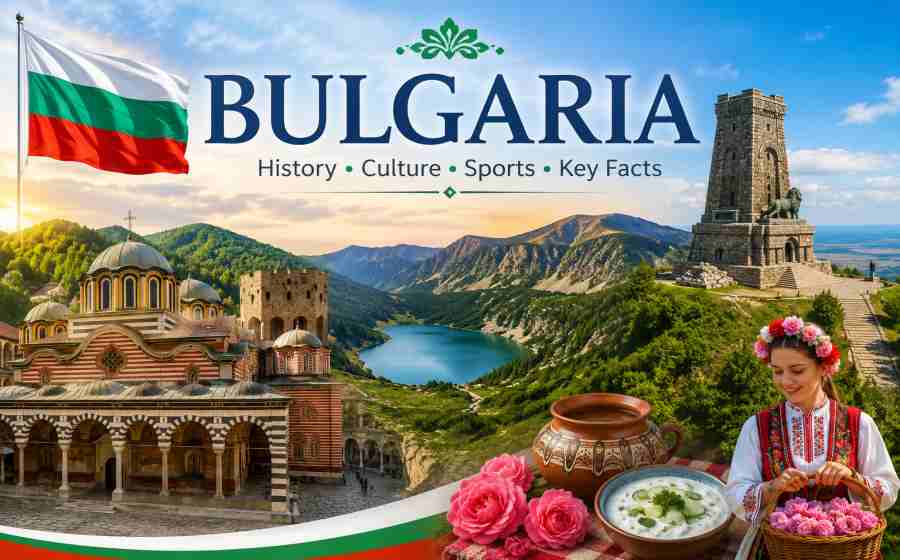
Bulgaria is one of the oldest countries in Europe, known for its rich history, vibrant traditions, beautiful mountains, ancient monasteries, and remarkable cultural heritage. Located in Southeastern Europe on the Balkan Peninsula, Bulgaria shares borders with Romania, Serbia, North Macedonia, Greece, Turkey, and the Black Sea. Despite being a relatively small nation, Bulgaria has made significant contributions to European civilization through literature, education, religion, music, and sports.
Today, Bulgaria is a modern European country that successfully blends its ancient traditions with contemporary development. It attracts millions of visitors every year because of its historical monuments, scenic landscapes, delicious cuisine, and welcoming people.
Table of Contents
Geography of Bulgaria
Bulgaria covers an area of approximately 110,994 square kilometers, making it one of the medium-sized countries in Europe. The country features diverse landscapes, including fertile plains, rolling hills, high mountains, dense forests, rivers, and the Black Sea coastline.
The Balkan Mountains divide the country into northern and southern regions, while the Rila Mountains contain Musala Peak, the highest mountain in the Balkans at 2,925 meters.
Capital: Sofia
Official Language: Bulgarian
Currency: Bulgarian Lev (BGN)
Population: Around 6.4 million (estimated)
Government: Parliamentary Republic
History of Bulgaria
Bulgaria has a history that spans more than 1,300 years. The First Bulgarian Empire was established in 681 AD, making Bulgaria one of Europe’s oldest continuously existing states. During the medieval period, Bulgaria became a major political, military, and cultural power in Southeastern Europe. It played an essential role in spreading Slavic literature, Orthodox Christianity, and the Cyrillic alphabet, which remains in use across many countries today.
In the late 14th century, Bulgaria came under Ottoman rule, lasting nearly five centuries. The Bulgarian people preserved their language, religion, and cultural identity throughout this period.
Following the Russo-Turkish War, Bulgaria regained autonomy in 1878 and gradually became fully independent. After World War II, Bulgaria became a socialist republic until the collapse of communism in 1989.
Since then, Bulgaria has embraced democracy and joined major international organizations. It became a member of NATO in 2004 and the European Union in 2007.
Bulgarian Culture
Bulgarian culture reflects influences from Thracian, Roman, Byzantine, Slavic, and Ottoman civilizations. Family values, hospitality, folklore, and traditional celebrations remain central to everyday life.
Traditional Bulgarian villages still preserve centuries-old customs, colorful clothing, folk music, and dances performed during festivals.
Music often features unique rhythms that are different from many other European traditions. Bulgarian folk singing is internationally admired for its distinctive vocal style.
Handcrafted pottery, wood carving, embroidery, and icon painting continue to represent Bulgaria’s artistic heritage.
Festivals and Traditions
Bulgarians celebrate numerous cultural and religious festivals throughout the year. Some popular celebrations include:
- Baba Marta (welcoming spring)
- Kukeri Festival (traditional masked dancers)
- Rose Festival
- Easter celebrations
- Christmas traditions
- National Liberation Day
The Kukeri Festival is especially famous, where people wear elaborate costumes and masks to symbolize driving away evil spirits.
Bulgarian Cuisine
Bulgarian food combines fresh vegetables, dairy products, grilled meats, herbs, and bread.
Popular dishes include:
- Shopska Salad
- Banitsa
- Kavarma
- Tarator
- Kebapche
- Lyutenitsa
- Stuffed Peppers
Bulgarian yogurt is particularly famous worldwide because it contains the beneficial bacterium Lactobacillus bulgaricus, named after the country.
Language and Religion
The official language is Bulgarian, a South Slavic language written using the Cyrillic alphabet. The majority of the population follows Eastern Orthodox Christianity, while Muslim communities also form an important part of Bulgarian society. Religious monuments such as monasteries and churches remain significant historical landmarks.
Economy of Bulgaria
Bulgaria has developed a diversified economy based on manufacturing, agriculture, information technology, tourism, mining, and services.
Major agricultural products include:
- Wheat
- Sunflowers
- Grapes
- Corn
- Tobacco
- Vegetables
The country’s IT industry has expanded rapidly in recent years, making Bulgaria an emerging technology hub in Eastern Europe.
Tourism also contributes significantly to the economy through beach resorts, ski resorts, historical sites, and spa destinations.
Famous Tourist Attractions
Bulgaria offers attractions for history lovers and nature enthusiasts alike. Some famous destinations include:
- Sofia
- Rila Monastery
- Plovdiv Old Town
- Veliko Tarnovo
- Seven Rila Lakes
- Nessebar
- Pirin National Park
- Black Sea Coast
Many UNESCO World Heritage Sites are located within Bulgaria, reflecting its rich historical and cultural importance.
Sports in Bulgaria
Sports hold an important place in Bulgarian society. The country has achieved international success in:
- Weightlifting
- Wrestling
- Rhythmic Gymnastics
- Athletics
- Volleyball
- Chess
- Boxing
Bulgarian athletes have won numerous Olympic, World Championship, and European Championship medals over several decades.
Football remains the country’s most popular spectator sport. Bulgaria gained worldwide recognition by reaching the semi-finals of the 1994 FIFA World Cup, one of the greatest achievements in its football history.
Education in Bulgaria
Education has long been highly valued in Bulgaria. The literacy rate is among the highest in Europe. Universities in Sofia, Plovdiv, Varna, and other cities attract both domestic and international students.
Bulgaria has contributed significantly to Slavic education through the development and promotion of the Cyrillic writing system.
Wildlife and Natural Beauty
Bulgaria possesses remarkable biodiversity. Its forests and protected national parks provide habitats for:
- Brown bears
- Wolves
- Deer
- Eagles
- Wild boars
- Rare butterflies
The country has numerous rivers, caves, waterfalls, and mountain ranges that attract hikers and nature photographers.
Interesting Facts About Bulgaria
- Bulgaria was founded in 681 AD, making it one of Europe’s oldest countries.
- Sofia is among the oldest continuously inhabited cities in Europe.
- Bulgaria is the birthplace of the Cyrillic alphabet’s development and spread.
- The country is one of the world’s largest producers of rose oil.
- Bulgarian yogurt is internationally renowned.
- The Rila Mountains contain the highest peak in the Balkans.
- Bulgaria has several UNESCO World Heritage Sites.
- Ancient Thracian treasures discovered in Bulgaria are among Europe’s most valuable archaeological finds.
- The country experiences four distinct seasons.
- Bulgaria has beautiful beaches along the Black Sea coast and excellent ski resorts in winter.
Summary
Bulgaria is a nation where ancient civilizations, medieval kingdoms, and modern European values come together. Its fascinating history, colorful traditions, delicious cuisine, breathtaking mountains, historic monasteries, and sporting achievements make it one of the most interesting countries in Southeastern Europe.
Whether exploring the historic streets of Sofia, visiting UNESCO heritage sites, enjoying traditional Bulgarian festivals, or relaxing along the Black Sea coast, Bulgaria offers visitors a memorable experience. Its enduring cultural heritage and commitment to preserving its traditions continue to make Bulgaria an important part of Europe’s historical and cultural landscape.
Also Check: General Knowledge