
Japan – History, Culture, Sports and Fascinating Facts About the Land of the Rising Sun
Discover Japan’s rich history, unique culture, popular sports, famous landmarks and key facts that make it one of the world’s most fascinating nations.
Japan
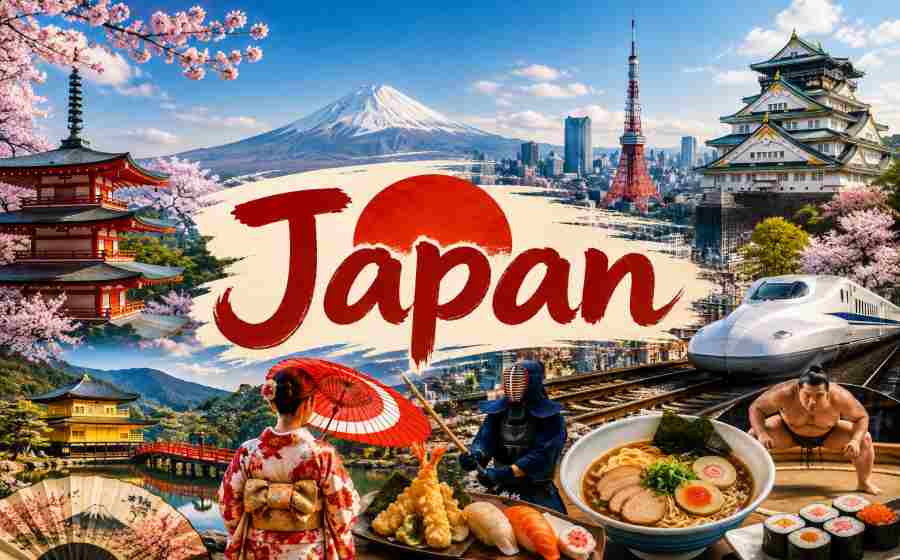
Japan is one of the most developed and culturally rich countries in the world. Known as the “Land of the Rising Sun,” Japan combines ancient traditions with cutting-edge technology. From majestic temples and samurai history to modern cities and technological innovation, Japan has captured the imagination of people across the globe. Located in East Asia, Japan is an island nation famous for its discipline, unique culture, economic strength, and contributions to science and technology.
Table of Contents
Basic Facts About Japan
- Official Name: Japan
- Capital City: Tokyo
- Continent: Asia
- Currency: Japanese Yen (JPY)
- Official Language: Japanese
- Population: Approximately 125 million
- Government: Constitutional Monarchy with a Parliamentary Government
- National Flag: White background with a red circle representing the sun
- National Flower: Cherry Blossom (Sakura)
Japan consists of thousands of islands, with the four main islands being Honshu, Hokkaido, Kyushu, and Shikoku. Its strategic location in the Pacific Ocean has significantly influenced its history and culture.
History of Japan
Japan’s history stretches back thousands of years. Archaeological evidence suggests that people inhabited the islands as early as 30,000 years ago. The country’s early civilization developed through various periods, including the Jomon and Yayoi eras.
One of the most influential periods in Japanese history was the rise of the samurai warrior class. During the medieval era, military rulers known as shoguns held significant power, while emperors remained symbolic leaders.
The Edo Period (1603–1868) brought political stability and economic growth under the Tokugawa Shogunate. However, Japan remained largely isolated from foreign influence during this time.
A major turning point came with the Meiji Restoration in 1868. Japan rapidly modernized, adopting Western technologies and reforms. By the early twentieth century, Japan had become a major world power.
After its involvement in World War II, Japan faced immense destruction. However, through determination and economic reforms, the nation experienced remarkable recovery and emerged as one of the world’s leading economies.
Japanese Culture
Japanese culture is a unique blend of tradition and modernity. Ancient customs continue to coexist with modern lifestyles.
Respect and Discipline
Respect for others is deeply rooted in Japanese society. Politeness, punctuality, and discipline are highly valued. Bowing is a common form of greeting and showing respect.
Traditional Arts
Japan has preserved many traditional art forms, including:
- Tea Ceremony
- Calligraphy
- Flower Arrangement (Ikebana)
- Kabuki Theatre
- Noh Drama
These traditions reflect the country’s appreciation for beauty, harmony, and simplicity.
Festivals
Japan celebrates numerous festivals throughout the year. Some famous festivals include:
- Cherry Blossom Festivals
- Gion Festival
- Tanabata Festival
- Snow Festivals
These events attract millions of visitors and showcase Japan’s rich cultural heritage.
Japanese Food
Japanese cuisine is renowned worldwide for its taste, presentation, and nutritional value.
Popular Japanese foods include:
- Sushi
- Sashimi
- Ramen
- Tempura
- Udon Noodles
- Miso Soup
Rice remains a staple food in Japanese households. Seafood also plays an important role due to Japan’s island geography.
Sports in Japan
Sports hold a significant place in Japanese society.
Sumo Wrestling
Sumo is Japan’s national sport and has been practiced for centuries. It combines athletic competition with traditional rituals.
Baseball
Baseball is one of the most popular sports in Japan. Professional leagues attract large audiences, and Japanese players have achieved international recognition.
Martial Arts
Japan is the birthplace of several martial arts, including:
- Judo
- Karate
- Kendo
- Aikido
These disciplines emphasize physical skill, self-control, and respect.
Modern Sports
Football, basketball, tennis, and volleyball are increasingly popular. Japan has also hosted major international sporting events, including the Olympic Games.
Economy and Technology
Japan possesses one of the largest economies in the world. It is a global leader in innovation, manufacturing, and technology.
The country is famous for producing:
- Automobiles
- Electronics
- Robotics
- Industrial Machinery
Japanese companies have earned worldwide recognition for quality and reliability. The nation’s commitment to research and development continues to drive technological advancements.
Famous Tourist Attractions
Japan offers a wide variety of tourist destinations.
Mount Fuji
Mount Fuji is Japan’s tallest mountain and an important cultural symbol. Its snow-capped peak attracts climbers and photographers from around the world.
Tokyo
Tokyo is one of the world’s largest and most advanced cities, known for its skyscrapers, shopping districts, and technology.
Kyoto
Kyoto is famous for its ancient temples, traditional gardens, and preserved historical sites.
Osaka
Osaka is known for its vibrant food culture, entertainment, and business activities.
Education in Japan
Japan’s education system is highly respected worldwide. The country maintains high literacy rates and places strong emphasis on academic excellence, discipline, and moral education.
Students are encouraged to develop teamwork, responsibility, and problem-solving skills. Japanese schools are known for maintaining clean and organized environments.
Interesting Facts About Japan
- Japan consists of over 6,000 islands.
- It has one of the highest life expectancies in the world.
- Cherry blossoms are an important national symbol.
- Japan is a global leader in robotics and technology.
- Trains in Japan are famous for their punctuality.
- Vending machines are found throughout the country.
- The Japanese bullet train is among the fastest rail systems in the world.
- Japan experiences frequent earthquakes due to its location on the Pacific Ring of Fire.
- Manga and anime are popular forms of entertainment worldwide.
- The country successfully blends ancient traditions with modern innovation.
Summary
Japan stands as a remarkable example of how tradition and progress can coexist harmoniously. Its rich history, vibrant culture, world-famous cuisine, sporting achievements, technological innovations, and breathtaking landscapes make it one of the most influential nations on Earth. Whether admired for its samurai heritage, cherry blossoms, advanced technology, or disciplined society, Japan continues to inspire and fascinate people around the world.
Also Check: General Knowledge