Germany – History, Culture, Sports, Tourism and Fascinating Facts About the Nation
Explore Germany’s rich history, vibrant culture, sports, traditions, geography, economy and key facts that make it one of Europe’s most influential countries.
Germany
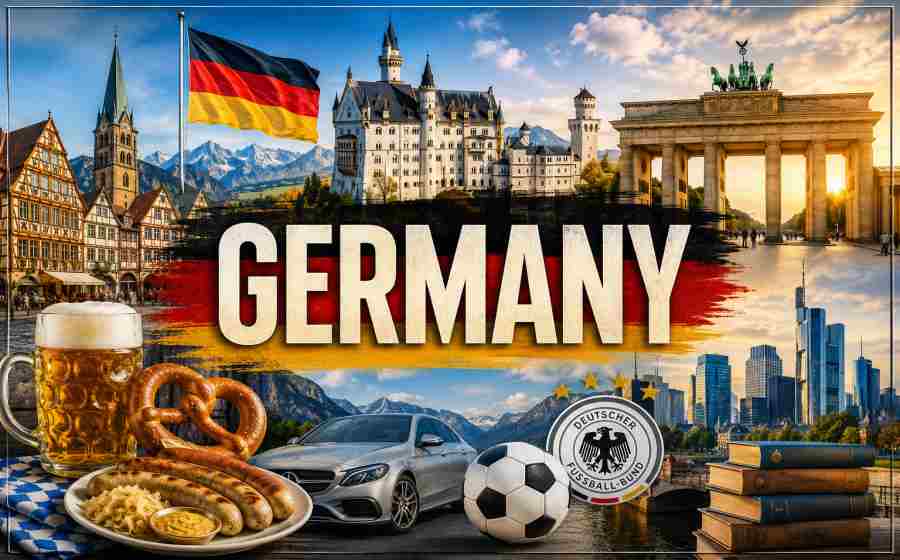
Germany is one of the most influential countries in Europe and the world. Known for its rich history, technological advancements, cultural heritage, and strong economy, Germany has played a major role in shaping modern civilization. From medieval castles and world-famous festivals to football achievements and scientific innovations, Germany offers a fascinating blend of tradition and progress.
Located in Central Europe, Germany is bordered by nine countries, making it one of the most strategically positioned nations on the continent. Today, it is recognized for its high standard of living, excellent education system, and significant contributions to science, literature, music, and industry.
Table of Contents
Historical Background of Germany
Germany’s history dates back thousands of years. Ancient Germanic tribes inhabited the region before it became part of the Roman Empire’s frontier. During the Middle Ages, the area was a key part of the Holy Roman Empire, which existed for nearly a thousand years.
In the 19th century, Germany was unified under the leadership of Prussia in 1871. This unification transformed Germany into a major European power. During the 20th century, Germany played a central role in both World War I and World War II. Following World War II, the country was divided into East Germany and West Germany due to Cold War tensions.
A historic moment occurred in 1990 when East and West Germany reunified, creating the modern Federal Republic of Germany. Since reunification, Germany has become one of the world’s strongest economies and a leading member of the European Union.
Geography and Climate
Germany covers an area of approximately 357,000 square kilometers. The country features diverse landscapes, including forests, mountains, rivers, lakes, and coastal regions.
Some notable geographical features include:
- The Rhine River
- The Danube River
- The Black Forest
- The Bavarian Alps
- The North Sea and Baltic Sea coastlines
Germany experiences a temperate climate with four distinct seasons. Summers are generally mild and pleasant, while winters can be cold, especially in mountainous regions.
German Culture and Traditions
German culture is deeply rooted in history, art, philosophy, and community values. The country is known for preserving traditions while embracing modern lifestyles.
Festivals
Germany hosts many famous festivals throughout the year. The most well-known is Oktoberfest, celebrated in Munich. Millions of visitors attend this festival to enjoy traditional music, food, and cultural activities.
Other notable celebrations include:
- Christmas Markets
- Carnival (Karneval)
- Easter Festivals
- Unity Day Celebrations
Food and Cuisine
German cuisine varies by region but is famous for hearty and flavorful dishes.
Popular German foods include:
- Bratwurst (sausage)
- Pretzels
- Schnitzel
- Sauerkraut
- Black Forest Cake
Bread is an important part of German daily life, and the country is known for producing hundreds of varieties.
Language
The official language of Germany is German. It is one of the most widely spoken languages in Europe and is known for its rich literary tradition.
Education and Innovation
Germany has a strong reputation for education and research. Many universities in the country rank among the world’s best institutions. Public universities often offer affordable or low-cost education, attracting students from around the globe.
Germany has produced numerous influential thinkers and scientists, including:
- Albert Einstein
- Johannes Gutenberg
- Max Planck
- Carl Benz
The country remains a global leader in engineering, automotive manufacturing, and scientific research.
Sports in Germany
Sports play a major role in German society. Football (soccer) is by far the most popular sport in the country.
Football
Germany is one of the most successful football nations in history. The German national team has won multiple FIFA World Cup titles and European Championships. German football clubs are also highly respected worldwide.
The Bundesliga, Germany’s top football league, attracts millions of fans each season and features some of Europe’s most competitive clubs.
Other Popular Sports
Besides football, Germans actively participate in:
- Basketball
- Handball
- Tennis
- Ice Hockey
- Cycling
- Athletics
Germany has consistently performed well in the Olympic Games and has produced many world-class athletes.
Economy of Germany
Germany possesses the largest economy in Europe and ranks among the world’s leading economic powers. The country is famous for its industrial strength and export-oriented economy.
Major industries include:
- Automobile manufacturing
- Engineering
- Chemicals
- Electronics
- Pharmaceuticals
- Renewable energy
German companies are known worldwide for quality and innovation. The country’s economic success is supported by a skilled workforce, strong infrastructure, and advanced technology.
Tourism in Germany
Germany attracts millions of tourists annually. Visitors are drawn by its historical landmarks, scenic landscapes, and vibrant cities.
Popular tourist destinations include:
- Berlin
- Munich
- Hamburg
- Cologne
- Dresden
- Heidelberg
Tourists also enjoy exploring medieval castles, picturesque villages, and beautiful national parks.
Government and Political System
Germany is a federal parliamentary republic consisting of 16 states. The capital city is Berlin, which serves as the political, cultural, and economic center of the country.
The government operates under a democratic system with elected representatives. Germany is also a key member of organizations such as the European Union, NATO, and the United Nations.
Interesting Facts About Germany
- Germany has more than 20,000 castles and castle ruins.
- It is one of the world’s leading automobile producers.
- The printing press was invented by Johannes Gutenberg in Germany.
- Germany is famous for its Christmas market traditions.
- The country has one of the most efficient public transportation systems in the world.
- Berlin has more bridges than Venice.
- Germany is among the world’s largest exporters.
- The country places strong emphasis on environmental sustainability and renewable energy.
Summary
Germany is a nation that successfully combines historical heritage with modern innovation. Its contributions to science, engineering, literature, music, and sports have left a lasting impact on the world. From the grandeur of its castles and cultural festivals to its economic strength and sporting achievements, Germany continues to be one of the most respected and influential countries globally. Understanding Germany’s history, culture, sports, and key facts provides valuable insight into a country that has played a significant role in shaping the modern world.
Also Check: General Knowledge