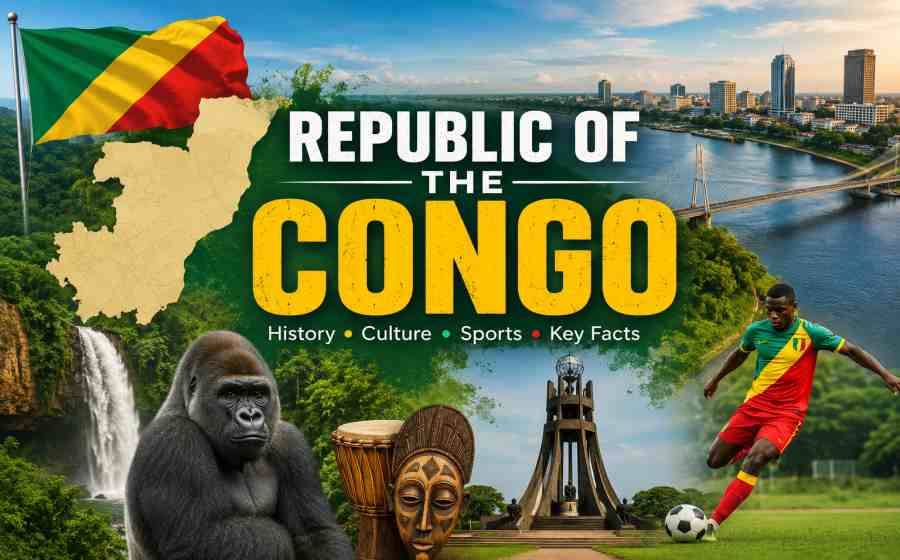
Republic of the Congo – A Fascinating Journey Through History, Culture, Tourist Places, Sports and Key Facts
Explore Republic of the Congo history, culture, geography, economy and key facts. Learn about this Central African nation in a simple and informative way.
Republic of the Congo
The Republic of the Congo, often called Congo-Brazzaville, is a beautiful country located in Central Africa. It is known for its rich rainforests, diverse wildlife, vibrant traditions, and historical significance. Although it is often confused with its larger neighbor, the Democratic Republic of the Congo, the Republic of the Congo is an independent nation with its own unique identity, culture, and heritage.
The country covers an area of approximately 342,000 square kilometers and has a population of over 6 million people. Its capital city, Brazzaville, serves as the political, economic, and cultural center of the nation.
Table of Contents
History of the Republic of the Congo
The history of the Republic of the Congo dates back centuries before European contact. Various ethnic groups, including the Kongo, Teke, and Mbochi peoples, established kingdoms and trading networks throughout the region.
In the late 15th century, Portuguese explorers arrived on the Central African coast and began trading with local kingdoms. During the colonial era, France gained control of the territory and incorporated it into French Equatorial Africa.
The country became known as the Middle Congo under French administration. After years of political movements and demands for self-governance, the Republic of the Congo gained independence from France on 15 August 1960.
Following independence, the nation experienced periods of political instability, military rule, and civil conflict. However, it has gradually worked toward greater stability and economic development. Today, the Republic of the Congo continues to strengthen its institutions while preserving its cultural heritage.
Geography and Climate
The Republic of the Congo is situated in Central Africa and shares borders with Gabon, Cameroon, the Central African Republic, the Democratic Republic of the Congo, and Angola’s Cabinda enclave. It also has a small coastline along the Atlantic Ocean.
The country is characterized by:
- Dense tropical rainforests
- Vast river systems
- Savannah grasslands
- Wetlands and swamps
- Mountainous regions in some areas
The mighty Congo River plays a vital role in transportation, trade, and daily life. The nation experiences a tropical climate with warm temperatures throughout the year and distinct rainy and dry seasons.
People and Culture
The Republic of the Congo is home to many ethnic communities, each contributing to the nation’s cultural richness. Major ethnic groups include the Kongo, Teke, Mbochi, Sangha, and several others.
Languages
French is the official language and is widely used in government, education, and business. National languages such as Lingala and Kituba are also commonly spoken across the country.
Traditional Music and Dance
Music and dance hold a special place in Congolese society. Traditional drums, rhythmic singing, and energetic dance performances are common during festivals, ceremonies, and celebrations.
Modern Congolese music has also gained recognition across Africa, blending traditional rhythms with contemporary influences.
Traditional Clothing
Colorful fabrics and patterned garments are often worn during cultural events and festivals. Traditional attire reflects regional identities and local customs.
Festivals
Various cultural festivals celebrate music, dance, art, and community traditions. These events help preserve heritage while bringing people together.
Religion
Christianity is the dominant religion in the Republic of the Congo, with the majority of citizens identifying as Catholic or Protestant. Alongside Christianity, some communities continue to practice traditional African beliefs and customs.
Religious tolerance is generally respected, and different faiths coexist peacefully throughout the country.
Economy
The Republic of the Congo possesses significant natural resources that contribute to its economy.
Major economic sectors include:
- Oil and petroleum production
- Forestry
- Agriculture
- Mining
- Fishing
- Trade and services
Oil exports represent a large portion of government revenue and foreign earnings. However, efforts are being made to diversify the economy through agriculture, tourism, and infrastructure development.
Common agricultural products include cassava, bananas, maize, peanuts, and sugarcane.
Wildlife and Natural Beauty
One of the Republic of the Congo’s greatest treasures is its natural environment. Large areas of tropical rainforest form part of the Congo Basin, the world’s second-largest rainforest after the Amazon.
The country is home to remarkable wildlife such as:
- Forest elephants
- Gorillas
- Chimpanzees
- Buffaloes
- Leopards
- Numerous bird species
Protected national parks and conservation areas help preserve these species and their habitats. Ecotourism has become increasingly important as visitors seek opportunities to experience Africa’s rich biodiversity.
Sports in the Republic of the Congo
Sports are an important part of life in the Republic of the Congo, especially among young people.
Football (Soccer)
Football is the most popular sport in the country. Local clubs attract passionate supporters, and the national team has represented the nation in international competitions across Africa. Many talented Congolese players have gained recognition both within Africa and abroad.
Basketball
Basketball has grown in popularity over the years, particularly in urban areas. Schools and community organizations encourage participation in the sport.
Athletics
Track and field events are also widely practiced. Athletes compete in regional and international competitions, showcasing the country’s sporting talent.
Other Sports
Handball, volleyball, martial arts, and traditional games are enjoyed by many communities throughout the nation.
Education
Education plays a crucial role in the country’s development. The government continues to invest in schools, universities, and literacy programs.
Primary education is compulsory, and efforts are being made to improve educational access in rural and remote regions. Higher education institutions in Brazzaville and other cities contribute to the development of skilled professionals.
Key Facts About the Republic of the Congo
| Fact | Details |
|---|---|
| Official Name | Republic of the Congo |
| Capital City | Brazzaville |
| Continent | Africa |
| Region | Central Africa |
| Independence | 15 August 1960 |
| Official Language | French |
| Major Languages | Lingala, Kituba |
| Currency | Central African CFA Franc (XAF) |
| Population | Over 6 million |
| Main Religion | Christianity |
| Major River | Congo River |
| Major Industry | Oil Production |
Interesting Facts
- Brazzaville is located directly across the Congo River from Kinshasa, making them two of the closest capital cities in the world.
- Much of the country is covered by tropical rainforest.
- The Congo Basin rainforest is one of the most important ecosystems on Earth.
- The country gained independence from France in 1960.
- French remains the official language of government and education.
- Wildlife conservation is an important national priority.
- Football is the most popular sport among citizens.
Summary
The Republic of the Congo is a nation rich in history, culture, natural beauty, and human diversity. From ancient kingdoms and colonial history to vibrant traditions and modern development, the country offers a fascinating story of resilience and progress. Its rainforests, wildlife, cultural heritage, and passion for sports make it one of Central Africa’s most interesting nations. As the Republic of the Congo continues to grow and develop, it remains an important part of Africa’s cultural and environmental landscape.
Also Check: General Knowledge