
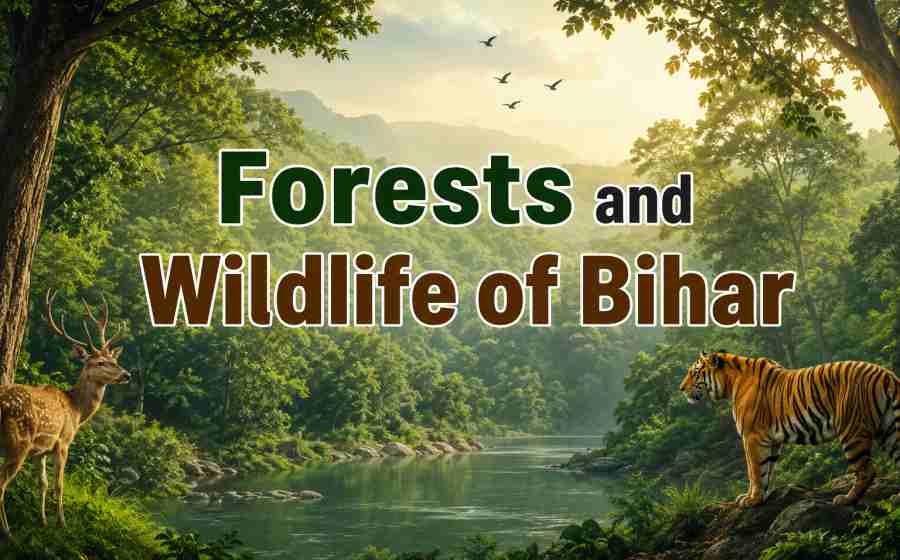
Forests and Wildlife of Bihar – Biodiversity, National Parks and Conservation
Explore the forests and wildlife of Bihar, including major forest types, national parks, wildlife sanctuaries, biodiversity and conservation efforts.
Forests and Wildlife of Bihar
Bihar is widely known for its rich history, fertile plains, and cultural heritage, but the state is also home to diverse forests and valuable wildlife. Although forests cover only a small percentage of Bihar’s total geographical area, they play an essential role in maintaining ecological balance, conserving biodiversity, preventing soil erosion, and supporting local livelihoods. Bihar’s forests provide habitat for many species of mammals, birds, reptiles, and plants, making them an important natural resource.
The forests of Bihar are mainly concentrated in the northern foothills near Nepal and the southern districts adjoining the Chotanagpur Plateau. These forests include tropical moist deciduous forests, tropical dry deciduous forests, riverine vegetation, and grasslands. The state government and environmental organizations continue to work towards protecting wildlife through national parks, wildlife sanctuaries, afforestation, and conservation projects.
Table of Contents
Forest Cover in Bihar
Bihar has one of the lowest percentages of forest cover among Indian states. According to recent estimates, forests cover approximately 7–8% of the state’s geographical area. The majority of these forests are located in:
- West Champaran
- Kaimur
- Rohtas
- Banka
- Jamui
- Nawada
- Munger
Despite limited forest area, these regions support rich biodiversity and contribute significantly to environmental conservation.
Importance of Forests in Bihar
Forests are vital for both nature and human life. Their importance includes:
- Maintaining ecological balance
- Conserving biodiversity
- Preventing soil erosion
- Improving groundwater recharge
- Regulating climate and rainfall
- Providing timber, bamboo, medicinal plants, and fuelwood
- Supporting tribal and rural livelihoods
- Protecting endangered wildlife species
- Promoting eco-tourism
Healthy forests also help reduce the effects of climate change by absorbing carbon dioxide from the atmosphere.
Types of Forests in Bihar
1. Tropical Moist Deciduous Forests
These forests are mainly found in the northern districts near the Himalayan foothills, especially in West Champaran.
Characteristics:
- Receive relatively high rainfall
- Dense vegetation
- Trees shed leaves during the dry season
- Rich biodiversity
Common trees include:
- Sal
- Shisham
- Khair
- Semal
- Bamboo
2. Tropical Dry Deciduous Forests
These forests occur in southern Bihar, including Kaimur, Rohtas, Nawada, Jamui, and Banka.
Characteristics:
- Moderate rainfall
- Trees shed leaves during summer
- Open canopy compared to moist forests
Major tree species include:
- Teak
- Mahua
- Palash
- Acacia
- Neem
3. Riverine Forests
Riverine vegetation grows along rivers such as the Ganga, Gandak, Kosi, and Son.
These forests help:
- Prevent riverbank erosion
- Improve water quality
- Support aquatic biodiversity
- Provide nesting grounds for birds
Major National Park of Bihar
Valmiki National Park
Valmiki National Park is the only national park in Bihar and is located in West Champaran district along the Indo-Nepal border.
Key Facts:
- Established in 1989
- Part of the Valmiki Tiger Reserve
- Lies in the Himalayan Terai region
- Rich in flora and fauna
- Popular destination for wildlife tourism
The park is famous for its tiger conservation programme and dense forests.
Major Wildlife Sanctuaries in Bihar
1. Valmiki Wildlife Sanctuary
- Located in West Champaran
- Largest protected forest in Bihar
- Habitat of Bengal tigers, leopards, deer, elephants, and numerous bird species
2. Kaimur Wildlife Sanctuary
Located in Kaimur district, this sanctuary protects dry deciduous forests and wildlife such as:
- Leopards
- Nilgai
- Wild boar
- Chinkara
- Various reptiles
3. Bhimbandh Wildlife Sanctuary
Situated in Munger district, Bhimbandh is known for:
- Natural hot springs
- Dense forests
- Rich bird diversity
- Deer and monkey populations
4. Gautam Buddha Wildlife Sanctuary
Spread across Gaya and Nawada districts, this sanctuary conserves dry forests and several endangered species.
5. Vikramshila Gangetic Dolphin Sanctuary
Located on the Ganga River near Bhagalpur, this sanctuary is unique because it protects India’s National Aquatic Animal, the Gangetic Dolphin. It is one of the few freshwater dolphin sanctuaries in the world.
Important Wildlife Found in Bihar
Bihar supports a wide variety of wildlife despite limited forest cover.
Mammals
Some important mammals include:
- Bengal Tiger
- Leopard
- Sloth Bear
- Wild Boar
- Nilgai (Blue Bull)
- Spotted Deer
- Sambar Deer
- Barking Deer
- Indian Hare
- Rhesus Macaque
- Langur
- Jackal
- Fox
Birds
Bihar attracts both resident and migratory birds.
Common bird species include:
- Indian Peafowl
- Sarus Crane
- Kingfisher
- Hornbill
- Parakeets
- Eagles
- Owls
- Storks
- Herons
- Ducks
- Geese
Birdwatching is especially popular during winter when migratory birds arrive from Central Asia and Siberia.
Reptiles
Reptiles found in Bihar include:
- Indian Cobra
- Python
- Monitor Lizard
- Crocodiles
- Turtles
- Freshwater Snakes
Aquatic Animals
The rivers of Bihar support:
- Gangetic Dolphin
- Various freshwater fish
- Turtles
- Otters
The Gangetic Dolphin is among the state’s most important endangered species.
Important Tree Species
The forests of Bihar contain several economically and ecologically important trees, including:
- Sal
- Teak
- Bamboo
- Mahua
- Khair
- Shisham
- Neem
- Palash
- Arjun
- Semal
Many of these trees provide timber, medicine, fruits, flowers, and forest products.
Conservation Efforts in Bihar
The Bihar government has introduced several initiatives to conserve forests and wildlife.
Major conservation measures include:
- Expansion of protected forest areas
- Tiger conservation under Project Tiger
- Protection of Gangetic Dolphins
- Afforestation programmes
- Social forestry schemes
- Wildlife monitoring
- Anti-poaching patrols
- Public awareness campaigns
- Eco-development programmes involving local communities
These initiatives aim to increase forest cover and preserve biodiversity for future generations.
Challenges Facing Forests and Wildlife
Despite conservation efforts, Bihar faces several environmental challenges:
- Deforestation
- Illegal logging
- Encroachment on forest land
- Habitat fragmentation
- Human-wildlife conflict
- River pollution
- Climate change
- Forest fires
- Poaching of wild animals
Addressing these issues requires stronger law enforcement, community participation, and sustainable forest management.
Role of Local Communities
Local villagers and forest-dependent communities play an important role in protecting forests. Their participation includes:
- Preventing illegal tree cutting
- Supporting plantation drives
- Reporting wildlife crimes
- Conserving water resources
- Promoting eco-tourism
- Participating in joint forest management programmes
Community involvement has significantly improved conservation outcomes in many regions of Bihar.
Summary
Although Bihar has relatively low forest cover compared to many Indian states, its forests and wildlife remain extremely valuable. Protected areas such as Valmiki National Park, Kaimur Wildlife Sanctuary, Bhimbandh Wildlife Sanctuary, and Vikramshila Gangetic Dolphin Sanctuary safeguard numerous species of plants and animals, including Bengal tigers and the endangered Gangetic Dolphin. Continuous conservation efforts, afforestation programmes, and public participation are helping preserve these natural ecosystems. Protecting Bihar’s forests is essential not only for wildlife conservation but also for maintaining ecological balance, supporting livelihoods, and ensuring a healthier environment for future generations.
Also Check: Bihar GK