Bihar Formation Day – History, Significance and the Journey of Bihar
Learn about Bihar Formation Day, its history, significance and celebrations. Discover how Bihar gained its identity and its role in India’s heritage.
Bihar Formation Day
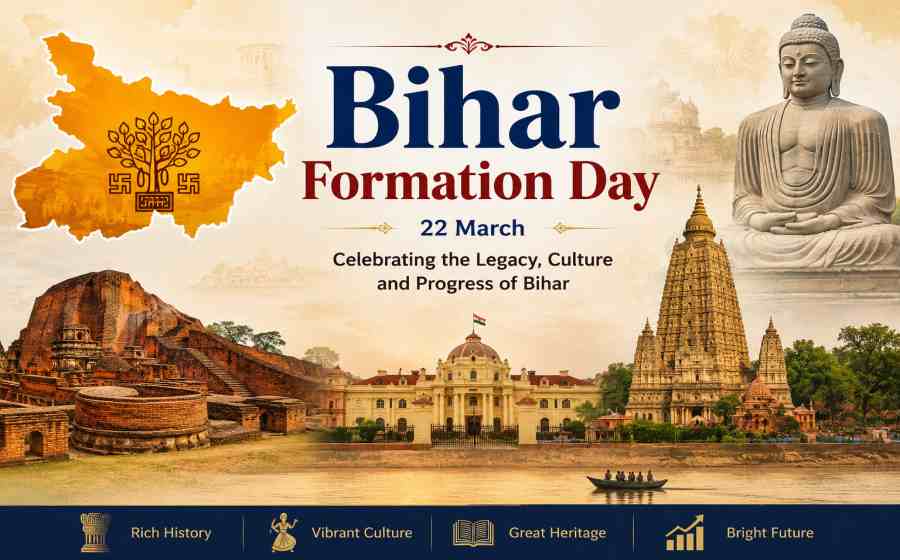
Bihar is one of India’s most historically rich states, known for its ancient civilizations, renowned universities, spiritual traditions, and significant contributions to Indian history. Every year, Bihar State Formation Day, also known as Bihar Diwas, is celebrated on 22 March to commemorate the creation of Bihar as a separate province. The day serves as a reminder of the state’s glorious past, cultural heritage, and continuous progress toward development.
Bihar Diwas is not just a celebration of administrative history; it is an occasion for the people of Bihar to take pride in their identity, achievements, and contributions to the nation. The event brings together people from different backgrounds to honor the state’s historical legacy and envision a brighter future.
Table of Contents
Historical Background of Bihar
The history of Bihar dates back thousands of years. The region was once home to powerful kingdoms and important centers of learning. Ancient Bihar included the kingdom of Magadha, which became one of the most influential political powers in Indian history. Great rulers such as Bimbisara, Ajatashatru, and Ashoka the Great ruled from this region.
Bihar also played a central role in the development of major religions. Lord Buddha attained enlightenment at Bodh Gaya, while Lord Mahavira, the founder of Jainism, spent much of his life in the region. The state was also home to the world-famous ancient universities of Nalanda and Vikramshila, attracting scholars from across Asia.
Despite its rich heritage, Bihar underwent several administrative changes during British rule. Understanding these changes helps explain the significance of Bihar State Formation Day.
Formation of Bihar as a Separate Province
Before 1912, Bihar was part of the large Bengal Presidency under British administration. The Bengal Presidency covered a vast territory, making governance difficult. The people of Bihar felt that their language, culture, and regional interests were not receiving adequate attention.
As demands for separate administrative recognition grew, the British government reorganized the region. On 22 March 1912, Bihar was separated from Bengal and combined with Odisha to form the new province of Bihar and Orissa.
This marked a significant milestone because it provided the people of Bihar with a distinct administrative identity. Later, in 1936, Bihar and Odisha were divided into separate provinces, creating the modern administrative structure of Bihar.
The formation of Bihar as a separate province laid the foundation for regional governance and development. It allowed the state to focus more effectively on its unique social, cultural, and economic needs.
Why Bihar State Formation Day is Celebrated
Bihar State Formation Day is celebrated to honor the historic decision that gave Bihar its own identity. The day recognizes the struggles, aspirations, and achievements of the people who contributed to the state’s development.
The celebration aims to:
- Promote awareness about Bihar’s history.
- Encourage pride in Bihar’s cultural heritage.
- Highlight the state’s achievements in education, agriculture, and governance.
- Inspire younger generations to contribute to Bihar’s progress.
- Strengthen unity among people living within and outside the state.
The day reminds citizens that Bihar’s identity is deeply rooted in a remarkable historical legacy that continues to influence modern India.
Historical Importance of Bihar
The significance of Bihar extends far beyond its formation as a province. The state has played a major role in shaping Indian civilization.
Birthplace of Powerful Empires
The ancient Magadha Empire, based in Bihar, became one of the strongest kingdoms in Indian history. It later gave rise to the Mauryan Empire, which unified much of the Indian subcontinent.
Center of Learning
Nalanda University was among the world’s earliest residential universities. Students from China, Korea, Tibet, and other regions traveled to Bihar for higher education.
Spiritual Heritage
Bihar is one of the most important spiritual destinations in the world. Bodh Gaya is a sacred site for Buddhists, while Pawapuri holds great importance for followers of Jainism.
Freedom Movement Contributions
Bihar played a significant role in India’s struggle for independence. Leaders such as Dr. Rajendra Prasad, India’s first President, made immense contributions to the freedom movement and nation-building.
Celebrations of Bihar Diwas
Bihar Diwas is celebrated with enthusiasm across the state and among Bihari communities worldwide. Government institutions, schools, colleges, and cultural organizations organize various events to mark the occasion.
Common activities include:
- Cultural programs featuring folk music and dance.
- Exhibitions showcasing Bihar’s history and achievements.
- Educational seminars and competitions.
- Art and literary events.
- Awareness campaigns highlighting development initiatives.
- Public gatherings and community celebrations.
Traditional forms of art such as Madhubani painting are often displayed during the celebrations, reflecting the state’s vibrant cultural heritage.
Bihar’s Progress Since Formation
Since becoming a separate province, Bihar has made notable contributions in several fields. Agriculture remains a major part of the state’s economy, while improvements in education, infrastructure, and governance continue to shape its development.
The state has produced distinguished leaders, scholars, scientists, civil servants, and artists who have contributed significantly to India’s growth. Efforts are also being made to preserve historical sites, promote tourism, and strengthen economic opportunities.
While challenges remain, Bihar continues to move forward by building upon its rich historical foundation and human potential.
Summary
Bihar State Formation Day is a celebration of identity, history, and progress. Observed on 22 March, it commemorates the creation of Bihar as a separate province in 1912 and highlights the state’s remarkable contributions to Indian civilization. From the mighty Magadha Empire and the ancient universities of Nalanda and Vikramshila to its role in spirituality and nation-building, Bihar holds a unique place in history.
Bihar Diwas provides an opportunity to reflect on the state’s achievements, honor its heritage, and inspire future generations to contribute to its continued growth and development. It stands as a symbol of pride, unity, and the enduring legacy of one of India’s most historic regions.
Also Check: Bihar GK