Languages Spoken in Bihar – Hindi, Maithili, Bhojpuri and the Rich Linguistic Heritage of Bihar
Discover the major languages spoken in Bihar, including Hindi, Maithili, Bhojpuri and more. Learn about Bihar’s rich linguistic diversity and cultural heritage.
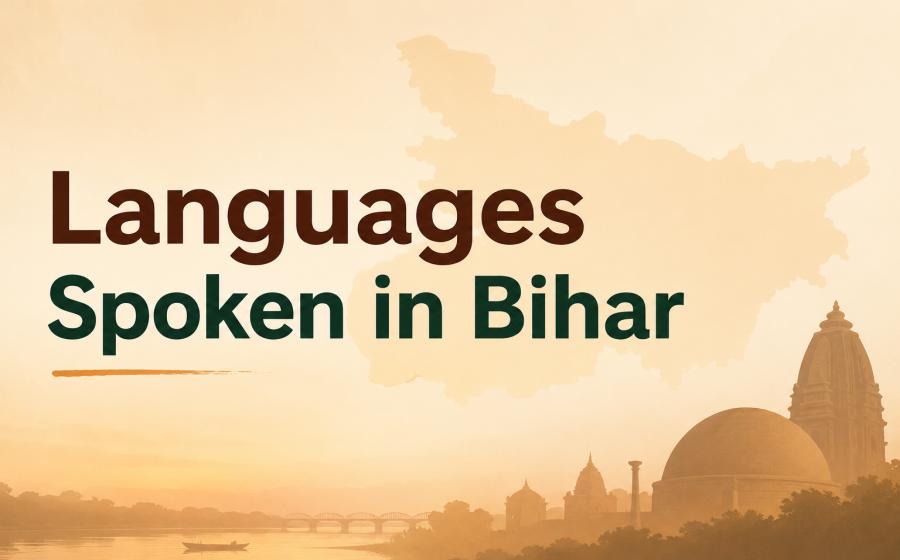
Languages Spoken in Bihar
Bihar, one of India’s most historically and culturally significant states, is known not only for its ancient heritage but also for its remarkable linguistic diversity. Situated in eastern India, Bihar is home to millions of people belonging to different communities, each contributing to the state’s vibrant cultural identity through their language and traditions.
While Hindi serves as the official language of Bihar, several regional languages and dialects are widely spoken across different districts. Languages such as Maithili, Bhojpuri, Magahi, Angika, and Urdu play an essential role in everyday communication, literature, folk traditions, and social life. Understanding Bihar’s linguistic landscape offers valuable insight into its rich cultural fabric.
Table of Contents
Hindi: The Official Language of Bihar
Hindi is the official language used for administration, education, government communication, and media in Bihar. It acts as a common language that connects people from various linguistic backgrounds across the state.
Modern Standard Hindi is taught in schools and used in official documents. Newspapers, television channels, and government announcements predominantly use Hindi, making it one of the most widely understood languages in Bihar.
However, despite its official status, many people use their regional languages in daily conversations while switching to Hindi for formal interactions.
Maithili: The Language of Mithila
Maithili is one of Bihar’s most celebrated regional languages. It is primarily spoken in the Mithila region, which includes districts such as Darbhanga, Madhubani, Samastipur, Sitamarhi, Supaul, and Madhubani.
Maithili has a rich literary tradition dating back centuries. The famous poet Vidyapati significantly contributed to Maithili literature through his devotional and romantic compositions. The language possesses its own unique identity, grammar, and vocabulary.
A major milestone for Maithili came in 2003 when it was included in the Eighth Schedule of the Constitution of India, granting it official recognition among India’s scheduled languages.
Bhojpuri: The Language Beyond Borders
Bhojpuri is another widely spoken language in Bihar, especially in western districts such as Buxar, Bhojpur, Siwan, Saran, Gopalganj, and parts of Rohtas.
Known for its lively expressions and folk traditions, Bhojpuri has a strong cultural influence through music, cinema, theatre, and festivals. Bhojpuri folk songs are popular during weddings and religious celebrations.
Interestingly, Bhojpuri extends far beyond Bihar. Due to migration during the colonial period, Bhojpuri-speaking communities can also be found in countries such as Mauritius, Fiji, Suriname, Guyana, and Trinidad and Tobago. This global presence highlights the far-reaching impact of Bihar’s linguistic heritage.
Magahi: The Language of Ancient Magadha
Magahi, sometimes called Magadhi, is spoken mainly in central Bihar, including districts such as Gaya, Nalanda, Jehanabad, Nawada, and parts of Patna.
The language derives its name from the ancient kingdom of Magadha, one of the most powerful regions in Indian history. Scholars believe that Magahi evolved from Magadhi Prakrit, an ancient language associated with early Indian civilizations.
Although Magahi does not currently enjoy scheduled status under the Indian Constitution, it remains an important medium of communication and cultural expression for millions of people.
Angika: The Voice of Eastern Bihar
Angika is primarily spoken in eastern Bihar, particularly in districts such as Bhagalpur, Banka, Munger, and Jamui.
The language reflects the unique traditions and identity of the Anga region, which finds mention in ancient Indian texts. Angika possesses distinct pronunciation patterns and vocabulary that differentiate it from neighboring languages.
Despite limited institutional recognition, efforts are being made by scholars and cultural organizations to preserve and promote Angika literature and heritage.
Urdu: An Important Language
Urdu also holds significant importance in Bihar and serves as the state’s second official language in many contexts. It is spoken by a considerable section of the population, especially within urban and Muslim communities.
The language has a rich literary history encompassing poetry, prose, and journalism. Urdu-medium schools and publications continue to contribute to Bihar’s educational and cultural landscape.
Its elegant script and expressive literary style have made Urdu a cherished part of Bihar’s multilingual society.
Linguistic Diversity and Cultural Identity
The coexistence of multiple languages in Bihar reflects the state’s inclusive and diverse social structure. People often grow up speaking their mother tongue at home, Hindi in educational settings, and sometimes additional languages in professional environments.
This multilingual ability strengthens social bonds and encourages cultural exchange. Festivals, folk songs, storytelling traditions, and local theatre continue to preserve these languages for future generations.
Each language carries unique customs, idioms, and historical experiences, collectively enriching Bihar’s identity.
Why Preserving Regional Languages Matters
Regional languages are more than tools of communication. They preserve local history, traditional knowledge, folklore, and community values. As modernization and urbanization influence language preferences, safeguarding these linguistic traditions becomes increasingly important.
Promoting regional literature, encouraging mother-tongue education, supporting local artists, and documenting oral traditions can help ensure that Bihar’s linguistic treasures remain vibrant and relevant.
Protecting these languages also strengthens cultural pride and provides future generations with a deeper understanding of their roots.
Summary
Bihar’s linguistic diversity stands as a testament to its rich cultural heritage and historical significance. From the official use of Hindi to the literary elegance of Maithili, the widespread popularity of Bhojpuri, the historical roots of Magahi, the regional identity of Angika, and the poetic beauty of Urdu, each language contributes to the state’s unique character.
These languages are not merely modes of communication; they are living expressions of Bihar’s traditions, memories, and collective identity. Appreciating and preserving this linguistic richness helps celebrate the true spirit of Bihar and ensures that its cultural legacy continues to flourish for generations to come.
Also Check: Bihar GK