Lithuania – History, Culture, Sports, Tourism and Key Facts
Explore Lithuania with its rich history, unique culture, popular sports, geography, economy, traditions, famous places and interesting facts.
Lithuania
Lithuania is a beautiful country in Northern Europe and one of the three Baltic nations, alongside Latvia and Estonia. Despite its relatively small size, Lithuania has a remarkable history, vibrant culture, and strong national identity. The country is known for its medieval castles, dense forests, traditional festivals, and achievements in sports, especially basketball. Today, Lithuania is a modern democratic nation, a member of the European Union (EU), NATO, and the Eurozone, making it an important part of Europe.
Table of Contents
History of Lithuania
Lithuania has one of the oldest histories among European nations. The first recorded mention of Lithuania dates back to 1009 AD. During the 13th century, Lithuanian tribes united under King Mindaugas, who became the country’s first and only crowned king in 1253. Under his leadership, Lithuania developed into a powerful kingdom.
In the 14th and 15th centuries, the Grand Duchy of Lithuania became one of the largest countries in Europe, stretching from the Baltic Sea to the Black Sea. It formed a close alliance with Poland, eventually creating the Polish-Lithuanian Commonwealth in 1569, one of Europe’s most influential political unions.
In the late 18th century, Lithuania was partitioned and absorbed by the Russian Empire. During the 19th century, Lithuanians worked hard to preserve their language and culture despite foreign rule. Lithuania declared independence on 16 February 1918, but during World War II it was occupied first by the Soviet Union, then Nazi Germany, and again by the Soviet Union.
On 11 March 1990, Lithuania became the first Soviet republic to declare the restoration of its independence, inspiring other nations to follow. Today, Lithuania is a peaceful democratic country with a growing economy.
Geography of Lithuania
Lithuania is located on the eastern coast of the Baltic Sea.
Geographical Highlights:
- Capital: Vilnius
- Largest City: Vilnius
- Area: Approximately 65,300 square kilometers
- Population: Around 2.9 million
- Borders: Latvia, Belarus, Poland, and Russia (Kaliningrad region)
- Official Language: Lithuanian
- Currency: Euro (€)
- Time Zone: Eastern European Time (EET)
The country features flat plains, rolling hills, rivers, lakes, and forests. Nearly one-third of Lithuania is covered with forests, making it one of Europe’s greener countries.
Culture of Lithuania
Lithuanian culture reflects centuries of traditions, folklore, music, and craftsmanship.
Language
Lithuanian is one of the oldest living Indo-European languages. It has preserved many ancient linguistic features, making it valuable for language researchers.
Traditional Music
Folk music plays an important role in Lithuanian culture. Traditional songs called “Dainos” are known for their poetic lyrics and beautiful melodies. Folk dances are commonly performed during festivals.
Festivals
Some of Lithuania’s major festivals include:
- Independence Day (16 February)
- Statehood Day (6 July)
- Midsummer Festival (Joninės)
- Vilnius Festival
- Song and Dance Festival
The Lithuanian Song and Dance Festival showcases thousands of performers in colorful traditional costumes.
Traditional Clothing
Traditional Lithuanian clothing includes woven linen garments decorated with colorful embroidery and patterns that vary by region.
Famous Food of Lithuania
Lithuanian cuisine is hearty and influenced by local ingredients.
Popular dishes include:
- Cepelinai (Potato dumplings)
- Šaltibarščiai (Cold beet soup)
- Kugelis (Potato pudding)
- Rye bread
- Kibinai (Stuffed pastries)
- Smoked fish
- Mushroom dishes
Potatoes, dairy products, rye, mushrooms, and berries are common ingredients in Lithuanian cooking.
Sports in Lithuania
Basketball is considered Lithuania’s national sport. The country has produced many internationally successful players and consistently performs well in global competitions.
Popular sports include:
- Basketball
- Football
- Athletics
- Cycling
- Rowing
- Swimming
- Tennis
Lithuanian athletes have won numerous Olympic and international medals, particularly in basketball, rowing, athletics, and swimming.
Economy of Lithuania
Lithuania has developed into a modern market economy.
Major industries include:
- Information technology
- Manufacturing
- Biotechnology
- Financial services
- Agriculture
- Food processing
- Tourism
- Renewable energy
The country exports machinery, furniture, chemicals, food products, and electronics. Lithuania is also recognized for its digital innovation and startup ecosystem.
Education in Lithuania
Lithuania has a well-developed education system with high literacy rates.
Higher education institutions attract both domestic and international students. Popular fields include:
- Engineering
- Medicine
- Information Technology
- Business
- Social Sciences
Education is considered an important contributor to the country’s economic development.
Tourism in Lithuania
Lithuania offers historical landmarks, beautiful natural landscapes, and charming cities.
Major tourist attractions include:
- Vilnius Old Town (UNESCO World Heritage Site)
- Trakai Island Castle
- Hill of Crosses
- Curonian Spit National Park
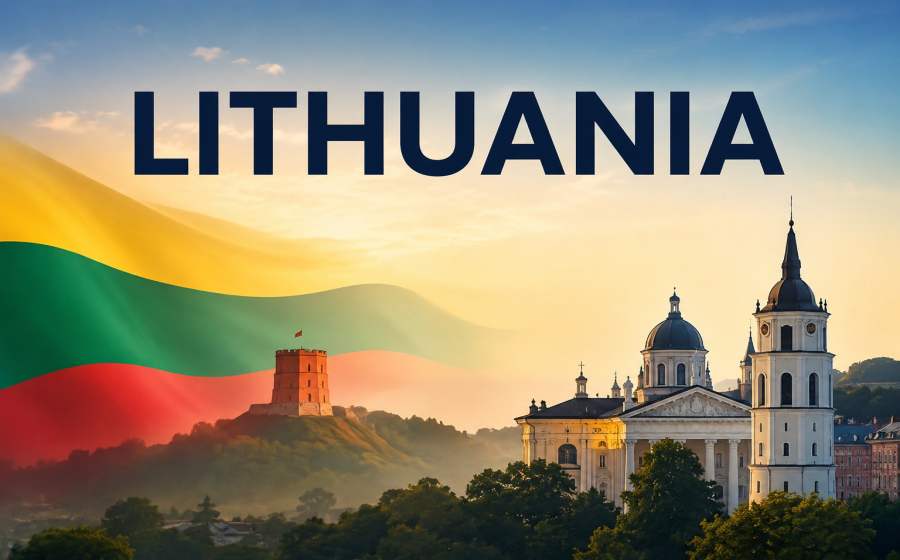
- Gediminas Tower
- Kaunas Old Town
- Aukštaitija National Park
Visitors enjoy medieval architecture, museums, forests, lakes, and Baltic Sea beaches.
Government and Political System
Lithuania is a parliamentary democratic republic.
Key features include:
- President as Head of State
- Prime Minister as Head of Government
- Multi-party political system
- Member of the European Union
- Member of NATO
- Member of the United Nations
The country actively supports democracy, international cooperation, and regional security.
Interesting Facts About Lithuania
- Lithuania was the first Soviet republic to restore its independence in 1990.
- Vilnius is one of Europe’s largest surviving medieval old towns.
- Lithuanian is among the oldest living Indo-European languages.
- Basketball enjoys immense popularity across the country.
- Lithuania has thousands of lakes and extensive forests.
- The country uses the Euro as its official currency.
- The Hill of Crosses contains hundreds of thousands of crosses placed by pilgrims and visitors.
- Lithuania has one of the fastest public internet infrastructures in Europe.
- Amber, often called “Baltic Gold,” has been treasured in Lithuania for centuries.
- The national flag features yellow, green, and red stripes symbolizing prosperity, nature, and courage.
Key Facts About Lithuania
| Category | Information |
|---|---|
| Capital | Vilnius |
| Largest City | Vilnius |
| Official Language | Lithuanian |
| Currency | Euro (€) |
| Population | Around 2.9 million |
| Area | 65,300 sq km |
| Continent | Europe |
| Government | Parliamentary Republic |
| Independence Restored | 11 March 1990 |
| National Sport | Basketball |
Summary
Lithuania is a country with a rich historical heritage, strong cultural traditions, and impressive modern development. From the medieval Grand Duchy to becoming one of Europe’s dynamic democratic nations, Lithuania has preserved its unique identity while embracing progress. Its ancient language, colorful festivals, successful athletes, beautiful landscapes, and growing economy make it an important and fascinating country in the Baltic region. Whether studying world geography, history, or culture, Lithuania offers valuable insights into Europe’s past and present.
Also Check: General Knowledge