
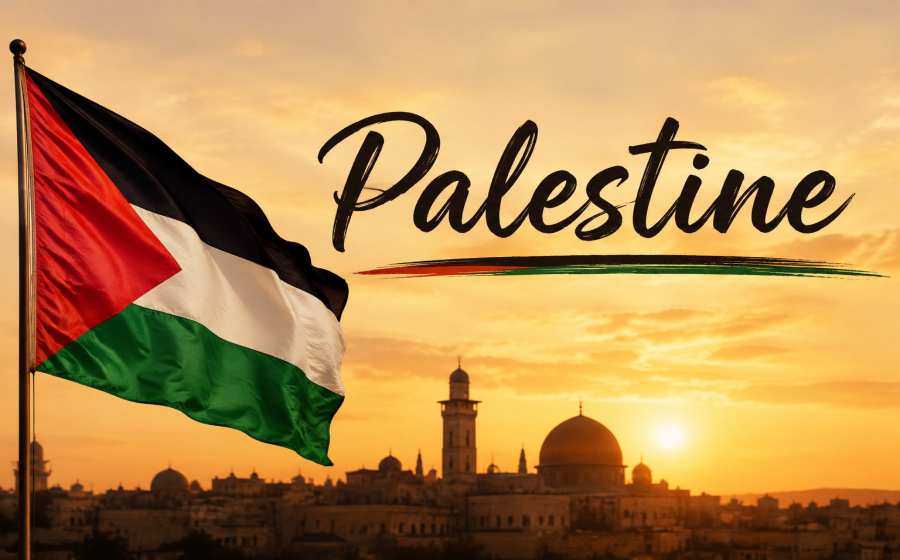
Palestine – History, Culture, Landmarks, Sports, Geography and Important Facts
Palestine is known for its rich history, vibrant culture, ancient heritage, traditional arts, sports, historic cities and fascinating facts.
Palestine
Palestine is a historic land in the eastern Mediterranean with a deep cultural, religious and historical significance. The name Palestine is closely associated with ancient civilizations, major religious traditions and centuries of interaction between different peoples and cultures. Today, the State of Palestine is recognized by many countries and holds non-member observer State status at the United Nations, granted by the UN General Assembly in 2012.
Palestinian society has a distinctive cultural identity shaped by Arab traditions, local customs, historic cities, agriculture, literature, music, crafts and food. Cities and places such as Bethlehem, Hebron, Jericho, Nablus and Gaza have played important roles in the region’s history. Palestine is also home to archaeological and religious sites that attract considerable historical and cultural interest.
Table of Contents
Historical Background of Palestine
Palestine has one of the world’s oldest and most complex historical landscapes. The region has been inhabited for thousands of years, with archaeological evidence showing settlements dating back to prehistoric periods.
Ancient Jericho, also known as Tell es-Sultan, is particularly important. UNESCO recognizes it as a World Heritage property, reflecting the exceptional archaeological significance of the ancient settlement.
Over different periods, the region came under the influence or rule of civilizations including the Canaanites, Egyptians, Israelites, Assyrians, Babylonians, Persians, Greeks, Romans and Byzantines. Later, Arab Muslim rule became an important part of the region’s history, followed by periods under various Islamic dynasties.
During the Ottoman period, Palestine formed part of the Ottoman Empire for several centuries. After the First World War, the region came under the British Mandate. The twentieth century brought major political changes, including the establishment of Israel in 1948, the displacement of many Palestinians, and subsequent Arab-Israeli wars and conflicts.
The Palestinian national movement developed strongly during the twentieth century. The Palestine Liberation Organization became a major political representative of Palestinians, while the Palestinian Authority was established in the 1990s following agreements connected with the Oslo peace process.
In November 2012, the UN General Assembly adopted Resolution 67/19, according Palestine non-member observer State status. The resolution passed with 138 votes in favour, 9 against and 41 abstentions.
Geography of Palestine
Palestine is located in the eastern Mediterranean region of Western Asia. The Palestinian territories commonly discussed today include the West Bank, including East Jerusalem, and the Gaza Strip.
The landscape varies considerably. The West Bank contains mountainous areas, valleys and agricultural regions, while Gaza is a narrow coastal territory along the Mediterranean Sea. The region’s geography has historically influenced agriculture, settlement patterns, trade and transportation.
Olive groves and vineyards are particularly important features of Palestinian rural landscapes. The cultural landscape of Battir, south-west of Jerusalem, is recognized by UNESCO for its traditional agricultural terraces, irrigation system, vineyards and olive cultivation.
Palestinian Culture and Traditions
Palestinian culture is rich in traditions passed from one generation to another. Dabkeh, a traditional group dance, is one of the most recognizable expressions of Palestinian cultural identity. It is commonly performed at weddings, celebrations and cultural events.
Traditional embroidery, known as tatreez, is another important cultural art. Palestinian embroidery features distinctive patterns and colors associated with different communities and regions. UNESCO lists the art of embroidery in Palestine among its recognized intangible cultural heritage elements.
Palestinian storytelling is also significant. Palestinian Hikaye, a traditional form of women’s storytelling, represents another important element of the country’s intangible cultural heritage.
Other recognized cultural practices include Arabic calligraphy, Nabulsi soap making, traditional henna practices, metal engraving and knowledge associated with date palms.
Food of Palestine
Palestinian cuisine reflects the agricultural traditions and cultural history of the region. Olive oil, vegetables, grains, herbs, fruits and dairy products are widely used.
Popular Palestinian dishes include maqluba, a rice and vegetable dish often prepared with meat; musakhan, traditionally made with bread, onions, sumac and chicken; maftoul, a couscous-like dish; and falafel, which is widely enjoyed throughout the region.
Olives and olive oil have a particularly strong connection with Palestinian agriculture and cultural life. Olive harvesting is an important seasonal activity in many Palestinian communities.
Famous Historical and Cultural Places
Palestine contains numerous places of outstanding historical importance. Bethlehem is internationally famous for the Church of the Nativity and its association with the birthplace of Jesus. UNESCO inscribed the Birthplace of Jesus: Church of the Nativity and the Pilgrimage Route, Bethlehem, on the World Heritage List in 2012.
Hebron/Al-Khalil Old Town is another major historic site recognized by UNESCO. Its old urban fabric contains important religious, architectural and cultural landmarks.
Ancient Jericho/Tell es-Sultan is significant for archaeological research into early human settlement. UNESCO added the site to the World Heritage List in 2023.
The Palestinian World Heritage List also includes the cultural landscape of Battir, Saint Hilarion Monastery/Tell Umm Amer and Sebastia. UNESCO’s current listing records six World Heritage properties for the State of Palestine.
Sports in Palestine
Sports are an important part of Palestinian social life, particularly football. Football is the most popular sport, with local clubs and national competitions contributing to sporting culture.
The Palestine national football team represents Palestine in international competitions. Palestinian athletes also participate in sports such as basketball, volleyball, athletics, swimming, martial arts and table tennis.
Despite significant challenges, Palestinian athletes have continued to compete internationally and represent their communities. Sporting participation provides opportunities for young people to develop teamwork, discipline and confidence.
Education and Literature
Education has traditionally held an important place in Palestinian society. Universities and educational institutions operate in Palestinian cities and communities, with students pursuing subjects ranging from science and medicine to humanities and technology.
Palestinian literature has also developed a strong international presence. Writers and poets have frequently explored themes such as homeland, identity, displacement, memory and everyday life. Poetry in particular has been an important form of cultural expression.
Languages and Religion
Arabic is the principal language spoken by Palestinians. Palestinian Arabic has distinctive vocabulary, pronunciation and expressions that vary somewhat between regions.
Palestinian society includes both Muslims and Christians, and the land contains sites that are sacred to Islam, Christianity and Judaism. Bethlehem and Jerusalem are particularly significant in Christian and Muslim traditions, while many locations throughout the region carry religious importance.
Palestine: Key Facts
- Official name: State of Palestine
- Region: Western Asia / Eastern Mediterranean
- Major territories: West Bank and Gaza Strip
- Main language: Arabic
- Major religions: Islam and Christianity, with a diverse historical religious heritage
- Major cultural dance: Dabkeh
- Famous traditional craft: Palestinian embroidery (Tatreez)
- Popular sport: Football
- Important historical city: Jericho
- Famous religious city: Bethlehem
- Important historic city: Hebron
- UN status: Non-member observer State
- UN observer State status: Granted in 2012
- UNESCO membership: Since 2011
- UNESCO World Heritage properties: Six currently listed by UNESCO
Summary
Palestine represents a region where ancient history, living traditions and modern political developments intersect. Its archaeological sites, historic cities, agricultural landscapes, literature, cuisine, embroidery, music and traditional dance demonstrate a rich cultural heritage. From ancient Jericho and Bethlehem to the olive terraces of Battir, Palestinian heritage reflects thousands of years of human settlement and cultural development. Its sporting traditions, educational institutions and artistic expressions continue to form important parts of contemporary Palestinian society.
Also Check: General Knowledge