
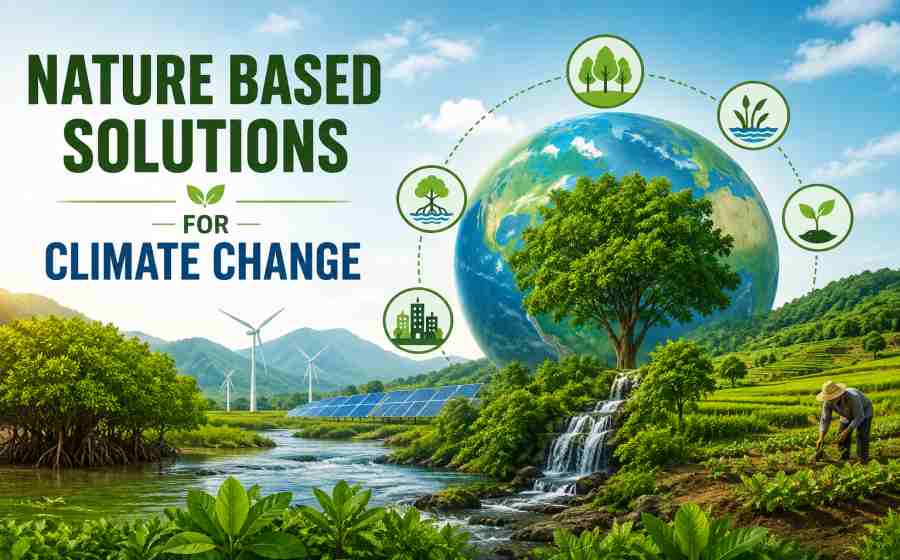
Nature Based Solutions for Climate Change – Sustainable Ways to Save the Planet
Discover how Nature Based Solutions for Climate Change help reduce global warming, protect biodiversity, improve livelihoods and build a sustainable future.
Nature Based Solutions for Climate Change
Climate change is one of the greatest challenges facing humanity today. Rising global temperatures, melting glaciers, unpredictable rainfall, floods, droughts and severe storms are affecting millions of people across the world. Scientists and governments are continuously searching for effective ways to reduce the impact of climate change. Among the most promising and sustainable approaches are Nature-Based Solutions (NbS).
Nature-Based Solutions use natural ecosystems and processes to address environmental problems while also supporting human well-being and biodiversity. Instead of relying only on expensive technologies or artificial systems, NbS work with nature to restore balance and create long-term environmental resilience.
Table of Contents
What are Nature Based Solutions?
Nature-Based Solutions are actions that protect, restore, or sustainably manage ecosystems to tackle societal challenges such as climate change, food security, water scarcity, and disaster risks. These solutions use the power of forests, wetlands, oceans, grasslands, and urban green spaces to absorb carbon dioxide, regulate temperatures, and support life on Earth.
Examples of Nature-Based Solutions include:
- Reforestation and afforestation
- Wetland restoration
- Mangrove protection
- Urban green spaces and rooftop gardens
- Sustainable agriculture
- River and floodplain restoration
- Coastal ecosystem conservation
These methods not only help reduce greenhouse gases but also improve biodiversity, create jobs, and strengthen local communities.
Importance of Nature Based Solutions in Climate Change
Nature plays a major role in regulating the Earth’s climate. Forests, oceans, and soil naturally absorb carbon dioxide from the atmosphere. However, deforestation, pollution, and unsustainable development have weakened these natural systems.
Nature-Based Solutions are important because they:
1. Reduce Carbon Emissions
Trees and plants absorb carbon dioxide through photosynthesis. Restoring forests and protecting existing ecosystems can remove large amounts of carbon from the atmosphere. According to environmental studies, forests alone absorb billions of tons of carbon dioxide every year.
2. Protect Biodiversity
Healthy ecosystems provide habitats for animals, birds, insects, and marine life. Nature-Based Solutions help preserve endangered species and maintain ecological balance.
3. Prevent Natural Disasters
Mangroves, wetlands, and forests act as natural barriers against floods, storms, landslides, and coastal erosion. They reduce disaster risks and protect human settlements.
4. Improve Human Health
Green spaces in cities improve air quality, reduce heat, and support mental well-being. Urban parks and trees make cities healthier and more livable.
5. Support Sustainable Livelihoods
Farmers, fishermen, and local communities depend on healthy ecosystems for income and food security. Sustainable farming and ecosystem restoration create employment opportunities and improve rural economies.
Major Types of Nature-Based Solutions
Reforestation and Afforestation
Reforestation means replanting trees in deforested areas, while afforestation involves planting trees in barren lands. Forest restoration improves biodiversity, controls soil erosion, and captures atmospheric carbon.
Countries around the world are investing in large-scale tree plantation drives to combat climate change. Community forests and agroforestry systems are also becoming popular.
Wetland Restoration
Wetlands act like natural water filters and carbon storage systems. They absorb excess rainwater, reduce flooding, and support wildlife. Restoring degraded wetlands helps improve water quality and climate resilience.
Mangrove Conservation
Mangroves are coastal forests that protect shorelines from storms and rising sea levels. They absorb carbon more effectively than many terrestrial forests. Conserving mangroves is especially important for coastal regions vulnerable to cyclones and erosion.
Sustainable Agriculture
Traditional farming practices often lead to soil degradation and excessive greenhouse gas emissions. Sustainable agriculture promotes crop rotation, organic farming, reduced chemical use, and efficient water management.
Practices such as agroforestry and regenerative farming improve soil health and increase carbon storage in land.
Urban Green Infrastructure
Cities are major contributors to climate change due to pollution and heat generation. Urban green infrastructure includes parks, green roofs, vertical gardens, and tree-lined roads.
These green spaces lower urban temperatures, improve air quality, and reduce energy consumption.
Challenges in Implementing Nature-Based Solutions
Although Nature-Based Solutions offer many benefits, there are several challenges in implementing them effectively.
Lack of Awareness
Many people and policymakers are still unaware of the long-term benefits of ecosystem restoration and sustainable practices.
Financial Constraints
Large-scale restoration projects require funding, technical expertise, and long-term planning.
Land Use Conflicts
Urbanization, industrial growth, and agriculture often compete for land needed for conservation projects.
Weak Policies
In some countries, environmental regulations are not strong enough to support ecosystem protection and restoration.
Nature Based Solutions in India
India has significant potential for Nature-Based Solutions because of its diverse ecosystems and large rural population.
Some major initiatives include:
- Afforestation programs under the Green India Mission
- River restoration projects like Namami Gange
- Mangrove conservation in coastal states
- Promotion of organic farming and sustainable agriculture
- Urban green initiatives in major cities
India’s traditional knowledge systems also support sustainable living and environmental conservation. Community participation is playing a key role in restoring forests, water bodies, and biodiversity.
Global Efforts for Nature Based Solutions
Many international organizations and countries are promoting Nature-Based Solutions to achieve climate goals under the Paris Agreement.
Programs such as the United Nations Decade on Ecosystem Restoration encourage governments and communities to restore degraded ecosystems. Global climate summits increasingly emphasize the importance of protecting nature alongside reducing industrial emissions.
Several countries are investing in green infrastructure, forest restoration, and coastal ecosystem management as part of their climate strategies.
The Future of Nature Based Solutions
Nature-Based Solutions are becoming essential for building a sustainable future. Scientific research shows that natural ecosystems can provide nearly one-third of the climate mitigation needed by 2030.
However, these solutions cannot replace all technological and industrial climate measures. Instead, they should work together with renewable energy, clean transportation, and sustainable development policies.
Protecting nature is no longer just an environmental issue; it is directly connected to economic growth, public health, and global security. Governments, businesses, and individuals must work together to restore ecosystems and reduce environmental damage.
Summary
Nature-Based Solutions offer a powerful and sustainable way to fight climate change while improving human well-being and protecting biodiversity. Forests, wetlands, mangroves, and green cities are natural allies in the struggle against global warming.
By investing in ecosystem restoration and sustainable practices, societies can reduce carbon emissions, prevent disasters, and create healthier environments for future generations. In a world facing increasing environmental challenges, working with nature may be one of the smartest and most effective solutions available today.
Also Check: Environment