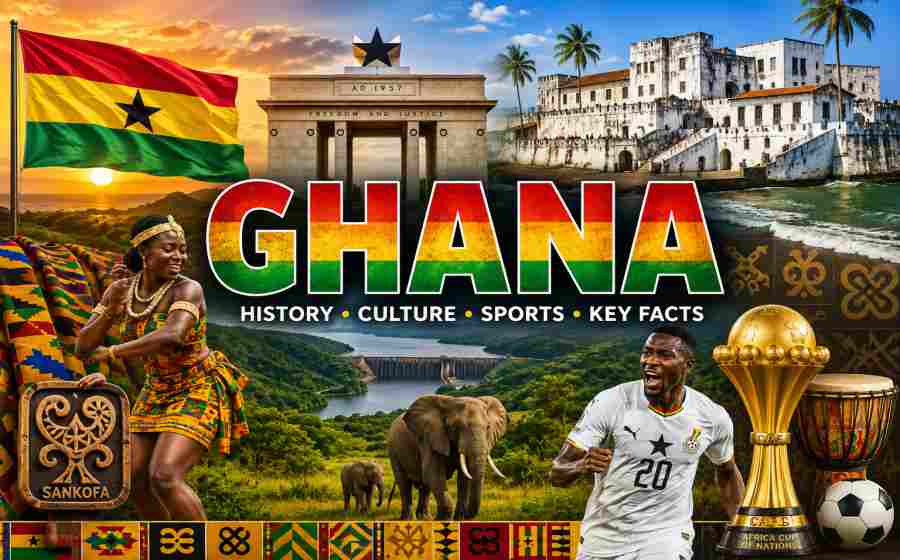
Ghana – History of a Land of Gold, Rich Heritage, Sporting Excellence and Fascinating Facts
Explore Ghana’s rich history, vibrant culture, famous sports, geography, economy, traditions, wildlife and key facts that make this West African nation unique.
Ghana
Ghana is one of West Africa’s most influential and historically significant countries. Known as the “Gateway to Africa,” Ghana is admired for its peaceful democracy, cultural diversity, abundant natural resources, and remarkable contributions to sports and education. The country gained global recognition as the first sub-Saharan African nation to achieve independence from colonial rule, inspiring many other African countries to seek freedom.
Today, Ghana stands as one of Africa’s fastest-growing economies, supported by agriculture, mining, manufacturing, tourism, and technology. Its welcoming people, colorful festivals, traditional music and breathtaking landscapes attract visitors from around the world.
Table of Contents
Location and Geography
Ghana is located on the western coast of Africa along the Gulf of Guinea and the Atlantic Ocean. It shares borders with Côte d’Ivoire to the west, Burkina Faso to the north, and Togo to the east.
The country’s landscape includes coastal plains, tropical rainforests, rolling hills, and savannas. Ghana also contains one of the world’s largest artificial lakes, Lake Volta, which plays a major role in transportation, fishing, and hydroelectric power generation. The climate is generally tropical, with rainy and dry seasons varying across different regions.
Brief History of Ghana
The name “Ghana” originates from the ancient Ghana Empire, although the modern nation is located southeast of that historic kingdom. Before European arrival, several powerful kingdoms flourished in the region, including the Ashanti Kingdom, which became famous for its wealth, military strength, and gold trade.
During the fifteenth century, Portuguese explorers reached the coast, followed by Dutch, British, Danish, and other European traders. Because of its rich gold deposits, the area became known as the Gold Coast. Sadly, the region also became a major center of the transatlantic slave trade. Numerous forts and castles built along the coastline served as trading posts and slave-holding centers.
On 6 March 1957, Ghana became the first country in sub-Saharan Africa to gain independence from British colonial rule under the leadership of Kwame Nkrumah. This historic achievement inspired liberation movements across the African continent. Since adopting democratic governance in the early 1990s, Ghana has remained one of Africa’s most politically stable nations.
Government and Economy
Ghana operates as a constitutional democracy with an elected president serving as both head of state and government.
The country’s economy is among the strongest in West Africa. Major industries include:
- Gold mining
- Cocoa production
- Oil and natural gas
- Agriculture
- Manufacturing
- Banking
- Tourism
- Telecommunications
Ghana is one of the world’s leading producers of cocoa and gold. Cocoa farming supports millions of livelihoods and contributes significantly to export earnings. Recent investments in technology and digital innovation have also helped Ghana become a growing startup hub in Africa.
Culture and Traditions
Ghana’s culture is incredibly diverse, with over 100 ethnic groups contributing to its traditions, languages, music, and customs.
The largest ethnic communities include:
- Akan
- Mole-Dagbani
- Ewe
- Ga-Adangbe
- Gurma
- Guan
English is the official language, while Twi, Ewe, Ga, Dagbani, and many other local languages are widely spoken. Respect for elders, hospitality, and strong family values remain important aspects of Ghanaian society. Traditional rulers continue to play respected roles in preserving customs and resolving local issues.
Festivals of Ghana
Festivals are an important part of Ghanaian life and celebrate history, harvests, community, and traditional beliefs.
Some well-known festivals include:
- Homowo Festival
- Aboakyir Festival
- Hogbetsotso Festival
- Odwira Festival
- Damba Festival
- Kundum Festival
These celebrations feature traditional dances, drumming, colorful clothing, storytelling, and communal feasts.
Traditional Clothing
Ghana is internationally famous for its vibrant traditional textiles.
Some popular clothing styles include:
- Kente cloth
- Smock (Fugu)
- Batakari
- Adinkra fabric
Kente cloth is especially admired worldwide for its bright colors and symbolic patterns, with each design representing particular values such as unity, wisdom, courage, or prosperity.
Music and Dance
Music plays an essential role in Ghanaian culture.
Popular musical styles include:
- Highlife
- Hiplife
- Gospel music
- Afrobeat
- Traditional drumming
Traditional dances often accompany festivals, weddings, and community celebrations. Instruments such as talking drums, xylophones, and rattles remain important parts of Ghana’s musical heritage.
Food of Ghana
Ghanaian cuisine is flavorful and varies across regions.
Popular dishes include:
- Jollof Rice
- Fufu
- Banku
- Kenkey
- Waakye
- Red Red
- Groundnut Soup
- Light Soup
- Tilapia with pepper sauce
Meals commonly include cassava, yam, maize, rice, fish, vegetables, and spicy sauces.
Sports in Ghana
Football is by far the most popular sport in Ghana. The national football team, known as the Black Stars, has earned international recognition through strong performances in the FIFA World Cup and the Africa Cup of Nations. Many Ghanaian footballers have achieved success in Europe’s top leagues.
Besides football, Ghana also excels in:
- Boxing
- Athletics
- Basketball
- Rugby
- Cricket
Boxing has produced several world champions, making it one of the country’s most respected sports.
Wildlife and Natural Attractions
Ghana offers remarkable biodiversity and protected national parks.
Popular wildlife destinations include:
- Mole National Park
- Kakum National Park
- Bia National Park
- Digya National Park
Visitors can see elephants, antelopes, monkeys, crocodiles, butterflies, and hundreds of bird species. The famous canopy walkway in Kakum National Park allows visitors to experience tropical rainforest from above the treetops.
Education in Ghana
Education is considered essential for national development. Ghana has many respected universities and institutions that attract students from across Africa. The government continues investing in:
- Primary education
- Secondary schools
- Technical education
- Digital learning
- Higher education
Literacy rates have steadily improved over recent decades.
Tourism
Tourism has become an important contributor to Ghana’s economy.
Major attractions include:
- Cape Coast Castle
- Elmina Castle
- Lake Volta
- Kakum National Park
- Mole National Park
- Labadi Beach
- Independence Square
- Wli Waterfalls
Historical castles preserve the memory of the transatlantic slave trade and are recognized as important heritage sites.
Interesting Facts About Ghana
- Ghana was the first sub-Saharan African nation to gain independence from colonial rule.
- The country was formerly called the Gold Coast.
- Lake Volta is one of the world’s largest artificial lakes.
- Ghana is among the world’s leading cocoa producers.
- Gold remains one of the country’s most valuable exports.
- English serves as the official language.
- More than 100 ethnic groups live peacefully across the country.
- Kente cloth originated in Ghana and is admired worldwide.
- Ghana is known for its stable democratic system.
- Hospitality is one of the country’s most celebrated cultural values.
Summary
Ghana is a remarkable African nation where history, tradition, modern development, and natural beauty come together. From its inspiring journey to independence and rich cultural heritage to its sporting achievements and thriving economy, Ghana continues to play a significant role on the African continent. Its peaceful democracy, welcoming people, colorful festivals, delicious cuisine, and breathtaking landscapes make it one of Africa’s most respected and fascinating countries. Whether studied for general knowledge or explored as a travel destination, Ghana offers countless stories of resilience, unity, and progress.
Also Check: General Knowledge