
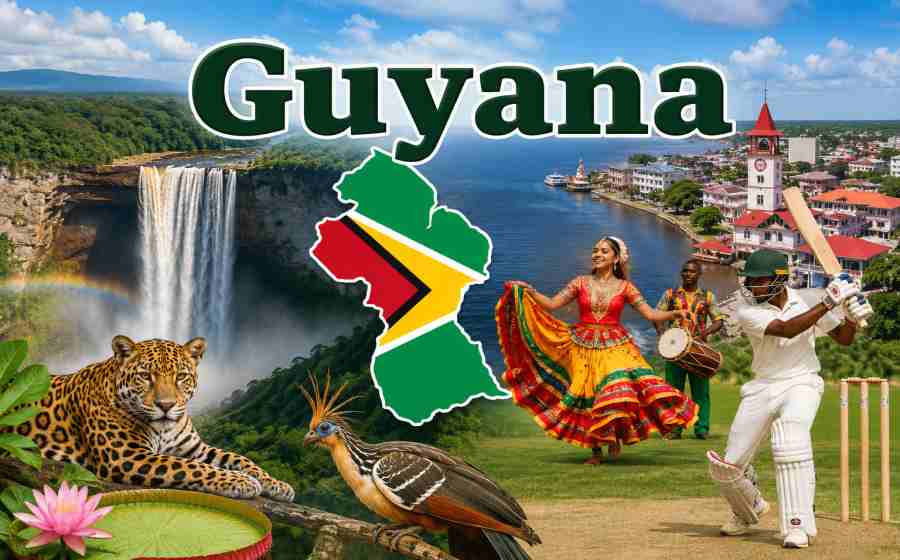
Guyana – History, Culture, Sports, Geography, Tourist Attractions and Fascinating Facts
Discover Guyana’s history, culture, geography, sports, wildlife, economy and fascinating facts. Learn why Guyana is one of South America’s most unique nations.
Guyana
Guyana is a beautiful country located on the northern coast of South America. Although it is geographically part of South America, Guyana has strong cultural ties with the Caribbean. It is the only English-speaking country on the South American mainland, making it unique among its neighbors.
Known for its vast rainforests, rich biodiversity, stunning waterfalls, and multicultural society, Guyana is often called the “Land of Many Waters.” Nearly 80% of the country is covered by forests, making it one of the greenest nations in the world. The country is also gaining global attention due to its rapidly growing oil industry.
Table of Contents
Location and Geography
Guyana is situated on the northeastern coast of South America. It shares borders with Venezuela to the west, Brazil to the south, and Suriname to the east. The Atlantic Ocean lies along its northern coastline.
- Capital: Georgetown
- Largest City: Georgetown
- Continent: South America
- Area: Approximately 214,969 square kilometers
- Official Language: English
- Currency: Guyanese Dollar (GYD)
The country consists of coastal plains, dense tropical forests, rivers, mountains, and savannas. Its tropical climate brings warm temperatures throughout the year with rainy and dry seasons.
A Brief History of Guyana
Before European exploration, Guyana was inhabited by Indigenous peoples, including the Arawak, Carib, Wapishana, and Macushi communities.
The Dutch established colonies in the 17th century, mainly for sugar plantations. Later, the British took control, and the territory became known as British Guiana.
African slaves were brought to work on plantations. After slavery was abolished in the 19th century, workers from India, China, and Portugal arrived as indentured laborers. These migrations shaped Guyana’s multicultural identity.
Guyana gained independence from Britain on May 26, 1966, and became a republic in 1970. Since then, the country has developed democratic institutions while focusing on economic growth and environmental conservation.
People and Culture
Guyana is one of the most culturally diverse countries in South America.
The major ethnic groups include:
- Indo-Guyanese
- Afro-Guyanese
- Indigenous peoples
- Mixed heritage communities
- Small Chinese and Portuguese communities
Because of this diversity, Guyana celebrates many cultural traditions and festivals throughout the year.
Popular celebrations include:
- Diwali
- Phagwah (Holi)
- Christmas
- Eid
- Mashramani (Republic Day celebration)
Music, dance, storytelling, and traditional foods play an important role in everyday life.
Languages Spoken
English is the official language and is used in education, government, and business.
However, many people also speak:
- Guyanese Creole
- Hindi phrases within Indo-Guyanese communities
- Indigenous languages
- Portuguese in some border regions
This linguistic diversity reflects the country’s multicultural population.
Traditional Food
Guyanese cuisine combines influences from Indian, African, Indigenous, Chinese, and European traditions.
Popular dishes include:
- Pepperpot (national dish)
- Cook-up rice
- Roti and curry
- Fried rice
- Cassava bread
- Metemgee
- Chow mein
Fresh seafood, tropical fruits, cassava, coconut, and spices are commonly used in local cooking.
Economy
Guyana’s economy has transformed significantly in recent years.
Major sectors include:
- Oil and natural gas
- Agriculture
- Gold mining
- Bauxite mining
- Timber
- Fishing
- Tourism
The discovery of large offshore oil reserves has made Guyana one of the world’s fastest-growing economies in recent years. Despite this growth, the country continues to invest in education, healthcare, infrastructure, and environmental protection.
Natural Resources
Guyana possesses abundant natural wealth, including:
- Gold
- Diamonds
- Bauxite
- Timber
- Freshwater
- Petroleum
- Rich fisheries
Its forests also play an important role in reducing global carbon emissions.
Wildlife and Nature
Guyana is considered one of the world’s biodiversity hotspots.
Wildlife includes:
- Jaguars
- Giant river otters
- Harpy eagles
- Giant anteaters
- Black caimans
- Capybaras
- Hundreds of bird species
The country protects much of its rainforest through national parks and conservation programs.
One of its greatest natural attractions is Kaieteur Falls, which is among the world’s tallest single-drop waterfalls.
Sports in Guyana
Cricket is by far the most popular sport in Guyana. Many famous cricketers from Guyana have represented the West Indies in international competitions.
Other popular sports include:
- Football
- Athletics
- Boxing
- Basketball
- Volleyball
- Rugby
Children often play cricket in schools, parks, and neighborhoods, making it an important part of everyday life.
Education
Education is free in public schools, and literacy rates are relatively high.
Major educational institutions offer programs in:
- Medicine
- Engineering
- Agriculture
- Business
- Science
- Education
The government continues investing in education to support national development.
Tourist Attractions
Guyana offers many natural attractions for travelers who enjoy wildlife and adventure.
Some famous places include:
- Kaieteur Falls
- Iwokrama Rainforest
- Shell Beach
- Georgetown
- Kanuku Mountains
- Rupununi Savannah
Eco-tourism is growing as visitors seek untouched rainforests and unique wildlife experiences.
National Symbols
- National Bird: Hoatzin (Canje Pheasant)
- National Flower: Victoria Amazonica Water Lily
- National Animal: Jaguar
- National Motto: “One People, One Nation, One Destiny”
These symbols represent Guyana’s unity and remarkable natural heritage.
Government and Climate
Guyana is a democratic republic.
The President serves as both Head of State and Head of Government. Elections are held regularly, and the country follows a constitutional system with executive, legislative, and judicial branches.
Guyana experiences a tropical climate.
Average temperatures remain between 24°C and 31°C throughout the year. The country has two rainy seasons and two relatively dry seasons.
Its warm climate supports lush forests, agriculture, and diverse ecosystems.
Interesting Facts About Guyana
- Guyana is the only English-speaking country in South America.
- Nearly 80% of the country is covered by forests.
- Kaieteur Falls is about five times taller than Niagara Falls.
- Guyana has one of the richest biodiversities in the world.
- Cricket is the nation’s favorite sport.
- The country has significant offshore oil reserves discovered in the 21st century.
- More than 800 bird species have been recorded in Guyana.
- The Demerara River is one of the country’s major waterways.
- Guyana’s culture blends African, Indian, Indigenous, European, Chinese, and Portuguese traditions.
- Eco-tourism continues to grow because of its untouched natural landscapes.
Why Guyana Matters
Guyana stands out as one of the world’s most environmentally significant countries. Its vast rainforests help combat climate change, while its multicultural society demonstrates peaceful cultural coexistence. The nation’s growing economy, driven by natural resources and sustainable development efforts, has positioned it as an emerging player on the global stage.
Summary
Guyana is a fascinating nation where natural beauty, cultural diversity, and economic transformation come together. From the breathtaking Kaieteur Falls and rich Amazonian rainforests to vibrant festivals and a deep passion for cricket, the country offers something unique for everyone. As Guyana continues to grow through responsible development and environmental conservation, it remains an important example of how tradition and progress can exist side by side. Whether you are studying world geography, history, or global cultures, Guyana is a country well worth exploring.
Also Check: General Knowledge