Traditional Music and Folk Songs of Bihar – Echoes of Tradition
Discover the rich heritage of Traditional Music and Folk Songs of Bihar, their styles, cultural importance, festivals and role in preserving tradition.
Traditional Music and Folk Songs of Bihar
Bihar is one of India’s oldest cultural regions, known for its rich traditions, ancient history, and vibrant folk heritage. Among its greatest cultural treasures are the traditional music and folk songs of Bihar, which have been passed down through generations. These songs are not merely a source of entertainment; they reflect the emotions, customs, beliefs, and daily life of the people. From celebrations and festivals to weddings and farming activities, music has always been an inseparable part of Bihari culture.
The folk music of Bihar is deeply connected to the state’s rural traditions and is performed in different dialects such as Bhojpuri, Maithili, Magahi, Angika, and Bajjika. Every region has its own unique style of singing, making Bihar’s musical heritage incredibly diverse.
Table of Contents
Importance of Traditional Music in Bihar
Traditional music plays an important role in preserving Bihar’s cultural identity. Folk songs express joy, sorrow, devotion, love, and social values while strengthening community bonds. These songs have historically been transmitted orally, ensuring that local traditions survive despite changing times.
Music accompanies almost every important occasion in Bihar, including:
- Weddings
- Birth ceremonies
- Harvest festivals
- Religious celebrations
- Seasonal changes
- Social gatherings
Even today, many villages continue to preserve these musical traditions with great pride.
Major Folk Songs of Bihar
1. Sohar
Sohar songs are sung to celebrate the birth of a child. These joyful songs express happiness and offer blessings for the newborn and the family. Women usually perform Sohar songs during naming ceremonies and other celebrations following childbirth.
2. Vivah Geet (Wedding Songs)
Wedding songs are among the most popular folk traditions in Bihar. They are sung during different stages of marriage ceremonies such as Haldi, Mehendi, Baraat welcome, and Bidaai.
These songs often include:
- Blessings for the bride and groom
- Humorous conversations
- Emotional farewell songs
- Traditional customs
Women from the family usually sing these songs without the need for professional musicians.
3. Chaita
Chaita is a famous seasonal folk song sung during the Hindu month of Chaitra (March–April). It reflects themes of love, nature, changing seasons, and devotion.
The high-pitched singing style and emotional lyrics make Chaita one of Bihar’s most recognizable musical traditions.
4. Kajri
Kajri songs are associated with the monsoon season. As dark clouds gather and rain begins to fall, singers express feelings of love, longing, and separation.
Kajri is especially popular in the Bhojpur region and neighboring areas.
5. Jhumar
Jhumar is performed during festivals and celebrations. It combines rhythmic singing with graceful dance movements, creating an energetic atmosphere during village fairs and cultural events.
6. Purbi
Purbi songs originated in eastern Bihar and often focus on emotional themes such as migration, family relationships, and separation from loved ones.
Because many people from Bihar historically migrated for work, Purbi songs beautifully express the pain of distance and hope for reunion.
7. Nirgun
Nirgun songs are devotional compositions inspired by saints like Kabir. They emphasize spirituality, simplicity, and the search for the divine beyond rituals and material possessions.
These songs carry deep philosophical meanings and remain popular among folk singers.
8. Fagua (Phagua)
Fagua songs are sung during the festival of Holi. Filled with joy and vibrant rhythms, these songs celebrate friendship, colors, and the arrival of spring.
Villagers often sing Fagua in groups while playing traditional musical instruments.
Traditional Musical Instruments of Bihar
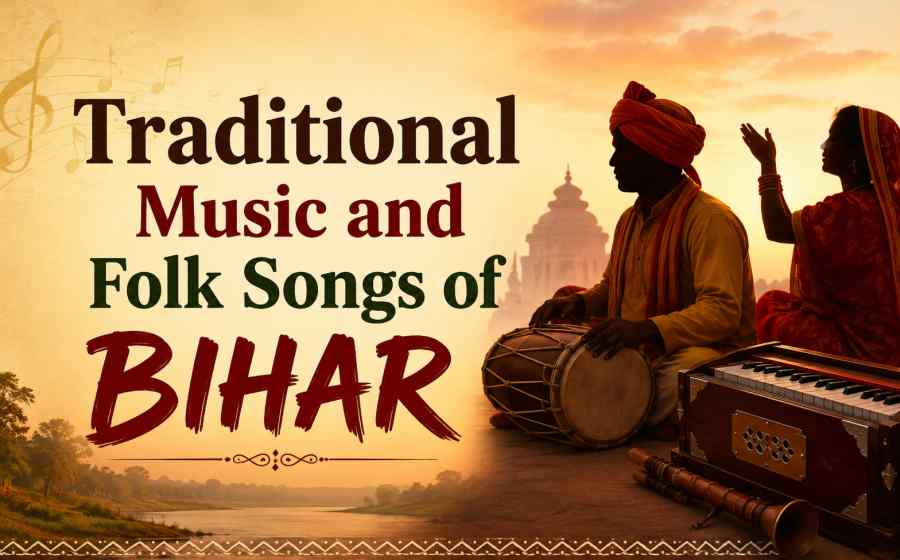
Folk music becomes more lively with the use of traditional instruments. Some commonly used instruments include:
- Dholak
- Tabla
- Harmonium
- Manjira
- Jhal
- Bansuri (Flute)
- Shehnai
- Nagara
These instruments provide rhythm and melody while maintaining the authentic flavor of Bihar’s folk performances.
Regional Diversity in Folk Music
Bihar’s linguistic diversity has given rise to various musical traditions.
Bhojpuri Folk Music
Bhojpuri songs are famous across India and abroad. They include wedding songs, devotional music, harvest songs, and seasonal melodies.
Maithili Folk Songs
Maithili music is known for its poetic beauty and classical influence. Many songs celebrate festivals, mythology, and family traditions.
Magahi Folk Music
Magahi folk songs portray village life, agriculture, love, and social customs with simple yet meaningful lyrics.
Angika Folk Music
The Angika-speaking region has its own unique collection of devotional and seasonal songs that reflect local traditions.
Bajjika Folk Music
Bajjika songs are commonly performed during family ceremonies and local festivals, preserving the culture of north Bihar.
Music During Festivals
Festivals provide an ideal occasion for folk performances. Some important festivals featuring traditional music include:
- Chhath Puja
- Holi
- Diwali
- Durga Puja
- Sama-Chakeva
- Jitiya
- Makar Sankranti
Each festival has its own set of songs that are sung according to customs and rituals.
Cultural Significance
Traditional music serves several important purposes:
- Preserves historical traditions
- Strengthens family relationships
- Promotes social harmony
- Passes cultural knowledge to younger generations
- Reflects the values of rural society
- Celebrates nature and changing seasons
Unlike modern entertainment, folk songs are closely connected to everyday life and community participation.
Influence on Modern Music
Bihar’s folk music has greatly influenced modern Bhojpuri cinema and regional music industries. Many contemporary singers blend traditional melodies with modern instruments, helping younger audiences appreciate their cultural roots.
Several folk artists continue to perform nationally and internationally, bringing Bihar’s musical heritage to wider audiences.
Preservation of Folk Music
With rapid urbanization and changing lifestyles, some traditional songs are gradually disappearing. However, efforts are being made to preserve this valuable heritage through:
- Cultural festivals
- Government-sponsored folk programs
- Music academies
- School cultural activities
- Digital recordings
- Social media platforms
- Documentary films
Young musicians are also learning traditional styles to ensure these musical traditions continue for future generations.
Summary
The Traditional Music and Folk Songs of Bihar are a priceless part of India’s cultural heritage. Whether it is the joyful Sohar, emotional Purbi, devotional Nirgun, colorful Fagua, or seasonal Chaita and Kajri, every folk song tells a story of Bihar’s people, traditions, and way of life. These timeless melodies preserve history, strengthen communities, and celebrate the rich cultural identity of the state. Protecting and promoting Bihar’s folk music is essential so that future generations can continue to experience its beauty and significance.
Also Check: Bihar GK