
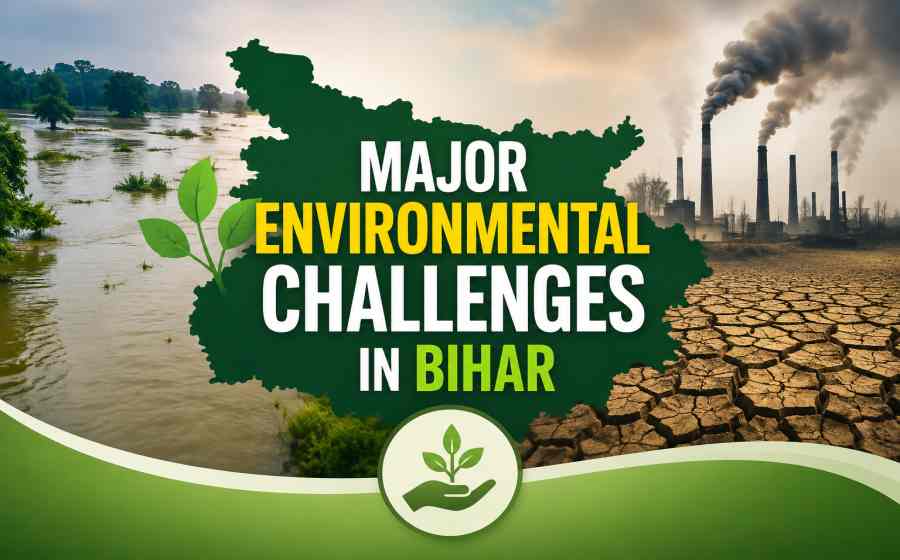
Major Environmental Challenges in Bihar – Causes, Impacts and Solutions
Explore the major environmental challenges in Bihar, including floods, pollution, deforestation, water issues, soil degradation and climate change.
Major Environmental Challenges in Bihar
Bihar is a state known for its fertile plains, major rivers, agricultural economy, forests and rich biodiversity. Rivers such as the Ganga, Gandak, Kosi, Son and Bagmati play an important role in the state’s geography and economy. However, rapid population growth, urban expansion, agricultural pressure, industrial activities and climate-related changes have created several environmental challenges.
Environmental problems in Bihar affect agriculture, water resources, public infrastructure, wildlife and the daily lives of millions of people. Some challenges are natural in origin, while others have become more serious because of human activities. Understanding these issues is important for protecting Bihar’s natural resources and supporting sustainable development.
Table of Contents
List of Environmental Challenges
1. Floods and Riverbank Erosion
Flooding is one of the most serious environmental challenges in Bihar. The state has a large network of rivers, many of which originate in the Himalayas and carry heavy water and sediment during the monsoon.
The Kosi, Gandak, Bagmati, Kamla and other rivers can cause extensive flooding in vulnerable areas. Floods can damage homes, roads, bridges, crops and other infrastructure. Riverbank erosion is another major concern because flowing water gradually removes fertile land along riverbanks.
Although floods are a natural part of the river system, changes in rainfall patterns, sediment deposition, drainage problems and human activities can increase their effects. Better flood forecasting, embankment management, drainage improvement and river-basin planning are important for reducing risks.
2. Air Pollution
Air pollution is becoming an important environmental concern in Bihar, particularly in densely populated urban areas. Cities such as Patna and other growing towns experience pollution from vehicles, road dust, construction activities, industries, waste burning and other sources.
During winter, weather conditions can sometimes trap pollutants close to the ground, reducing air quality. Agricultural residue burning in some areas can also contribute to seasonal pollution.
Poor air quality can affect human health and reduce overall environmental quality. Promoting cleaner transportation, controlling construction dust, improving public transport and encouraging cleaner fuels can help address this challenge.
3. Water Pollution
Bihar has abundant river and groundwater resources, but water pollution threatens their quality. Domestic sewage, untreated wastewater, solid waste, agricultural runoff and some industrial activities can introduce pollutants into water bodies.
The Ganga and other rivers are particularly important because they support agriculture, fisheries, transportation, religious activities and local livelihoods. Maintaining clean rivers requires effective sewage treatment, proper waste disposal and strict monitoring of pollution sources.
Protecting ponds, wetlands and groundwater recharge areas is equally important because these resources support both rural and urban communities.
4. Deforestation and Loss of Forest Cover
Compared with some other Indian states, Bihar has relatively limited forest cover. Population pressure, agricultural expansion, infrastructure development, fuelwood collection and other activities can put pressure on forests and natural vegetation.
Forests provide several environmental benefits. They help conserve soil, support biodiversity, regulate local climatic conditions and contribute to groundwater conservation. The forests of the Valmiki landscape are especially significant for wildlife conservation.
Afforestation, social forestry, protection of existing forests and community participation can help improve Bihar’s green cover.
5. Soil Degradation
Agriculture is a major part of Bihar’s economy, making healthy soil essential for food production. However, soil degradation can occur because of erosion, excessive cultivation, loss of organic matter, improper irrigation and the repeated use of certain agricultural inputs.
Floods can remove topsoil from some areas, while the deposition of river sediments can change soil characteristics in others. Inadequate soil management may eventually affect agricultural productivity.
Practices such as crop rotation, organic matter management, balanced fertilizer use, agroforestry and soil conservation can help maintain soil health.
6. Solid Waste Management
Rapid urbanization has increased the amount of municipal solid waste generated in Bihar’s towns and cities. Poor segregation, inadequate collection, open dumping and improper disposal can create environmental problems.
Plastic waste is particularly troublesome because it can remain in the environment for long periods and may block drains, contributing to waterlogging during heavy rainfall. Open burning of waste can also release harmful pollutants.
Improved door-to-door collection, waste segregation, recycling, composting and scientific disposal systems are essential for better waste management.
7. Groundwater Stress
Groundwater is an important source of drinking water and irrigation in Bihar. Excessive dependence on groundwater in areas with intensive agriculture and growing urban demand can place pressure on underground water resources.
Water quality is also a concern in some parts of the state. Naturally occurring contaminants and local pollution sources can affect groundwater quality. Regular testing, rainwater harvesting, efficient irrigation and groundwater recharge can support better water management.
8. Climate Change
Climate change is creating additional environmental pressure on Bihar. Changes in temperature, rainfall patterns and the frequency or intensity of extreme weather events can affect agriculture, water availability and human settlements.
Bihar’s dependence on agriculture makes it particularly sensitive to changes in weather conditions. Excessive heat can affect crops and livestock, while irregular rainfall can create both drought-like conditions and flooding risks.
Climate-resilient agriculture, water conservation, disaster preparedness, renewable energy and stronger early-warning systems can help communities adapt to changing conditions.
9. Biodiversity Loss
Bihar supports a variety of ecosystems, including forests, wetlands, rivers, grasslands and agricultural landscapes. These habitats provide shelter and food for numerous species.
However, habitat loss, pollution, illegal activities, changes in land use and human-wildlife conflict can threaten biodiversity. Wetlands such as Kanwar Lake are especially valuable because they provide habitat for birds and other wildlife while also supporting ecological functions.
Protecting important habitats, restoring degraded ecosystems and strengthening conservation awareness are necessary to preserve Bihar’s biodiversity.
10. Urbanization and Pressure on Natural Resources
Bihar’s cities are expanding as population and economic activities grow. Unplanned urban development can place pressure on land, water, drainage systems and green spaces.
The conversion of natural or agricultural land for buildings and infrastructure can reduce open spaces and increase surface runoff. Poor drainage can worsen urban waterlogging during heavy rainfall.
Sustainable urban planning, better drainage, green spaces, efficient public transportation and environmentally responsible construction can make cities more resilient.
Measures to Address Environmental Challenges in Bihar
Bihar’s environmental problems require coordinated efforts from government institutions, local communities, businesses, farmers and citizens. Some important measures include:
- Increasing tree plantation and protecting existing forests.
- Improving sewage treatment and preventing untreated wastewater from entering rivers.
- Strengthening solid waste collection, segregation and recycling.
- Promoting rainwater harvesting and groundwater recharge.
- Encouraging sustainable and climate-resilient agricultural practices.
- Improving flood forecasting and disaster preparedness.
- Reducing vehicle emissions and promoting cleaner public transportation.
- Protecting wetlands, forests and wildlife habitats.
- Creating greater public awareness about environmental conservation.
- Encouraging renewable energy and energy-efficient technologies.
Summary
The major environmental challenges in Bihar are closely connected with the state’s rivers, agriculture, population growth, urbanization and changing climate. Floods, erosion, air and water pollution, deforestation, soil degradation, waste management problems, groundwater stress and biodiversity loss can affect both the environment and human development.
Bihar has significant natural resources, but protecting them requires long-term planning and responsible use. Sustainable agriculture, cleaner cities, healthy rivers, protected forests and stronger environmental awareness can help the state move toward a safer and more sustainable future. Environmental conservation is not only the responsibility of government agencies; active participation by communities and individuals is equally important.
Also Check: Bihar GK