Bahrain – History, Culture, Sports, Tourist Places, Geography and Key Facts
Discover Bahrain’s history, culture, sports, geography, economy and key facts, from ancient Dilmun civilization to modern Manama and Formula 1
Bahrain
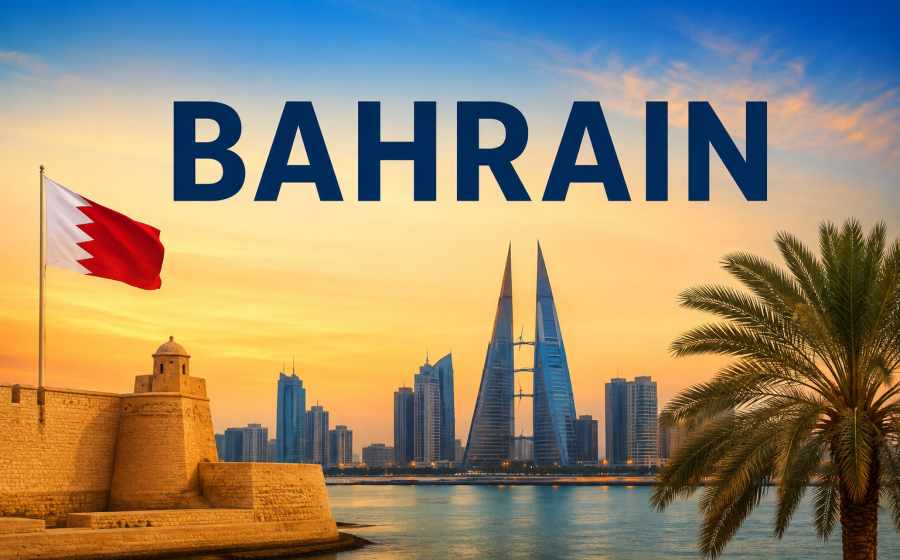
Bahrain, officially known as the Kingdom of Bahrain, is a small island country in the Arabian Gulf. Despite its compact size, Bahrain has a remarkable history, rich cultural traditions, a modern economy and an important position in the Gulf region. Its capital and largest urban center is Manama, a city known for modern skyscrapers, traditional markets, financial institutions and cultural attractions.
Bahrain is an archipelago situated off the eastern coast of Saudi Arabia. The country has historically been connected with trade, pearl diving and maritime activity. Today, it is recognized for its financial services, tourism, petroleum industry, international events and particularly the Bahrain Grand Prix. Formula 1 has held its first Middle Eastern World Championship race in Bahrain since 2004.
Table of Contents
Ancient History of Bahrain
Bahrain has one of the oldest histories in the Gulf region. Thousands of years ago, the islands were associated with the ancient Dilmun civilization, an important trading society that connected Mesopotamia with the Indus Valley. Historical sources describe Dilmun as an important commercial center, particularly because of Bahrain’s strategic location and access to maritime trade routes.
The islands were later influenced or controlled by several regional powers. Bahrain became associated with the Babylonian world and subsequently experienced periods of Arab and Persian influence. In the ancient Greek period, the islands were known as Tylos.
Islam reached Bahrain in the 7th century, becoming an important part of the country’s history and identity. Over the following centuries, Bahrain was ruled by different regional powers, including Arab dynasties, Persian authorities and Portuguese forces. The islands also became famous as a center of trade and pearling.
Al Khalifa Rule and Independence
The Al Khalifa family has ruled Bahrain since 1783, when its forces captured the islands from a Persian garrison. During the 19th and 20th centuries, Bahrain developed close political relations with Britain and eventually became part of the British system of protection in the Gulf.
A major turning point came in 1971, when Bahrain became fully independent from the United Kingdom on August 15. The country later adopted the name Kingdom of Bahrain in 2002 following constitutional changes.
Geography of Bahrain
Bahrain is an island nation located in the Arabian Gulf, close to the eastern coast of Saudi Arabia. Its landscape is predominantly low-lying and arid, with desert terrain covering much of the country. The climate is characterized by very hot summers and comparatively mild winters.
The country’s location has always been one of its greatest advantages. Bahrain sits near important Gulf shipping and commercial routes, helping it develop as a center for trade and business. Causeways and modern infrastructure connect major populated areas and facilitate movement across the islands.
The Tree of Life, an old mesquite tree standing in Bahrain’s desert, is one of the country’s best-known natural attractions. It has become a symbol of survival in an extremely dry environment and attracts visitors from around the world.
Culture and Traditions
Bahraini culture combines traditional Arab customs with influences developed through centuries of trade and interaction with other societies. Arabic is the official language, while English is also widely used in business, education and everyday communication.
Traditional Bahraini culture is strongly connected to the sea. For generations, pearl diving and fishing were important parts of life and the economy. Before the development of the modern petroleum industry, pearl diving was one of Bahrain’s most important economic activities.
Traditional markets, known as souqs, remain important cultural spaces. Visitors can find spices, textiles, perfumes, handicrafts, jewelry and other traditional products. Music, poetry, dance and family celebrations also form important parts of Bahraini cultural life.
Islam is the country’s official religion, and Islamic traditions influence many aspects of social and cultural life. At the same time, Bahrain has historically had communities from different religious and cultural backgrounds, reflecting its role as a trading center.
Economy of Bahrain
Bahrain was one of the earliest Gulf states to develop a modern petroleum industry, but its economy has gradually become more diversified. Petroleum and natural gas remain important, while banking, financial services, manufacturing, tourism, trade and logistics also contribute significantly to economic activity.
The country has worked to establish itself as a regional financial center. Its relatively small size and strategic location have encouraged the development of international business and commercial services.
Aluminium production is another notable part of Bahrain’s industrial sector. The country’s economic development demonstrates how a small Gulf nation has attempted to expand beyond dependence on traditional pearl diving and oil-related activities.
Sports in Bahrain
Sports have become an important part of Bahrain’s international image. The country is especially famous for Formula 1.
The Bahrain International Circuit in Sakhir hosted its first Formula 1 Grand Prix in 2004, becoming the first Middle Eastern venue to host a Formula 1 World Championship race. The circuit is approximately 5.4 kilometers long and has become a regular destination on the international motorsport calendar.
The Bahrain Grand Prix has helped promote the country as a sports and tourism destination. The race is particularly distinctive because events have frequently been held under floodlights, creating a spectacular setting in the desert surroundings.
Besides motorsport, Bahrain participates in football, athletics, swimming, martial arts, basketball and other international sports. Bahraini athletes have represented the country at the Olympic Games and other major competitions. The nation has also invested in sports infrastructure and international sporting events.
Tourism in Bahrain
Bahrain offers a mixture of modern attractions and historical sites. Manama is a major destination for visitors, with shopping centers, restaurants, museums, markets and contemporary architecture.
Historical attractions include Bahrain Fort, archaeological sites connected with the Dilmun civilization and traditional neighborhoods in Muharraq. Bahrain’s pearling heritage is also an important part of its tourism identity.
Visitors can explore traditional souqs, enjoy Gulf cuisine, discover museums and cultural centers, or travel into the desert to see landmarks such as the Tree of Life. The combination of history, modern development and island scenery makes Bahrain an interesting destination in the Gulf.
Important Facts About Bahrain
- Official Name: Kingdom of Bahrain
- Capital: Manama
- Location: Arabian Gulf
- Official Language: Arabic
- Currency: Bahraini Dinar
- Independence: August 15, 1971
- Ruling Family: Al Khalifa
- Famous Ancient Civilization: Dilmun
- Major Historical Occupation: Pearling and maritime trade
- Major Economic Sectors: Petroleum, finance, manufacturing, tourism and services
- Famous Sporting Event: Bahrain Grand Prix
- Formula 1 Debut: 2004
- Major Natural Landmark: Tree of Life
- Major Historical Attraction: Bahrain Fort
Why Bahrain is Important
Bahrain’s importance comes from much more than its size. Its location has made it a crossroads for trade and cultural exchange for thousands of years. From the ancient Dilmun civilization and the historic pearl industry to its modern financial sector and Formula 1 events, Bahrain has continually adapted to changing times.
Its history reflects the wider development of the Arabian Gulf, while its cultural traditions preserve the country’s maritime heritage. Today, Bahrain combines ancient archaeological treasures with modern cities, business centers and international sporting events. This unique mixture makes the Kingdom of Bahrain an important and fascinating country to study in world geography and general knowledge.
Summary
Bahrain is a small but historically significant island nation with a rich cultural identity and a strategic position in the Arabian Gulf. Its journey from the ancient trading world of Dilmun and the famous pearling era to an independent modern kingdom illustrates the remarkable transformation of the Gulf region. With its historic sites, vibrant culture, diversified economy and internationally recognized Formula 1 race, Bahrain continues to hold a distinctive place in global geography, history and sports.
Also Check: General Knowledge