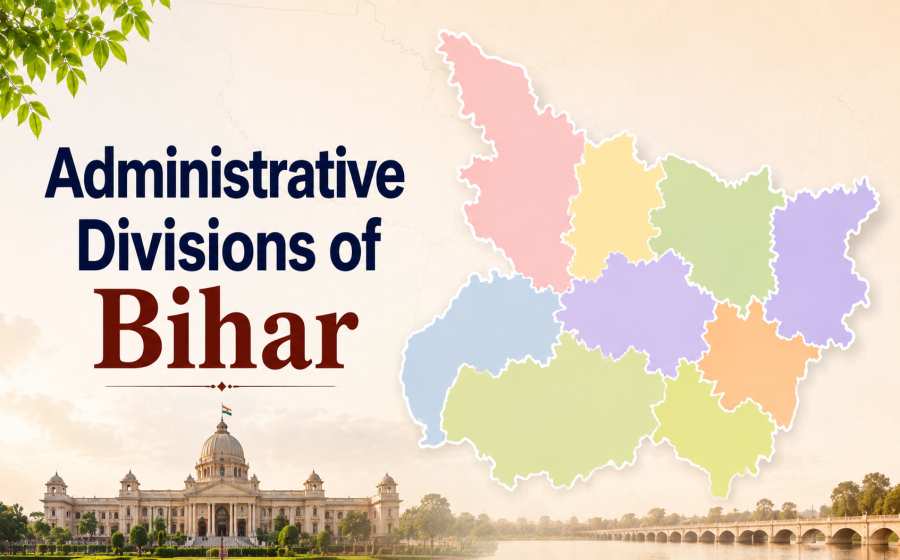
Administrative Divisions of Bihar – Understanding the State’s Administrative Structure
Explore the Administrative Divisions of Bihar, including divisions, districts, subdivisions, blocks and local governance systems across the state.
Administrative Divisions of Bihar
Bihar is one of India’s most historically significant states, known for its rich cultural heritage, ancient universities, and important role in Indian history. To ensure effective governance and administration, Bihar is divided into several administrative units. These divisions help the government manage public services, maintain law and order, implement development programs, and ensure smooth functioning across the state.
Understanding Bihar’s administrative structure is important for students, competitive exam aspirants, and anyone interested in the governance of the state. This article provides a comprehensive overview of Bihar’s administrative divisions, districts, subdivisions, blocks, and local governance system.
Table of Contents
What are Administrative Divisions?
Administrative divisions are geographical areas created by the government to facilitate efficient administration. Since managing an entire state from a single location is difficult, the state is divided into smaller units. Each unit has designated officials responsible for administration, development, and public welfare.
In Bihar, the administrative structure follows a hierarchical system, beginning with the state government and extending down to villages and urban local bodies.
Administrative Structure of Bihar
The administrative hierarchy of Bihar can be broadly divided into the following levels:
- State
- Divisions
- Districts
- Subdivisions
- Blocks
- Panchayats and Villages
- Urban Local Bodies
Each level has specific responsibilities and administrative officials.
Divisions of Bihar
Bihar is divided into 9 administrative divisions. A division serves as an intermediary administrative unit between the state government and districts. Each division is headed by a Divisional Commissioner, who supervises district administrations within the division.
The nine divisions of Bihar are:
- Patna Division
- Tirhut Division
- Saran Division
- Darbhanga Division
- Kosi Division
- Purnia Division
- Bhagalpur Division
- Munger Division
- Magadh Division
These divisions help coordinate administrative activities and ensure efficient implementation of government policies.
Districts of Bihar
The divisions are further divided into districts. Bihar currently has 38 districts, making district administration one of the most important units of governance.
Each district is headed by a District Magistrate (DM) or Collector. The District Magistrate plays a crucial role in maintaining law and order, conducting elections, implementing government schemes, and managing disaster response activities.
Some major districts of Bihar include:
- Patna
- Gaya
- Muzaffarpur
- Bhagalpur
- Darbhanga
- Nalanda
- Purnia
- Begusarai
- Samastipur
- West Champaran
District administrations act as the direct link between the state government and local communities.
Subdivisions in Bihar
To improve administrative efficiency, districts are further divided into subdivisions. Each subdivision is managed by a Sub-Divisional Officer (SDO) or Sub-Divisional Magistrate (SDM).
The responsibilities of subdivision offices include:
- Revenue administration
- Law and order maintenance
- Monitoring government projects
- Issuing administrative certificates
- Conducting local elections
Subdivisions help reduce administrative burdens on district headquarters and ensure quicker delivery of public services.
Community Development Blocks
Below the subdivision level are Community Development Blocks, commonly known as Blocks. Blocks are important units for rural development and implementation of welfare programs. Each block is headed by a Block Development Officer (BDO).
The primary functions of blocks include:
- Rural infrastructure development
- Agricultural support programs
- Education and health initiatives
- Employment schemes
- Monitoring government welfare projects
Blocks serve as a vital connection between district authorities and village-level governance.
Panchayati Raj System in Bihar
The Panchayati Raj System is the foundation of rural local governance in Bihar. It promotes decentralization and allows local communities to participate directly in decision-making.
The rural governance structure consists of:
Gram Panchayat
A Gram Panchayat governs one or more villages and is headed by an elected Mukhiya.
Panchayat Samiti
At the block level, Panchayat Samitis coordinate development activities among various Gram Panchayats.
Zila Parishad
At the district level, the Zila Parishad oversees development plans and coordinates rural governance activities.
This three-tier system strengthens grassroots democracy and encourages local participation in governance.
Urban Administration in Bihar
Urban areas in Bihar are administered through various local bodies depending on population size and urban development.
Municipal Corporations
Large cities such as Patna, Gaya, Muzaffarpur, and Bhagalpur are governed by Municipal Corporations.
Municipal Councils
Medium-sized towns are managed by Municipal Councils.
Nagar Panchayats
Smaller urbanizing areas are administered by Nagar Panchayats.
These urban bodies are responsible for:
- Water supply
- Waste management
- Road maintenance
- Street lighting
- Public health services
- Urban planning
Urban local governments play a critical role in improving living standards and infrastructure.
Importance of Administrative Divisions
Administrative divisions provide several benefits to governance and public administration:
Efficient Governance
Smaller administrative units make governance more organized and manageable.
Better Public Service Delivery
Citizens can access government services more quickly through local administrative offices.
Improved Development Planning
Districts and blocks can identify local needs and implement suitable development programs.
Enhanced Law and Order
Administrative officials at different levels help maintain peace and security effectively.
Disaster Management
Bihar frequently faces floods and other natural disasters. Administrative divisions enable quicker response and relief operations.
Summary
The administrative divisions of Bihar form the backbone of governance and development across the state. From divisions and districts to blocks and village panchayats, each administrative unit contributes to effective governance, public welfare, and regional development. Understanding this structure not only enhances general knowledge but also helps students and competitive exam aspirants gain a deeper understanding of how Bihar is governed. As Bihar continues to grow and modernize, its administrative framework remains essential for ensuring efficient service delivery and balanced development throughout the state.
Also Check: Bihar GK