
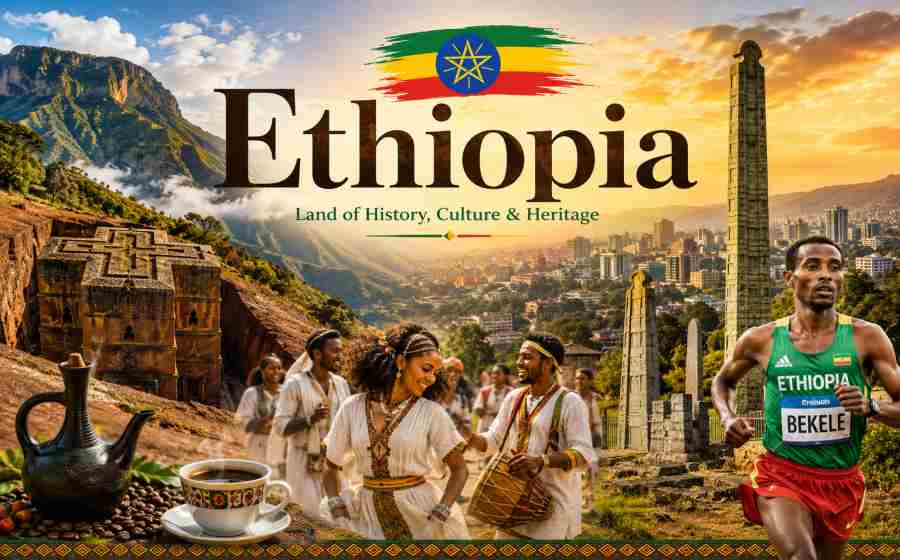
Ethiopia – History, Culture, Traditions, Sports and Fascinating Facts
Discover Ethiopia’s ancient history, rich culture, famous athletes, unique traditions, stunning landscapes and fascinating facts about this African nation.
Ethiopia
Ethiopia is one of the most remarkable countries in Africa, known for its ancient civilization, rich cultural heritage, breathtaking landscapes, and unique traditions. Located in the Horn of Africa, Ethiopia has played an important role in African history and is often regarded as one of the oldest continuously inhabited regions in the world. Unlike many African nations, Ethiopia largely maintained its independence during the colonial era, making it a symbol of resilience and pride.
Today, Ethiopia is recognized for its diverse ethnic communities, historical monuments, world-famous athletes, and rapidly developing economy. This article explores the history, culture, sports, geography, and key facts about Ethiopia.
Table of Contents
History of Ethiopia
Ethiopia has a history that stretches back thousands of years. Archaeological discoveries suggest that some of the earliest human ancestors lived in this region. One of the most famous discoveries is “Lucy,” an ancient hominin fossil estimated to be over 3 million years old.
The ancient Kingdom of Aksum emerged around the 1st century CE and became one of the most powerful civilizations of its time. Aksum was an important center for trade connecting Africa, the Middle East, and Asia. The kingdom adopted Christianity in the 4th century, making Ethiopia one of the earliest Christian nations in the world.
Throughout history, Ethiopia faced invasions and conflicts but successfully preserved its identity and sovereignty. In 1896, Ethiopian forces achieved a historic victory against Italy in the Battle of Adwa. This victory became a symbol of African resistance against colonial rule.
Although Italy briefly occupied Ethiopia from 1936 to 1941, the country regained its independence during World War II. Modern Ethiopia has undergone significant political and economic changes and remains an influential nation in Africa.
Geography and Climate
Ethiopia is located in eastern Africa and shares borders with Eritrea, Djibouti, Somalia, Kenya, South Sudan, and Sudan.
The country is known for its varied landscapes, including:
- Highlands and mountains
- Deep valleys and plateaus
- Deserts and savannas
- Rivers and lakes
The Ethiopian Highlands are often called the “Roof of Africa” because of their high elevation. The Blue Nile River, one of the major tributaries of the Nile, originates from Lake Tana in Ethiopia.
The climate varies depending on altitude. Highland regions enjoy mild temperatures, while lowland areas can be hot and dry.
Culture and Traditions
Ethiopia is famous for its cultural diversity. The country is home to more than 80 ethnic groups, each with its own language, customs, and traditions.
Some of the major ethnic communities include:
- Oromo
- Amhara
- Somali
- Tigray
- Sidama
Traditional music and dance are important parts of Ethiopian culture. Different regions have distinct dance styles featuring energetic shoulder and body movements.
Family values and community bonds remain strong in Ethiopian society. Festivals, weddings, and religious celebrations often bring communities together.
Languages and Religion
Ethiopia is one of the most linguistically diverse countries in Africa. Several languages are spoken across the nation. The official working language of the federal government is Amharic, but many regional languages are also widely used, including Oromo, Tigrinya, and Somali.
Religion plays a significant role in Ethiopian life. Major religions include:
- Christianity
- Islam
- Traditional beliefs
The Ethiopian Orthodox Church is one of the oldest Christian institutions in the world and has had a major influence on the country’s culture and history.
Ethiopian Cuisine
Ethiopian food is known for its unique flavors and communal dining style.
The most famous Ethiopian dish is Injera, a soft, spongy flatbread made from teff grain. It is usually served with various stews known as Wot.
Popular Ethiopian foods include:
- Injera
- Doro Wot (chicken stew)
- Tibs (sautéed meat)
- Shiro (chickpea stew)
- Kitfo (seasoned minced meat)
Coffee holds a special place in Ethiopian culture. Ethiopia is widely believed to be the birthplace of coffee, and traditional coffee ceremonies remain an important social tradition.
Sports in Ethiopia
Sports play a major role in Ethiopian society, with athletics being the country’s greatest strength.
Ethiopia has produced some of the world’s finest long-distance runners. Ethiopian athletes have won numerous Olympic and World Championship medals.
Some legendary Ethiopian athletes include:
- Abebe Bikila
- Haile Gebrselassie
- Kenenisa Bekele
- Tirunesh Dibaba
Football is also popular, and many young Ethiopians actively participate in local and national competitions.
Economy of Ethiopia
Agriculture has traditionally been the backbone of Ethiopia’s economy. Millions of people depend on farming for their livelihoods.
Major agricultural products include:
- Coffee
- Maize
- Wheat
- Barley
- Livestock
In recent decades, Ethiopia has invested in infrastructure, manufacturing, and energy projects. The country has experienced significant economic growth and is becoming an important regional economic center.
Coffee exports remain one of Ethiopia’s most valuable sources of foreign income.
Tourist Attractions
Ethiopia offers many historical and natural attractions that attract visitors from around the world.
Notable destinations include:
- Lalibela
- Aksum
- Simien Mountains National Park
- Lake Tana
- Addis Ababa
These destinations showcase Ethiopia’s rich history, architecture, wildlife, and natural beauty.
Key Facts About Ethiopia
- Country Name: Ethiopia
- Capital City: Addis Ababa
- Continent: Africa
- Population: More than 120 million people
- Official Federal Working Language: Amharic
- Currency: Ethiopian Birr
- Major Religion: Christianity and Islam
- Famous Export: Coffee
- Known For: Ancient history, long-distance runners, coffee culture, and unique heritage
- Independence: One of the few African countries that largely avoided long-term colonial rule
Summary
Ethiopia is a nation of extraordinary historical significance, cultural richness, and natural beauty. From the ancient Kingdom of Aksum and the rock-hewn churches of Lalibela to its world-famous athletes and coffee traditions, Ethiopia offers a unique blend of heritage and modern development. Its resilience, diversity, and contributions to African history make it one of the most fascinating countries in the world. Understanding Ethiopia provides valuable insight into the cultural and historical foundations of Africa and highlights the importance of preserving its remarkable legacy.
Also Check: General Knowledge