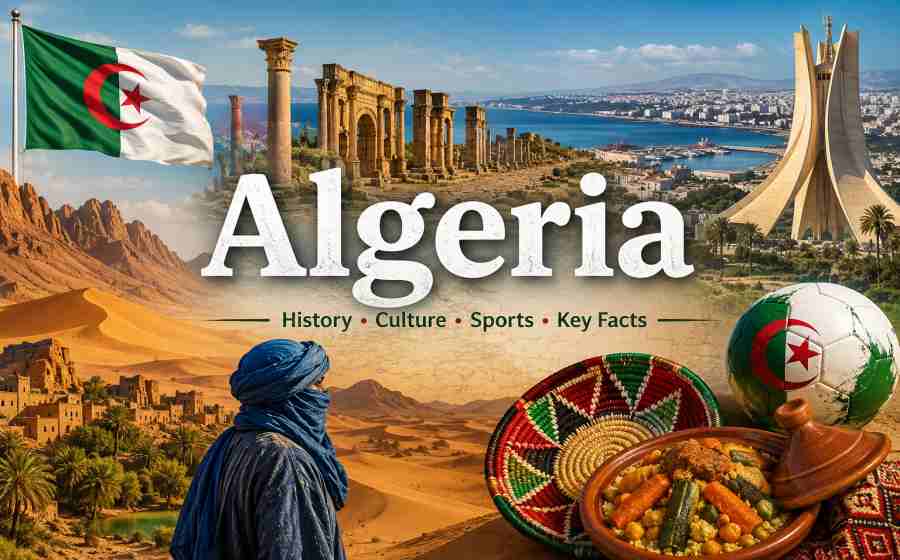
Algeria – History, Culture, Sports and Fascinating Facts About Africa’s Largest Country
Learn about Algeria’s history, culture, sports, geography, economy and important facts. Discover what makes Africa’s largest country unique.
Algeria
Algeria is one of the most important countries in North Africa. Known for its rich history, vast deserts, diverse culture, and significant natural resources, Algeria is the largest country in Africa by land area. It has played a major role in the history of the Mediterranean region and the Arab world. From ancient civilizations and colonial struggles to modern development, Algeria offers a fascinating story that reflects resilience, tradition, and progress. This article explores Algeria’s history, culture, sports, geography, economy, and other key facts that make it a unique nation.
Table of Contents
History of Algeria
The history of Algeria stretches back thousands of years. Ancient Berber communities were among the earliest inhabitants of the region. Over time, several powerful civilizations influenced Algeria, including the Phoenicians, Romans, Vandals, Byzantines, and Arabs. During Roman rule, Algeria became an important part of the empire and saw the development of cities, roads, and trade networks. In the 7th century, Arab conquerors introduced Islam, which became the dominant religion and greatly influenced Algerian culture.
In the 16th century, Algeria came under Ottoman control and remained part of the Ottoman Empire for several centuries. In 1830, France invaded Algeria and established colonial rule. The French occupation lasted for more than 130 years and had a profound impact on Algerian society.
The struggle for independence began in the mid-20th century. The Algerian War of Independence (1954–1962) was one of the most significant anti-colonial movements in history. After years of conflict and sacrifice, Algeria gained independence from France on July 5, 1962.
Geography and Climate
Algeria covers approximately 2.38 million square kilometers, making it the largest country in Africa. It borders Tunisia, Libya, Niger, Mali, Mauritania, Western Sahara, Morocco, and the Mediterranean Sea.
The country can be divided into three main geographical regions:
- The fertile coastal plains along the Mediterranean Sea
- The Atlas Mountains in the north
- The vast Sahara Desert in the south
Nearly 80% of Algeria’s territory is covered by the Sahara Desert. Despite its harsh environment, the desert contains breathtaking landscapes, oases, and unique ecosystems.
The climate varies by region. Coastal areas experience a Mediterranean climate with mild winters and warm summers, while the desert region is extremely hot and dry.
Culture and Traditions
Algerian culture is a blend of Berber, Arab, Islamic, African, and French influences. This diverse heritage is reflected in the country’s language, architecture, music, cuisine, and customs. Arabic is the official language, while Tamazight (Berber) is also recognized as a national and official language. French is widely used in business, education, and media.
Family values play a central role in Algerian society. Respect for elders, hospitality, and community bonds remain important cultural traditions. Traditional clothing includes garments such as the Karakou for women and the Gandoura for men, especially during festivals and celebrations. Religious festivals, weddings, and national holidays are celebrated with enthusiasm and help preserve Algeria’s cultural identity.
Algerian Cuisine
Algerian food is known for its rich flavors and diverse ingredients. The cuisine combines Mediterranean, Arab, Berber, and French influences.
Popular Algerian dishes include:
- Couscous – the national dish
- Chorba – a traditional soup
- Tajine – a slow-cooked stew
- Merguez – spicy sausages
- Makroud – a sweet pastry made with dates
Meals are often shared with family and guests, reflecting the country’s strong tradition of hospitality.
Sports in Algeria
Sports are an important part of Algerian life, with football being the most popular sport in the country.
The Algerian national football team has achieved notable success in international competitions. Algeria has participated in multiple FIFA World Cups and won the Africa Cup of Nations on several occasions.
Apart from football, Algerians actively participate in:
- Athletics
- Handball
- Boxing
- Basketball
- Martial arts
Algerian athletes have also earned medals at the Olympic Games, showcasing the country’s sporting talent on the global stage.
Economy of Algeria
Algeria possesses significant natural resources, particularly oil and natural gas. These resources form the backbone of the national economy and contribute substantially to government revenue and exports.
Key economic sectors include:
- Petroleum and natural gas
- Agriculture
- Manufacturing
- Mining
- Renewable energy
The government has been working to diversify the economy by encouraging investment in tourism, technology, and non-energy industries.
Agricultural products such as wheat, barley, dates, olives, and citrus fruits are also important to the country’s economy.
Education and Development
Education is highly valued in Algeria. The government has invested heavily in expanding access to schools and universities since independence. Primary education is compulsory, and literacy rates have improved significantly over the past decades.
Major universities and research institutions contribute to scientific and technological advancement. Infrastructure development, healthcare improvements, and economic reforms continue to support Algeria’s modernization efforts.
Tourism in Algeria
Although not as widely known as some other tourist destinations, Algeria offers remarkable attractions for travelers.
Popular tourist highlights include:
- Ancient Roman ruins
- Sahara Desert landscapes
- Mountain villages
- Mediterranean beaches
- Historic mosques and palaces
Visitors can explore UNESCO World Heritage Sites, traditional markets, and breathtaking desert scenery that showcase Algeria’s rich cultural and natural heritage.
Key Facts About Algeria
- Capital City: Algiers
- Continent: Africa
- Official Languages: Arabic and Tamazight
- Widely Spoken Language: French
- Currency: Algerian Dinar (DZD)
- Independence Day: July 5, 1962
- Largest City: Algiers
- Religion: Islam (majority)
- Area: Approximately 2.38 million square kilometers
- Nickname: The Land of the Sahara
- Largest Desert Region: Sahara Desert
Summary
Algeria is a nation of remarkable diversity, rich traditions, and historical significance. From ancient Berber roots and Roman heritage to its successful independence movement, the country has a unique place in world history. Its vast deserts, vibrant culture, delicious cuisine, passionate sports community, and abundant natural resources make Algeria one of Africa’s most fascinating countries.
As Algeria continues to develop and strengthen its position on the global stage, it remains a symbol of resilience, cultural richness, and national pride. Whether studied for geography, history, culture, or current affairs, Algeria offers valuable insights into the heritage and future of North Africa.
Also Check: General Knowledge