Kazakhstan – History, Culture, Sports, Geography and Important Facts
Explore Kazakhstan’s history, culture, sports, geography, economy and key facts. Discover what makes Kazakhstan one of Central Asia’s most unique nations.
Kazakhstan
Kazakhstan is the largest landlocked country in the world and one of the most important nations in Central Asia. Known for its vast steppes, rich cultural heritage, modern cities, and diverse ethnic communities, Kazakhstan serves as a bridge between Europe and Asia. With a fascinating history, strong sporting traditions, and abundant natural resources, the country has emerged as a significant regional power since gaining independence.
Table of Contents
Introduction to Kazakhstan
Kazakhstan is located in Central Asia, with a small portion extending into Eastern Europe. It shares borders with Russia, China, Kyrgyzstan, Uzbekistan, and Turkmenistan. Covering more than 2.7 million square kilometers, Kazakhstan is the ninth-largest country in the world.
The capital city is Astana, while Almaty remains the country’s cultural and economic hub. Kazakhstan has a population of around 20 million people and is known for its ethnic diversity and peaceful coexistence among different communities.
History of Kazakhstan
The history of Kazakhstan dates back thousands of years. Ancient nomadic tribes inhabited the vast steppes, relying on horse breeding and trade. Archaeological discoveries suggest that some of the earliest horse domestication occurred in this region. During the Middle Ages, the area became part of important trade routes connecting Asia and Europe through the famous Silk Road. Merchants, travelers, and scholars passed through Kazakhstan, contributing to cultural exchange and economic development.
In the 13th century, the region came under the influence of Genghis Khan and the Mongol Empire. Over time, various khanates ruled the territory before it gradually became incorporated into the Russian Empire during the 18th and 19th centuries.
Kazakhstan later became part of the Soviet Union in 1936 as the Kazakh Soviet Socialist Republic. Following the dissolution of the Soviet Union in 1991, Kazakhstan declared independence and began building its identity as a sovereign nation.
Geography and Climate
Kazakhstan’s landscape is incredibly diverse. The country features expansive grasslands, deserts, mountains, lakes, and rivers. The northern regions consist mainly of fertile plains, while the southeast is home to mountain ranges such as the Tian Shan Mountains.
One of the country’s most notable natural features is the Caspian Sea, which borders western Kazakhstan. The nation also contains numerous mineral resources, including oil, natural gas, uranium, copper, and gold. Kazakhstan experiences a continental climate characterized by hot summers and cold winters. Temperature differences between seasons can be significant due to the country’s vast size and inland location.
Culture and Traditions
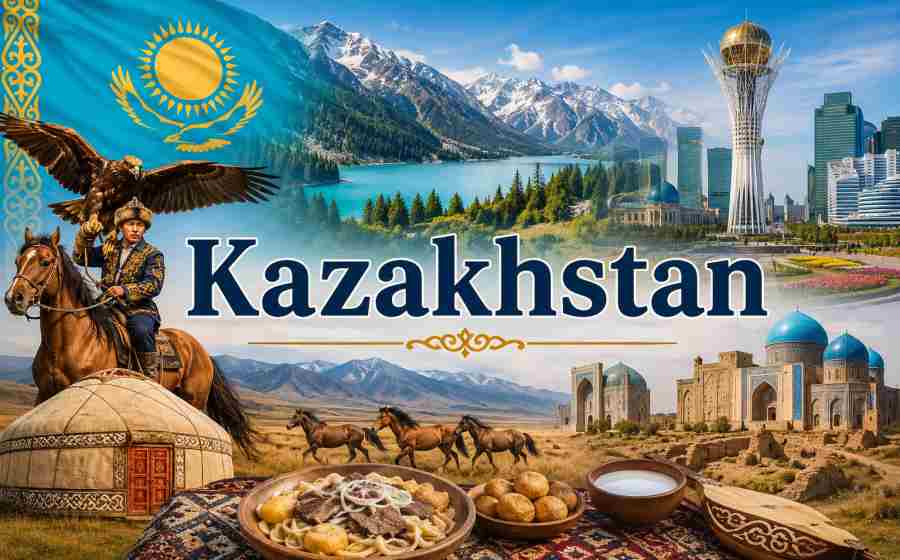
Kazakh culture has deep roots in nomadic traditions. Hospitality remains one of the most valued aspects of society. Guests are often welcomed warmly and offered traditional food and beverages. The traditional dwelling known as the yurt symbolizes the nomadic lifestyle of the Kazakh people. Although modern housing is common today, yurts continue to play an important role during festivals and cultural celebrations.
Music is another important element of Kazakh culture. Traditional instruments such as the dombra, a two-stringed lute, are widely used in folk performances. Storytelling, poetry, and oral traditions have also helped preserve the nation’s heritage through generations.
Traditional Cuisine
Kazakh cuisine reflects the country’s nomadic history. Meat and dairy products are central components of many dishes.
Some popular traditional foods include:
- Beshbarmak, considered the national dish
- Kazy, a traditional horse meat sausage
- Baursak, fried dough pastries
- Shubat, fermented camel milk
- Kumis, fermented mare’s milk
These foods remain important during family gatherings, celebrations, and cultural events.
Sports in Kazakhstan
Sports play a significant role in Kazakhstan’s national identity. Traditional horseback games have been practiced for centuries and remain popular in rural regions. Modern sports have also gained widespread popularity. Boxing is one of Kazakhstan’s strongest disciplines, producing several Olympic and world champions. Cycling, wrestling, weightlifting, and athletics are also widely followed.
Kazakhstan regularly participates in the Olympic Games and has achieved success in various international competitions. Winter sports such as skiing, ice hockey, and speed skating are also growing due to the country’s cold climate in many regions.
Economy and Development
Kazakhstan possesses one of the strongest economies in Central Asia. The country’s wealth is largely supported by its abundant natural resources, particularly oil, gas, and uranium.
In recent decades, Kazakhstan has invested heavily in infrastructure, education, technology, and transportation. Its strategic location between Europe and Asia makes it an important hub for international trade and logistics.
The government continues to promote economic diversification by encouraging growth in manufacturing, agriculture, renewable energy, and digital innovation.
Education and Science
Education is highly valued in Kazakhstan. The country has expanded access to schools, universities, and research institutions since independence.
Kazakhstan is also known for its role in space exploration. The famous Baikonur Cosmodrome is the world’s first and largest operational space launch facility. Numerous historic space missions have been launched from this site.
Interesting Facts About Kazakhstan
- Kazakhstan is the world’s largest landlocked country.
- It ranks as the ninth-largest country by area.
- The nation is one of the world’s leading producers of uranium.
- Horses were first domesticated in the region thousands of years ago.
- Kazakhstan has over 100 ethnic groups living within its borders.
- The country serves as a key link between Europe and Asia.
- Baikonur Cosmodrome launched the first human into space.
- The national symbol includes the golden eagle, representing freedom and strength.
Summary
Kazakhstan is a nation where ancient traditions meet modern development. From its nomadic heritage and vibrant culture to its growing economy and sporting achievements, the country offers a unique blend of history and progress. As one of Central Asia’s most influential nations, Kazakhstan continues to play an important role in regional and global affairs. Its rich cultural legacy, stunning landscapes, and remarkable achievements make it a fascinating country worthy of exploration and study.
Also Check: General Knowledge