Belgium – History, Culture, Sports, Tourist Attractions and Fascinating Facts
Discover Belgium with its rich history, unique culture, famous sports, geography, economy, traditions, landmarks and fascinating facts in one place.
Belgium
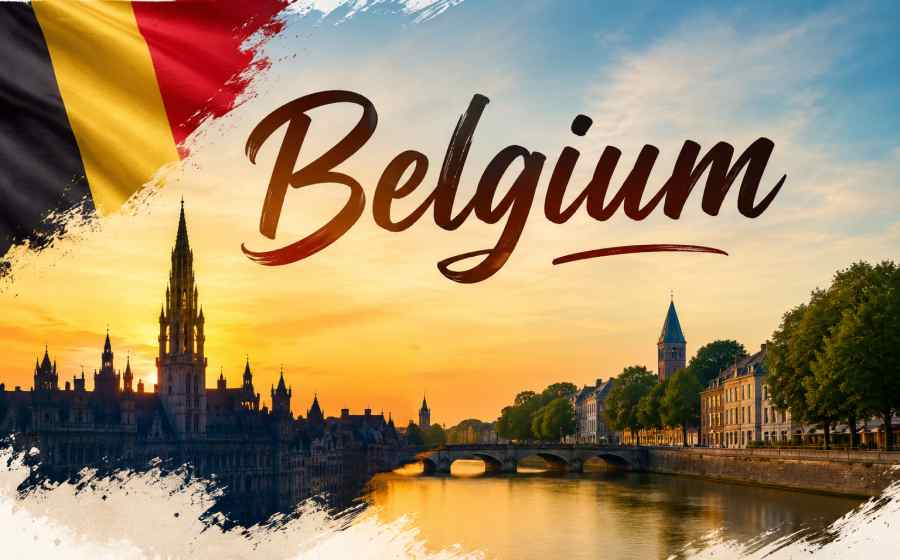
Belgium is a small yet highly influential country located in Western Europe. Despite its modest size, it has played a significant role in European history, politics, trade, and culture. Belgium is famous for its medieval cities, delicious chocolates, waffles, fries, world-class beers, and beautiful architecture. It is also known as the headquarters of several important international organizations, making it one of Europe’s most important political centers.
Belgium shares borders with France, Germany, Luxembourg, and the Netherlands. Its strategic location has made it a crossroads of European civilizations for centuries. Today, Belgium is one of the world’s most developed countries with a high standard of living and a rich cultural heritage.
Table of Contents
History of Belgium
The history of Belgium dates back thousands of years. During ancient times, Celtic tribes known as the Belgae inhabited the region. In 57 BCE, the Roman Empire conquered the area under Julius Caesar, who referred to the Belgae as some of the bravest tribes he had encountered.
After the fall of the Roman Empire, various Germanic kingdoms ruled the region. During the Middle Ages, Belgium became an important center for trade, textiles, and commerce. Cities like Bruges, Ghent, and Antwerp flourished as major trading hubs across Europe.
In the following centuries, Belgium came under the rule of several powerful empires, including the Spanish Habsburgs, Austrian Habsburgs, and later France under Napoleon Bonaparte.
After Napoleon’s defeat in 1815, Belgium became part of the Kingdom of the Netherlands. However, cultural and religious differences led to the Belgian Revolution in 1830. Belgium declared independence and became a constitutional monarchy in 1831.
Belgium suffered greatly during both World War I and World War II because of its strategic location. Following the wars, the country became a founding member of NATO and the European Economic Community, which later evolved into the European Union.
Geography of Belgium
Belgium covers an area of approximately 30,689 square kilometers. Although small, its landscape varies considerably.
The northern region, known as Flanders, consists mainly of flat plains and fertile farmland. The southern region, Wallonia, is more mountainous and includes the Ardennes Forest, which attracts tourists throughout the year.
Belgium has a short coastline along the North Sea, while numerous rivers, including the Scheldt and Meuse, flow through the country.
The climate is temperate maritime, with cool summers, mild winters, and regular rainfall throughout the year.
Capital and Major Cities
The capital city of Belgium is Brussels, one of Europe’s most important political and diplomatic centers.
Other major cities include:
- Antwerp
- Ghent
- Bruges
- Liège
- Namur
- Leuven
- Charleroi
Each city has its own historical landmarks, museums, universities, and cultural attractions.
People and Languages
Belgium has a population of around 12 million people. One of Belgium’s unique characteristics is its multilingual society. The country recognizes three official languages:
- Dutch (mainly spoken in Flanders)
- French (mainly spoken in Wallonia)
- German (spoken by a small community in eastern Belgium)
Many Belgians are also fluent in English, making communication easier for international visitors.
Government and Economy
Belgium is a federal constitutional monarchy. The King serves as the head of state, while the Prime Minister heads the government. Belgium has a strong and diversified economy based on:
- Manufacturing
- International trade
- Finance
- Chemicals
- Pharmaceuticals
- Technology
- Food processing
- Logistics
The Port of Antwerp is among Europe’s busiest ports and plays a vital role in global trade. Belgium also hosts the headquarters of the European Union and NATO, contributing significantly to its international importance.
Culture of Belgium
Belgian culture combines influences from Germanic and Latin traditions, creating a rich and diverse national identity.
Art has flourished in Belgium for centuries. The country produced famous painters such as Jan van Eyck, Pieter Bruegel the Elder, and René Magritte.
Belgium is also famous for comic books. Popular characters like Tintin and The Smurfs originated here. Music festivals, art exhibitions, theater performances, and local fairs are celebrated throughout the year.
Belgian architecture showcases Gothic churches, medieval squares, Renaissance buildings, and modern designs.
Traditional Food
Belgium is internationally recognized for its delicious cuisine. Some of the country’s most famous dishes include:
- Belgian waffles
- Belgian chocolates
- French fries (which many believe originated in Belgium)
- Moules-frites (mussels with fries)
- Stoofvlees (beef stew)
- Speculoos biscuits
- Belgian cheeses
Belgium is also famous for producing hundreds of varieties of beer.
Festivals and Celebrations
Belgians celebrate numerous festivals throughout the year, including:
- National Day (21 July)
- Carnival of Binche
- Tomorrowland Music Festival
- Christmas Markets
- Flower Carpet Festival in Brussels
- Ghent Festival
These events attract millions of domestic and international tourists.
Sports in Belgium
Football (soccer) is the most popular sport in Belgium. The Belgian national football team, known as the “Red Devils,” has consistently ranked among the world’s strongest teams in recent years.
Other popular sports include:
- Cycling
- Tennis
- Athletics
- Hockey
- Formula One
- Basketball
Belgium has produced many world-class cyclists and tennis champions.
Education
Belgium has one of Europe’s strongest education systems. Education is compulsory for children, and universities such as KU Leuven, Ghent University, and Université catholique de Louvain are internationally respected for research and academic excellence.
Tourism
Belgium offers countless attractions for visitors. Popular tourist destinations include:
- Grand Place in Brussels
- Atomium
- Bruges Historic Centre
- Antwerp Cathedral
- Ghent Castle
- Waterloo Battlefield
- Ardennes Forest
- Belgian Coast
Its compact size makes it easy to explore multiple cities in a short time.
Economy and International Importance
Belgium ranks among the world’s most developed economies. Its central location has made it one of Europe’s major transportation and logistics hubs. Brussels serves as the political capital of the European Union, where many important international decisions are made.
Belgium maintains strong diplomatic relations with countries worldwide and actively participates in global peacekeeping, humanitarian efforts, and international trade.
Interesting Facts About Belgium
- Belgium became independent in 1830.
- Brussels is often called the capital of Europe.
- Belgium has three official languages.
- The country is famous for chocolates, waffles, fries, and beer.
- Tintin and The Smurfs were created by Belgian artists.
- The Port of Antwerp is one of Europe’s busiest ports.
- Belgium is home to the headquarters of both the European Union and NATO.
- Cycling is one of the nation’s most loved sports.
- The country has many UNESCO World Heritage Sites.
- Belgium consistently ranks among the countries with a high quality of life.
Summary
Belgium may be small in size, but its influence on European history, culture, politics, and global affairs is remarkable. From medieval cities and artistic masterpieces to world-famous chocolates, sporting achievements, and international diplomacy, Belgium offers a unique blend of tradition and modernity. Its multilingual society, rich heritage, thriving economy, and welcoming atmosphere make it one of Europe’s most fascinating nations. Whether admired for its historic landmarks, culinary delights, or global significance, Belgium continues to leave a lasting impression on visitors and scholars alike.
Also Check: General Knowledge