Cambodia – History, Wildlife, Natural Beauty, Culture, Sports and Key Facts
Cambodia is a land of ancient temples, rich Khmer culture, vibrant traditions, landscapes and remarkable history that continues to inspire the world.
Cambodia
Cambodia is a beautiful Southeast Asian country known for its ancient temples, rich cultural heritage, warm hospitality, and remarkable history. Despite facing many challenges throughout its past, Cambodia has preserved its traditions and continues to grow as an important destination for tourism, education, and cultural exploration. The country is most famous for the magnificent Angkor Wat temple complex, which attracts millions of visitors every year.
Table of Contents
Location and Geography
Cambodia is located in Southeast Asia and shares borders with Thailand to the west, Laos to the north, and Vietnam to the east. The country also has a coastline along the Gulf of Thailand in the southwest.
The landscape consists of fertile plains, forests, rivers, and mountains. The mighty Mekong River flows through Cambodia and plays a vital role in agriculture, transportation, and daily life. Another important geographical feature is Tonlé Sap Lake, the largest freshwater lake in Southeast Asia, which supports millions of people through fishing and farming.
- Capital: Phnom Penh
- Largest City: Phnom Penh
- Official Language: Khmer
- Currency: Cambodian Riel (KHR)
- Government: Constitutional Monarchy
- Population: Around 17 million (estimated)
History of Cambodia
Cambodia has one of the oldest civilizations in Southeast Asia. Its history dates back thousands of years, but the country’s golden age began during the Khmer Empire.
Between the 9th and 15th centuries, the Khmer Empire became one of the world’s most powerful civilizations. During this period, remarkable architectural masterpieces such as Angkor Wat, Angkor Thom, and Bayon Temple were constructed.
However, after the decline of the Khmer Empire, Cambodia experienced invasions, political instability, and foreign influence.
In the 19th century, Cambodia became part of French Indochina and remained under French colonial rule until gaining independence in 1953.
One of the darkest periods in Cambodian history occurred between 1975 and 1979 under the Khmer Rouge regime, when millions of people lost their lives due to forced labor, starvation, and executions.
Since the 1990s, Cambodia has focused on rebuilding its economy, education, infrastructure, and tourism industry while preserving its historical heritage.
Culture and Traditions
Cambodian culture is deeply influenced by Buddhism, ancient Khmer traditions, music, dance, and family values.
Respect for elders, hospitality, and community life remain important aspects of Cambodian society. Traditional clothing includes the Sampot, a colorful garment worn during festivals and ceremonies.
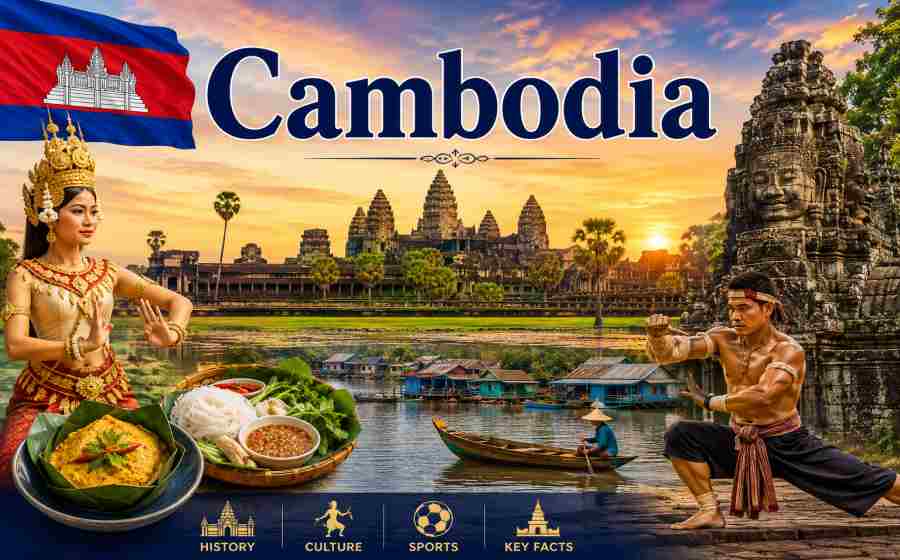
The country is also famous for Apsara Dance, a graceful classical dance form inspired by celestial dancers carved on the walls of Angkor temples. The dance tells stories from mythology through elegant hand gestures and movements.
Traditional Cambodian music features unique instruments such as the Roneat (xylophone), Tro (string instrument), and Skor Thom (large drums).
Religion
About 95% of Cambodia’s population follows Theravada Buddhism, making it the dominant religion. Buddhist temples, known as pagodas, are found throughout the country and serve as religious, educational, and community centers.
Small communities of Muslims, Christians, and followers of indigenous beliefs also live peacefully in Cambodia.
Famous Tourist Attractions
Cambodia is home to some of the world’s most iconic historical and natural attractions.
Angkor Wat
The world’s largest religious monument, Angkor Wat, is Cambodia’s national symbol and appears on its national flag. Originally built as a Hindu temple, it later became a Buddhist temple.
Phnom Penh
The capital city offers historical sites, royal palaces, museums, and bustling markets.
Tonlé Sap Lake
This unique lake changes its size dramatically during different seasons and supports one of the largest freshwater fishing industries in the world.
Koh Rong Island
Known for its white sandy beaches, crystal-clear waters, and peaceful atmosphere, Koh Rong is a popular destination for tourists.
Food and Cuisine
Cambodian cuisine is flavorful yet mild compared to some neighboring countries.
Popular dishes include:
- Fish Amok (steamed fish curry)
- Nom Banh Chok (Khmer noodles)
- Lok Lak (stir-fried beef)
- Bai Sach Chrouk (grilled pork with rice)
- Prahok (fermented fish paste)
Rice is the staple food, while fresh herbs, coconut milk, fish sauce, and tropical fruits are commonly used in cooking.
Sports in Cambodia
Football is the most popular modern sport in Cambodia, followed by volleyball and basketball. However, the country’s traditional martial art, Bokator, holds special cultural importance. Bokator is believed to be over a thousand years old and includes various combat techniques inspired by animals.
Cambodia also participates in international competitions such as:
- Olympic Games
- Asian Games
- Southeast Asian (SEA) Games
Hosting the 2023 SEA Games marked an important milestone in the country’s sporting history and showcased Cambodia’s growing sports infrastructure.
Economy
Cambodia has experienced rapid economic growth over the past two decades.
Major sectors include:
- Agriculture
- Garment manufacturing
- Tourism
- Construction
- Services
Rice, rubber, cassava, garments, footwear, and bicycles are among Cambodia’s major exports. Tourism remains a significant contributor to the economy, with Angkor Wat attracting visitors from around the world.
Education
Cambodia has made considerable progress in improving education after rebuilding its school system following years of conflict.
Primary education enrollment has increased significantly, while universities and vocational institutions continue to expand.
The government, along with international organizations, continues investing in educational development and digital learning opportunities.
Wildlife and Natural Beauty
Cambodia has diverse ecosystems that include tropical forests, wetlands, rivers, and coastal regions.
Some notable wildlife includes:
- Asian elephants
- Irrawaddy dolphins
- Sun bears
- Gibbons
- Clouded leopards
- Numerous bird species
Protected national parks help conserve these valuable ecosystems and promote eco-tourism.
Festivals
Cambodia celebrates many colorful festivals throughout the year.
Some of the most important include:
- Khmer New Year
- Pchum Ben (Ancestors’ Day)
- Water Festival (Bon Om Touk)
- Royal Ploughing Ceremony
- Visak Bochea (Buddha’s Birthday)
These festivals feature traditional music, dancing, religious ceremonies, boat races, and community celebrations.
Interesting Facts About Cambodia
- Angkor Wat is the largest religious monument in the world.
- Cambodia’s national flag is the only one featuring a real building.
- The Khmer language has its own unique alphabet.
- Tonlé Sap River reverses its flow direction during the rainy season.
- Cambodia is one of the world’s leading rice-producing nations.
- Bokator is among the oldest martial arts in Southeast Asia.
- Buddhism plays a central role in Cambodian daily life.
- The country has a tropical climate with wet and dry seasons.
- Cambodia is home to rare Irrawaddy dolphins in the Mekong River.
- Tourism is one of the country’s largest sources of income.
Summary
Cambodia is a nation where ancient history, spiritual traditions, and modern progress come together. From the magnificent temples of Angkor Wat to the peaceful villages along the Mekong River, the country offers an inspiring blend of cultural richness and natural beauty. Despite overcoming significant historical challenges, Cambodia continues to develop while preserving its unique heritage. Whether studying world geography, history, culture, or sports, Cambodia remains an important and fascinating country that deserves recognition for its remarkable past and promising future.
Also Check: General Knowledge