Senegal – History, Tourist Attractions, Culture, Sports, Geography and Key Facts
Discover Senegal, its rich history, vibrant culture, geography, sports, economy, traditions, famous landmarks and fascinating facts in one place.
Senegal
Senegal is one of West Africa’s most peaceful and culturally rich countries. Located along the Atlantic Ocean, it is known for its welcoming people, vibrant music, colorful traditions, beautiful coastline, and stable democracy. Senegal has played an important role in African history and continues to be a leader in culture, sports, and economic development.
The country attracts visitors with its historic islands, national parks, delicious cuisine, and lively festivals. Senegal is also famous for producing world-class football players and preserving its unique cultural heritage. Whether you are interested in geography, history, or general knowledge, learning about Senegal offers valuable insights into one of Africa’s most fascinating nations.
Table of Contents
Location and Geography
Senegal is situated in West Africa and shares borders with Mauritania to the north, Mali to the east, Guinea and Guinea-Bissau to the south, and surrounds The Gambia on three sides. The western coast faces the Atlantic Ocean, making it an important center for trade and fishing.
The country’s landscape includes coastal plains, rivers, forests, savannahs, and semi-arid regions. The Senegal River forms much of its northern boundary and has supported agriculture for centuries.
Quick Facts
- Capital: Dakar
- Largest City: Dakar
- Official Language: French
- National Languages: Wolof, Pulaar, Serer, Jola, Mandinka, and others
- Currency: West African CFA Franc (XOF)
- Continent: Africa
- Time Zone: Greenwich Mean Time (GMT)
- Population: Over 18 million
History of Senegal
The history of Senegal dates back thousands of years. Ancient kingdoms such as Tekrur, Jolof, and Cayor flourished through trade across West Africa. Gold, salt, ivory, and other goods were exchanged through trans-Saharan trade routes.
During the 15th century, Portuguese explorers arrived, followed by the Dutch, British, and French. The island of Gorée became one of the most significant centers of the Atlantic slave trade, where countless Africans were transported to the Americas.
France gradually established colonial control over Senegal, making Dakar the capital of French West Africa. After years of political movements and demands for independence, Senegal gained independence on April 4, 1960.
Since independence, Senegal has maintained relative political stability compared to many neighboring countries and has become known for peaceful democratic transitions.
Culture and Traditions
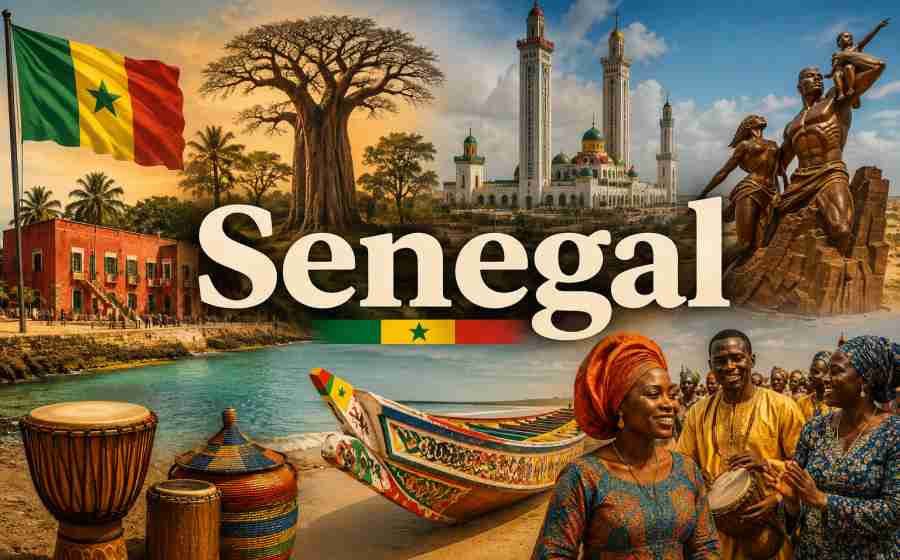
Senegal’s culture reflects a blend of African traditions, Islamic influences, and French heritage. Hospitality is one of the country’s strongest cultural values, often expressed through the Wolof word “Teranga,” meaning generosity and warm welcome.
Traditional clothing is colorful and elegant. Men often wear flowing robes called boubous, while women wear beautifully designed dresses with matching headscarves.
Music and dance are central to Senegalese life. Traditional drums such as the sabar create energetic rhythms used during weddings, festivals, and community celebrations. Modern Senegalese music has also gained international popularity. Family and community play an essential role in daily life, with respect for elders being deeply valued.
Language and Religion
French serves as the official language and is used in government, education, and administration. However, Wolof is the most widely spoken language in everyday life. Other languages include Pulaar, Serer, Mandinka, Soninke, and Jola.
Islam is practiced by approximately 95% of the population, while Christianity and traditional African beliefs are also respected. Senegal is widely recognized for promoting religious harmony and peaceful coexistence.
Food of Senegal
Senegalese cuisine is rich in flavor and influenced by local ingredients and coastal seafood.
Some famous dishes include:
- Thieboudienne (Ceebu Jën): Rice with fish and vegetables, regarded as the national dish.
- Yassa: Chicken or fish cooked with onions and lemon.
- Mafé: Peanut-based stew served with rice.
- Pastels: Fried pastries filled with fish.
- Fresh tropical fruits such as mangoes, papayas, bananas, and oranges are widely enjoyed.
Tea, especially the sweet mint tea known as Attaya, is an important part of social gatherings.
Economy
Senegal has one of the strongest economies in West Africa. Agriculture, fishing, mining, tourism, and services contribute significantly to national income.
Major agricultural products include:
- Peanuts
- Millet
- Rice
- Cotton
- Maize
- Vegetables
Fishing remains one of the country’s largest industries because of its long Atlantic coastline. Senegal also produces phosphates, gold, and zircon. In recent years, discoveries of offshore oil and natural gas have created new economic opportunities. Dakar serves as a major commercial hub connecting Africa with Europe and the Americas.
Sports in Senegal
Football is by far the most popular sport in Senegal. The national football team has earned international recognition for its impressive performances in global competitions.
Senegal has produced many talented footballers who have played for top European clubs. Youth football development continues to grow across the country.
Basketball is another highly popular sport, with Senegal producing successful men’s and women’s national teams.
Traditional wrestling, known as Laamb, is one of the country’s oldest sports and attracts huge crowds. Wrestlers enjoy celebrity status and competitions are major cultural events. Athletics, martial arts, and handball are also gaining popularity.
Tourist Attractions
Senegal offers a variety of natural and historical attractions.
Some of the most visited places include:
- Dakar – the lively capital city.
- Gorée Island – a UNESCO World Heritage Site connected to the slave trade.
- Pink Lake (Lake Retba) – famous for its pink-colored water.
- Djoudj National Bird Sanctuary – one of Africa’s most important bird reserves.
- Niokolo-Koba National Park – home to diverse wildlife including lions, antelopes, monkeys, and elephants.
These attractions make Senegal an attractive destination for history lovers and nature enthusiasts alike.
Education
The Senegalese government has invested in improving education over the years. Primary education is compulsory, and universities in Dakar and other cities provide higher education opportunities.
French is the primary language of instruction, though local languages are increasingly being included in educational programs.
Interesting Facts About Senegal
- Dakar is the westernmost capital city on mainland Africa.
- The country completely surrounds The Gambia except for its Atlantic coastline.
- Senegal is famous worldwide for its concept of Teranga, meaning hospitality.
- Gorée Island is one of Africa’s most important historical sites connected to the transatlantic slave trade.
- Lake Retba became internationally famous for its naturally pink-colored water.
- Senegal has maintained one of the strongest democratic traditions in West Africa.
- Traditional wrestling competitions attract thousands of spectators.
- The country is one of Africa’s leading producers of peanuts.
- Birdwatchers from around the world visit Senegal because of its rich biodiversity.
- Senegal’s music has influenced artists across Africa and beyond.
National Symbols
- National Flag: Green, yellow, and red vertical stripes with a green star in the center.
- National Anthem: “Pincez Tous vos Koras, Frappez les Balafons.”
- National Animal: Lion.
- National Flower: While no official national flower is universally recognized, many native flowering plants hold cultural importance.
Summary
Senegal is a nation where history, culture, and modern development come together in remarkable ways. From its ancient kingdoms and colonial past to its peaceful democracy and growing economy, the country offers valuable lessons about resilience and cultural pride. Its welcoming people, delicious cuisine, successful athletes, and vibrant traditions make Senegal one of the most fascinating countries in Africa. Whether studied for general knowledge, travel, or education, Senegal stands as an excellent example of Africa’s rich heritage and promising future.
Also Check: General Knowledge