El Salvador – History, Culture, Sports, Geography and Key Facts
El Salvador is a Central American nation known for its history, volcanoes, rich culture, traditional food, football and beautiful Pacific coast.
El Salvador
El Salvador is a small but culturally rich country in Central America. Often recognized for its volcanic landscapes, Pacific beaches, archaeological heritage and passionate football culture, the country has a fascinating history shaped by Indigenous civilizations, Spanish colonial rule, independence, political conflict and modern development. With a population of about 6.4 million in 2025, El Salvador is one of the most densely populated countries in the Americas.
The country’s official name is the Republic of El Salvador, and its capital and largest city is San Salvador. Spanish is the official language, while the United States dollar is widely used as the country’s currency. El Salvador is also notable for its relatively compact territory, diverse natural scenery and strong national identity.
Table of Contents
Geography of El Salvador
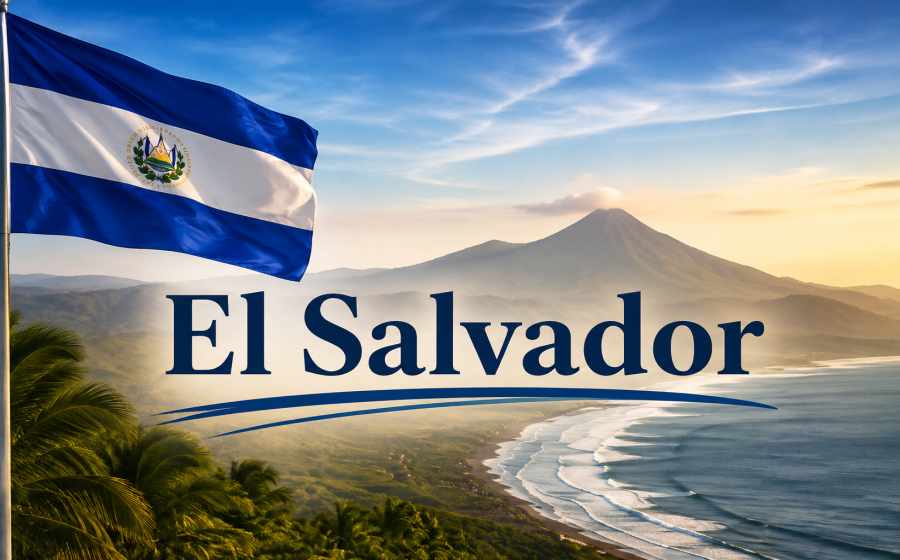
Salvador is located on the Pacific coast of Central America. It shares borders with Guatemala to the west and Honduras to the north and east, while the Pacific Ocean lies to the south. It is the smallest country in mainland Central America by area.
The country’s landscape is strongly influenced by volcanic activity. Mountains, volcanoes, valleys, lakes and coastal plains form much of its geography. Several volcanoes are important landmarks, including Santa Ana Volcano, San Miguel Volcano and Izalco Volcano.
Because of its location along the Pacific Ring of Fire, Salvador experiences earthquakes and volcanic activity. At the same time, its fertile volcanic soils have historically supported agriculture, including the cultivation of coffee, sugarcane and other crops.
History of El Salvador
The history of El Salvador goes back thousands of years. Before European colonization, the region was inhabited by Indigenous communities, including the Pipil, Lenca and Maya. Archaeological discoveries provide evidence of sophisticated communities that developed agriculture, trade and distinctive cultural traditions.
One of the country’s most important archaeological sites is Joya de Cerén, sometimes called the “Pompeii of the Americas.” A seventh-century farming settlement was suddenly covered by volcanic ash, preserving buildings, household objects and other evidence of everyday life. UNESCO recognizes Joya de Cerén as a World Heritage Site because it provides exceptional evidence of ordinary life in a Mesoamerican farming community.
Spanish conquest began in the 16th century, bringing major political, economic and cultural changes. Spanish colonial rule continued for centuries. Central America declared independence from Spain in 1821, and the region subsequently went through several political arrangements before modern independent states emerged.
The 20th century was marked by political instability, social inequality and conflict. Salvador experienced a long civil war from 1979 to 1992 between the government and the Farabundo Martí National Liberation Front (FMLN). The conflict caused extensive loss of life and displacement.
The Chapultepec Peace Accords, signed in 1992, brought the civil war to an end and introduced major political and institutional reforms. Since then, El Salvador has continued developing as a democratic republic while facing challenges related to economic opportunity, public security and social development.
Culture and Traditions
Salvadoran culture reflects Indigenous, Spanish and other influences. Family, religion, music, food, festivals and community traditions are important parts of everyday life.
One of the country’s most famous foods is the pupusa, a thick handmade corn or rice flatbread traditionally filled with ingredients such as cheese, beans or pork. Pupusas are widely associated with Salvadoran national identity and are enjoyed throughout the country.
Traditional celebrations often combine religious practices with local customs. One example is the Confraternity of Flowers and Palms, a celebration in Panchimalco that combines Indigenous traditions and Catholic practices. It includes decorated palms, processions, music, traditional dances, prayers, special foods and traditional clothing. UNESCO inscribed the practice on the Representative List of the Intangible Cultural Heritage of Humanity.
Music and dance also have an important place in Salvadoran culture. Traditional celebrations provide opportunities for communities to preserve local customs and pass knowledge from older generations to younger people.
Famous Places and Heritage
Despite its small size, El Salvador has numerous attractions. San Salvador is the country’s political and cultural center, while coastal destinations attract visitors interested in beaches, surfing and nature.
The Joya de Cerén Archaeological Site is particularly significant because it offers an unusually detailed look at ancient daily life. UNESCO lists it as El Salvador’s World Heritage property.
Other notable places include Lake Coatepeque, Santa Ana Volcano, El Boquerón, Suchitoto and the Pacific beaches. The country’s combination of volcanoes, forests, archaeological locations and coastline makes it an interesting destination for nature and history enthusiasts.
Sports in El Salvador
Football is the most popular sport in El Salvador. The country’s national team, commonly known as La Selecta, has represented El Salvador on the international stage for decades.
El Salvador has qualified for the FIFA World Cup twice, appearing in the tournaments of 1970 and 1982. Its best World Cup result has been reaching the group stage on both occasions.
The 1982 World Cup is particularly memorable in Salvadoran football history. The team recorded its first World Cup goal of that tournament through Luis Ramírez Zapata. Despite difficult results, participation on football’s biggest international stage remains an important part of the country’s sporting history.
Beach soccer has also become an important part of El Salvador’s sporting identity. According to FIFA, the country has made six appearances at the FIFA Beach Soccer World Cup, with a fourth-place finish in 2011 representing its best performance.
Apart from football, Salvadorans participate in basketball, baseball, surfing, boxing, athletics and other sports. The country’s Pacific coastline has also helped surfing gain international attention.
Economy of El Salvador
Salvador has a diversified economy in which services, manufacturing, agriculture, trade and remittances all play important roles. The country is closely connected economically with the United States through trade, migration and remittances. The World Bank describes Salvador as a small, dollarized economy with a population of around six million.
Agriculture has historically been important, particularly coffee and sugarcane production. Manufacturing, including textiles and apparel, also contributes to exports. Tourism has growing potential because of the country’s beaches, volcanoes, cultural heritage and archaeological sites.
The economy has faced challenges including relatively slow long-term growth, poverty, fiscal pressures and the need for stronger productivity and job creation. Recent development efforts have focused on infrastructure, investment, tourism, education and economic diversification.
El Salvador and Modern Development
Modern Salvador has undergone significant changes in recent decades. Improved security conditions have influenced tourism, investment and public life, while the government has pursued economic and infrastructure reforms.
The country also attracted international attention after adopting Bitcoin as legal tender in 2021, alongside the US dollar. The policy made El Salvador a major subject of global discussion about cryptocurrency and national economic policy.
At the same time, the country continues to work on issues such as poverty reduction, employment, education, infrastructure, climate resilience and sustainable economic growth. The World Bank notes that these areas remain important to Salvador’s long-term development.
Interesting Facts About El Salvador
- El Salvador is the smallest country in mainland Central America.
- Its capital city is San Salvador.
- Spanish is the official language.
- The country uses the US dollar as its currency.
- El Salvador lies along the Pacific coast of Central America.
- The country is known for its many volcanoes and earthquakes.
- Joya de Cerén is a UNESCO World Heritage Site.
- El Salvador has appeared in the FIFA World Cup twice, in 1970 and 1982.
- Football is the country’s most popular sport.
- Beach soccer is another important sporting activity.
- Pupusas are among the country’s most famous traditional foods.
- El Salvador became independent from Spanish rule in 1821.
- The country’s civil war ended with the 1992 peace accords.
- El Salvador has three UNESCO biosphere reserves, according to UNESCO’s country profile.
- The country is famous for its Pacific beaches and surfing destinations.
- El Salvador became the first country to adopt Bitcoin as legal tender in 2021.
Summary
El Salvador may be small in size, but its history, culture and natural beauty give it a distinctive place in Central America. From ancient archaeological settlements and Indigenous traditions to Spanish colonial influences, independence, civil war and modern development, the country has experienced a remarkable historical journey. Its volcanoes, Pacific beaches, traditional cuisine, community festivals and passion for football add to its unique identity. Salvador’s heritage continues to connect its past with the present while the country works toward greater economic opportunity and sustainable development.
Also Check: General Knowledge