
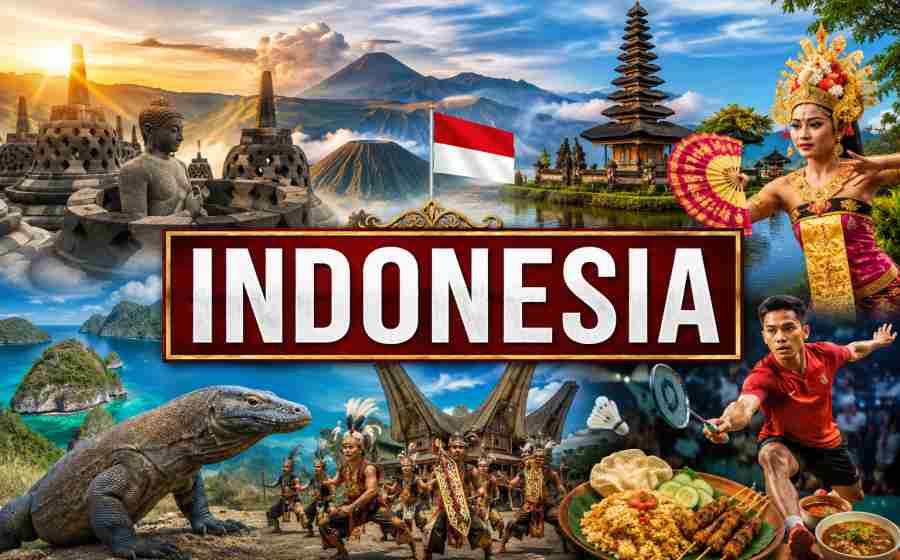
Indonesia – History, Culture, Sports, Geography and Important Facts
Discover Indonesia’s history, culture, sports, geography and key facts. Explore what makes Indonesia one of the world’s most diverse nations.
Indonesia
Indonesia is one of the most diverse and fascinating countries in the world. Located in Southeast Asia, it is the largest archipelago nation, consisting of more than 17,000 islands spread across the Indian and Pacific Oceans. With its rich history, vibrant cultures, stunning landscapes, and growing economy, Indonesia plays an important role in regional and global affairs. From ancient kingdoms and colonial struggles to modern achievements in sports and technology, Indonesia offers a unique blend of tradition and progress.
Table of Contents
Introduction to Indonesia
Indonesia is officially known as the Republic of Indonesia. It is the fourth most populous country in the world, with a population of over 280 million people. The country stretches across thousands of islands, with major islands including Java, Sumatra, Kalimantan (Borneo), Sulawesi, and Papua.
Jakarta serves as the capital city, although the government is in the process of developing Nusantara as the future capital. Indonesia is known for its incredible biodiversity, tropical climate, and cultural diversity. More than 700 languages are spoken across the nation, making it one of the most linguistically diverse countries on Earth.
Historical Background
Indonesia has a long and fascinating history that dates back thousands of years. Ancient kingdoms such as Srivijaya and Majapahit dominated trade routes across Southeast Asia and contributed significantly to regional culture and commerce.
During the 16th century, European powers arrived in search of valuable spices. The Dutch eventually established control over much of the region, creating the Dutch East Indies. Colonial rule lasted for more than three centuries and influenced Indonesia’s political and economic development.
During World War II, Japan occupied Indonesia from 1942 to 1945. Following Japan’s surrender, Indonesian nationalist leaders Sukarno and Mohammad Hatta declared independence on August 17, 1945. After years of struggle against Dutch attempts to regain control, Indonesia gained international recognition as an independent nation in 1949. Today, Indonesia is a democratic republic and one of the leading economies in Southeast Asia.
Geography and Natural Beauty
Indonesia’s geography is extraordinary. The country lies along the Pacific Ring of Fire, making it home to numerous active volcanoes and frequent seismic activity. Famous volcanoes such as Mount Merapi and Mount Bromo attract visitors from around the world.
Indonesia also possesses some of the world’s most beautiful natural attractions, including:
- Bali’s stunning beaches
- Komodo National Park
- Raja Ampat’s marine ecosystems
- Lake Toba, one of the largest volcanic lakes in the world
- Tropical rainforests rich in wildlife
The nation is home to unique species such as the Komodo dragon, orangutan, Javan rhinoceros, and Sumatran tiger.
Culture and Traditions
Indonesia’s culture reflects centuries of interaction among indigenous communities, traders, and foreign civilizations. Despite its diversity, the country embraces the national motto: “Bhinneka Tunggal Ika,” meaning “Unity in Diversity.”
Traditional music, dance, and art remain important aspects of Indonesian life. Popular cultural elements include:
Traditional Dance
Each region has its own dance forms. Balinese dances are famous for their intricate movements and colorful costumes, while Javanese dances emphasize grace and storytelling.
Batik Art
Batik is a traditional textile art that involves creating intricate patterns using wax and dye. Indonesian batik is internationally recognized and is considered a cultural treasure.
Festivals and Celebrations
Indonesia celebrates numerous religious and cultural festivals throughout the year. Eid al-Fitr, Christmas, Nyepi (Balinese Day of Silence), and Chinese New Year are among the most widely observed celebrations.
Cuisine
Indonesian cuisine is renowned for its rich flavors and spices. Popular dishes include:
- Nasi Goreng (fried rice)
- Satay (grilled meat skewers)
- Rendang (spiced beef dish)
- Gado-Gado (vegetable salad with peanut sauce)
- Soto (traditional soup)
These dishes showcase the country’s diverse culinary heritage.
Religion and Society
Indonesia is home to multiple religions and cultures. Islam is the predominant religion, making Indonesia the world’s largest Muslim-majority nation. However, Christianity, Hinduism, Buddhism, and Confucianism are also officially recognized and practiced.
The island of Bali is particularly famous for its Hindu traditions and unique cultural identity. Religious harmony and coexistence remain important aspects of Indonesian society.
Sports in Indonesia
Sports play a significant role in Indonesian culture and national pride.
Badminton
Badminton is the most successful and popular sport in Indonesia. Indonesian athletes have won numerous Olympic medals and world championships. The country consistently ranks among the world’s strongest badminton nations.
Football (Soccer)
Football enjoys immense popularity across Indonesia. Millions of fans passionately support local clubs and the national team.
Other Popular Sports
Other widely played sports include:
- Basketball
- Volleyball
- Athletics
- Martial arts such as Pencak Silat
Indonesia frequently participates in international sporting events including the Olympics, Asian Games, and Southeast Asian Games.
Economy and Development
Indonesia possesses one of the largest economies in Asia. Key sectors contributing to economic growth include:
- Manufacturing
- Agriculture
- Tourism
- Mining
- Technology and digital services
The country is a major producer of palm oil, rubber, coal, and nickel. In recent years, Indonesia’s digital economy has expanded rapidly, driven by e-commerce, fintech, and technology startups.
Tourism also plays a vital role, with destinations such as Bali attracting millions of visitors annually.
Education and Innovation
Indonesia continues to invest in education and technological advancement. Universities and research institutions are expanding opportunities for students and professionals. Government initiatives focus on improving digital infrastructure, innovation, and sustainable development.
The nation’s growing young population provides significant potential for future economic and technological progress.
Key Facts About Indonesia
- Official Name: Republic of Indonesia
- Capital: Jakarta (future capital: Nusantara)
- Population: Over 280 million
- Official Language: Indonesian (Bahasa Indonesia)
- Currency: Indonesian Rupiah (IDR)
- Independence Day: August 17, 1945
- Number of Islands: More than 17,000
- Largest Island Population: Java
- National Motto: Unity in Diversity
- Largest Muslim-majority country in the world
Summary
Indonesia is a remarkable nation characterized by its rich history, cultural diversity, natural wonders, and economic potential. As the world’s largest archipelago, it connects thousands of islands, hundreds of ethnic groups, and numerous traditions into a single nation. Whether through its ancient kingdoms, vibrant festivals, successful athletes, or breathtaking landscapes, Indonesia continues to captivate people around the globe. Its commitment to growth, innovation, and cultural preservation ensures that Indonesia remains one of the most influential and fascinating countries in the modern world.
Also Check: General Knowledge