Qatar – History, Culture, Sports, Tourism and Fascinating Key Facts
Discover Qatar’s history, culture, sports, geography, economy and key facts, including Doha, the FIFA World Cup 2022 and traditional heritage.
Qatar
Qatar is a small but highly influential country located on a peninsula in the Arabian Gulf. Known for its modern skyline, rich Arab traditions, impressive infrastructure and major international sporting events, Qatar has transformed significantly over the past few decades. Its capital, Doha, has developed into an important centre for business, culture, education, tourism and international events.
Despite its modern appearance, Qatar has a long history connected with maritime trade, pearl diving, fishing, camel breeding and the wider Arabian Peninsula. Today, the country combines traditional heritage with modern architecture, museums, sports facilities and a diversified economy. Qatar also gained worldwide attention by becoming the first country in the Middle East to host the FIFA World Cup in 2022.
Table of Contents
Geography of Qatar
Qatar is a peninsula situated on the western coast of the Arabian Gulf. It shares its only land border with Saudi Arabia, while Bahrain, the United Arab Emirates and Iran lie across the surrounding waters. The country covers approximately 11,571 square kilometres and has a predominantly flat, dry desert landscape.
The climate is hot and arid. Summers can be extremely hot, while winters are comparatively mild. Qatar has no permanent rivers or natural lakes, although seasonal water channels can appear after rainfall. Its coastline, beaches, sand dunes and mangrove areas contribute to its natural appeal.
Doha, the capital city, is the country’s political, commercial and cultural centre. Other important places include Al Wakrah, Al Khor, Mesaieed, Dukhan and Ras Laffan.
History of Qatar
The history of Qatar extends back thousands of years. Archaeological discoveries indicate human settlement in the peninsula during ancient periods, including evidence dating to the 6th millennium BCE. Qatar’s location made it part of regional networks connecting the Arabian Peninsula with Mesopotamia, India and other areas around the Gulf.
In ancient and medieval times, Qatar was associated with fishing, maritime activities, camel and horse breeding, trade and pearl gathering. The pearl industry became particularly important because the waters around the peninsula were rich in natural pearl beds. For centuries, pearl diving provided an important source of income for communities along the coast.
Islam reached Qatar in the 7th century CE. Over subsequent centuries, the peninsula experienced the influence of different regional powers and maritime trading networks. The Portuguese, Ottoman Empire and other powers played roles in the wider Gulf region during different periods.
The modern history of Qatar is closely associated with the Al Thani family. In the 18th century, tribes gathered under Al Thani leadership, helping create greater political stability. In 1868, Sheikh Mohammed bin Thani signed an agreement with British authorities that recognized Qatar as an independent political entity. Qatar later came under Ottoman influence, while its rulers retained considerable autonomy.
Qatar entered a treaty relationship with Britain in 1916. The country gradually moved toward full independence as the British protectorate system in the Gulf came to an end. On 3 September 1971, Qatar became an independent sovereign state. It also joined the United Nations in 1971.
The discovery and development of oil and natural gas resources transformed Qatar’s economy. Energy revenues supported rapid development in infrastructure, education, healthcare, transport and other sectors. Natural gas, particularly liquefied natural gas, became a major part of Qatar’s international economic importance.
Culture and Traditions of Qatar
Qatari culture reflects deep-rooted Arab and Islamic traditions combined with modern influences. Arabic is the official language, while English is widely used in business, education and everyday communication. Islam is the official religion, and Islamic values have an important influence on social customs and public life.
Hospitality is an important part of Qatari culture. Traditional gatherings often involve serving Arabic coffee and dates, while family and community relationships remain significant. Traditional clothing also reflects the country’s heritage. Men commonly wear the thobe, while women traditionally wear garments such as the abaya.
Qatar’s heritage is strongly connected with the sea. Pearl diving, fishing and dhow sailing were historically important to coastal communities. Traditional wooden dhows remain an important symbol of Qatar’s maritime past.
Another important part of Qatari heritage is falconry. Falcons have traditionally been associated with prestige, skill and desert life. Camel racing and horse riding are also deeply connected with the country’s heritage. These traditions continue today alongside modern sporting activities.
Qatar has invested heavily in preserving and presenting its cultural heritage. Institutions such as the National Museum of Qatar, Museum of Islamic Art, Mathaf: Arab Museum of Modern Art and 3-2-1 Qatar Olympic and Sports Museum contribute to the country’s cultural landscape.
Sports in Qatar
Sports have become one of Qatar’s most visible areas of international activity. Football is especially popular, and Qatar has developed modern stadiums and sporting infrastructure to host major competitions.
The biggest sporting event in Qatar’s history was the FIFA World Cup 2022, held from 20 November to 18 December 2022. It was the first FIFA World Cup hosted in the Arab and Muslim world and the first edition held in the Middle East. The tournament brought international attention to Qatar and showcased its stadiums, transportation network and hospitality.
Qatar has also hosted the 2006 Asian Games, the 2019 World Athletics Championships and the 2023 World Aquatics Championships. The country hosted the AFC Asian Cup in 2023 and has developed a reputation for staging major international competitions.
Motorsport is another important sporting attraction. The Lusail International Circuit hosts major motorcycle and Formula 1 events. Qatar is also known for tennis tournaments, horse racing, camel racing and falconry.
Qatar’s traditional sporting heritage remains important despite its modern sporting ambitions. Camel racing, for example, has been modernized through the use of robotic jockeys controlled remotely by trainers.
Economy of Qatar
Qatar has one of the world’s most prominent energy-based economies. Petroleum and natural gas played a major role in the country’s rapid economic transformation. Its natural gas industry, particularly liquefied natural gas, has made Qatar an important participant in global energy markets.
At the same time, Qatar has been working toward economic diversification. Tourism, finance, education, sports, aviation, technology and cultural industries have received increasing attention. Doha has emerged as a regional business and transportation hub.
Tourism is another growing sector. Qatar offers a combination of modern architecture, museums, desert landscapes, beaches, mangroves, cultural attractions and sporting events.
Important Places in Qatar
Qatar has several notable attractions that reflect both its traditional and modern character. Souq Waqif in Doha is known for its traditional atmosphere, shops, restaurants and cultural experiences. The Museum of Islamic Art houses an important collection representing Islamic artistic heritage.
Katara Cultural Village combines art, performance spaces, galleries, restaurants and cultural activities. Qatar’s natural attractions include desert areas, beaches and the Al Thakira Mangroves, which provide an interesting contrast to the country’s predominantly arid landscape.
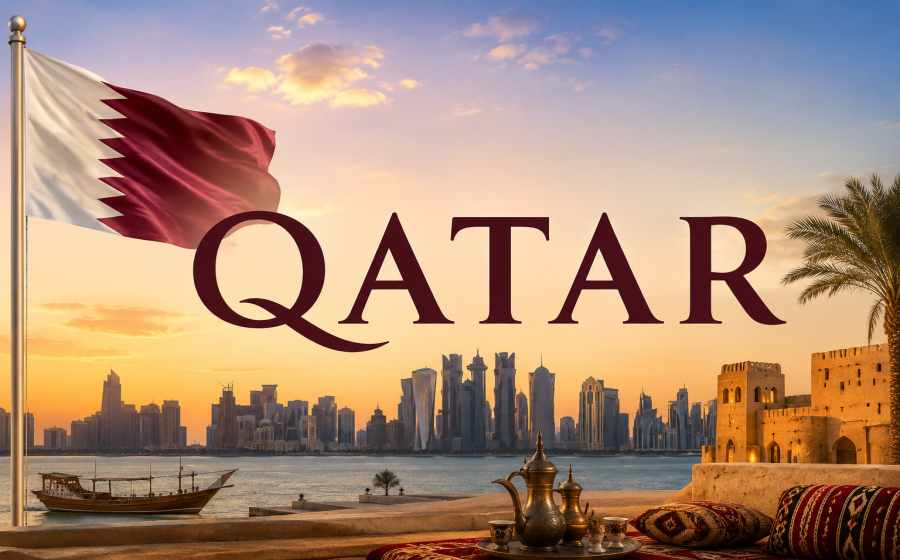
The modern skyline of Doha is another defining feature of the country, with striking skyscrapers and contemporary architectural projects standing alongside traditional markets and heritage sites.
Key Facts About Qatar
- Official Name: State of Qatar
- Capital: Doha
- Location: Arabian Peninsula, Arabian Gulf
- Area: Approximately 11,571 sq. km
- Official Language: Arabic
- Religion: Islam
- Government: Constitutional hereditary monarchy
- Currency: Qatari Riyal
- Time Zone: GMT+3
- Independence: 3 September 1971
- National Day: 18 December
- National Sport: Football
- National Animal: Arabian Oryx
- Major Natural Resource: Natural Gas
- Famous Sporting Event: FIFA World Cup 2022
- Major City: Doha
- Climate: Hot desert climate
- Land Border: Saudi Arabia
Summary
Qatar is a fascinating example of how a small Gulf country has developed into an internationally significant state while maintaining strong connections with its traditional heritage. Its history is rooted in maritime trade, pearl diving, Arab culture and Islamic traditions, while its modern identity has been shaped by energy resources, infrastructure, education, tourism and international sports.
The successful hosting of the FIFA World Cup 2022 further strengthened Qatar’s global profile. From the traditional heritage of falconry and camel racing to modern museums, skyscrapers and world-class sporting venues, Qatar offers a distinctive combination of past and present.
Also Check: General Knowledge