Suriname – History, Tourism, Culture, Sports and Key Facts
Discover Suriname through its rich history, diverse culture, famous festivals, popular sports, geography, wildlife and interesting key facts in one place.
Suriname
Suriname is one of the smallest yet most culturally diverse countries in South America. Located on the northeastern coast of the continent, it is bordered by Guyana to the west, French Guiana to the east, Brazil to the south, and the Atlantic Ocean to the north. Despite its relatively small population, Suriname is known for its multicultural society, tropical rainforests, abundant natural resources, and fascinating colonial history.
The country’s official language is Dutch, making it the only independent nation in South America where Dutch is the official language. Suriname’s unique blend of African, Indian, Indonesian, Chinese, Indigenous, and European influences makes it one of the world’s most culturally rich nations.
Table of Contents
History of Suriname
The earliest inhabitants of Suriname were Indigenous peoples such as the Arawak and Carib tribes, who lived in the region long before European exploration. Spanish explorers arrived in the 16th century, but they did not establish permanent settlements.
In the 17th century, the British founded colonies in Suriname. However, following the Treaty of Breda in 1667, the Dutch gained control of the territory while the British retained New Amsterdam, which later became New York City.
Under Dutch rule, Suriname became a major plantation colony producing sugar, coffee, cocoa, and cotton. Enslaved Africans were brought to work on plantations, and many later escaped into the forests, forming independent Maroon communities that still exist today.
After slavery was abolished in 1863, workers from India, Indonesia (especially Java), and China were brought to Suriname as indentured laborers. Their descendants continue to shape the country’s multicultural identity.
Suriname gained full independence from the Netherlands on 25 November 1975. Since then, it has experienced political changes, military rule, and democratic reforms while steadily developing its economy.
Geography and Climate
Suriname covers approximately 163,820 square kilometers, making it one of the least densely populated countries in South America.
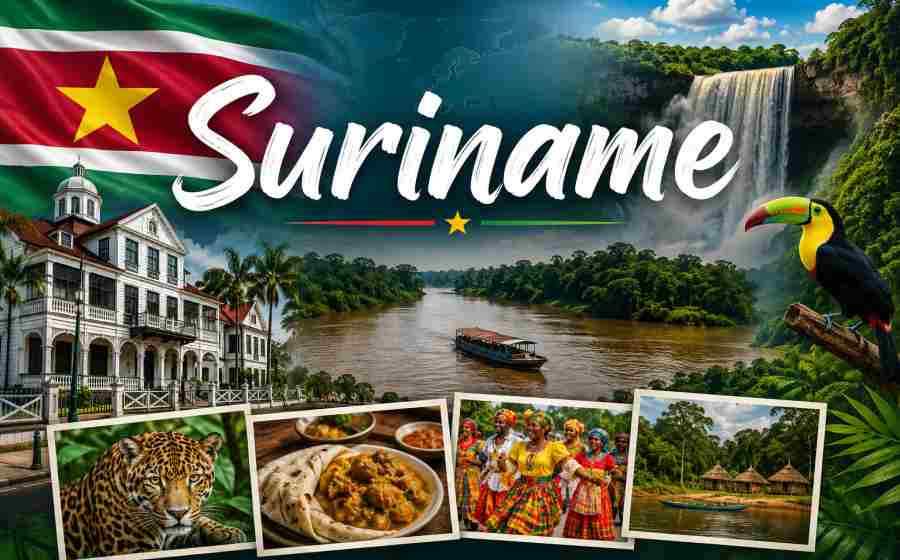
Around 90% of the country is covered by dense tropical rainforest, making Suriname one of the greenest nations on Earth. Numerous rivers flow through the country, including the Suriname River, Marowijne River, and Coppename River.
The climate is tropical, with warm temperatures throughout the year. Rainfall is abundant, supporting rich biodiversity and lush vegetation.
Capital and Major Cities
The capital city is Paramaribo, which serves as the country’s political, economic, and cultural center. Its historic inner city is famous for its Dutch colonial wooden buildings and has been recognized as a UNESCO World Heritage Site.
Other important cities include:
- Nieuw Nickerie
- Moengo
- Lelydorp
- Albina
People and Culture
Suriname is often described as one of the world’s most multicultural societies.
The population includes:
- Hindustani (Indian origin)
- Creoles
- Javanese (Indonesian origin)
- Maroons
- Indigenous peoples
- Chinese
- Europeans
- Mixed ethnic communities
This cultural diversity is reflected in the country’s languages, religions, cuisine, music, clothing, and traditions.
Religious harmony is a remarkable feature of Suriname, where Hindu temples, mosques, churches, and synagogues often stand close together.
Languages Spoken
The official language is Dutch, used in government, education, and administration.
Other commonly spoken languages include:
- Sranan Tongo
- Hindi (Sarnami)
- Javanese
- English
- Indigenous languages
- Chinese dialects
Many Surinamese people are multilingual.
Traditional Food
Suriname’s cuisine reflects its multicultural heritage.
Popular dishes include:
- Roti with curry
- Pom (a baked casserole)
- Moksi Alesi (mixed rice)
- Saoto soup
- Bara
- Nasi Goreng
- Bami noodles
- Cassava-based dishes
Indian, Indonesian, African, Chinese, and Dutch cooking styles have blended to create unique flavors.
Festivals and Celebrations
Suriname celebrates festivals from many religions and communities.
Major festivals include:
- Independence Day
- Holi (Phagwa)
- Diwali
- Eid al-Fitr
- Christmas
- Keti Koti (Emancipation Day)
- Chinese New Year
These celebrations showcase colorful traditions, music, dance, and community gatherings.
Economy
Suriname’s economy relies heavily on natural resources.
Major industries include:
- Gold mining
- Oil production
- Bauxite mining
- Agriculture
- Forestry
- Fishing
- Tourism
Rice, bananas, and seafood are important agricultural exports. Gold has become one of the country’s most valuable export commodities in recent years.
Wildlife and Natural Beauty
Suriname is famous for its incredible biodiversity.
The country’s forests are home to:
- Jaguars
- Giant river otters
- Tapirs
- Sloths
- Scarlet macaws
- Harpy eagles
- Monkeys
- Anacondas
- Sea turtles
Protected areas help preserve these species and their habitats.
Popular natural attractions include:
- Brownsberg Nature Park
- Central Suriname Nature Reserve
- Raleighvallen
- Blanche Marie Falls
- Galibi Nature Reserve
Ecotourism has become increasingly important because of Suriname’s well-preserved rainforests.
Education
Education is compulsory for children, and Dutch is the primary language of instruction. The country has universities, vocational institutions, and public schools. Literacy rates are relatively high compared to many developing nations.
Sports in Suriname
Football (soccer) is the most popular sport in Suriname.
Other popular sports include:
- Athletics
- Basketball
- Swimming
- Volleyball
- Cricket
- Martial arts
Many athletes of Surinamese heritage have achieved international success, especially in football while representing European countries. Youth sports programs continue to grow across the nation.
Government
Suriname is a democratic republic with a President serving as both head of state and head of government.
The country has a National Assembly responsible for making laws and representing citizens.
Tourism
Suriname attracts travelers looking for authentic rainforest experiences and cultural diversity.
Popular tourist attractions include:
- Historic Paramaribo
- River cruises
- Jungle lodges
- Nature reserves
- Indigenous villages
- Waterfalls
- Wildlife watching
Adventure tourism, birdwatching, and eco-friendly travel are increasingly popular.
Interesting Facts About Suriname
- Suriname is the smallest independent country in South America by population.
- Dutch is the official language.
- More than 90% of the land is covered by rainforest.
- Paramaribo is a UNESCO World Heritage Site.
- Suriname is among the most forested countries in the world.
- People from many ethnic backgrounds live together peacefully.
- The country drives on the left side of the road.
- Gold is one of its leading exports.
- Suriname has remarkable biodiversity with thousands of plant and animal species.
- Multiple religious festivals are celebrated as national holidays.
Summary
Suriname may be small in size, but it offers remarkable diversity in history, culture, languages, wildlife, and traditions. From its Dutch colonial heritage and multicultural society to its vast rainforests and abundant natural resources, the country stands out as one of South America’s most unique nations. Whether exploring the historic streets of Paramaribo, enjoying its flavorful cuisine, or discovering its untouched forests, Suriname presents a fascinating blend of nature and culture that continues to attract visitors and inspire curiosity around the world.
Also Check: General Knowledge