
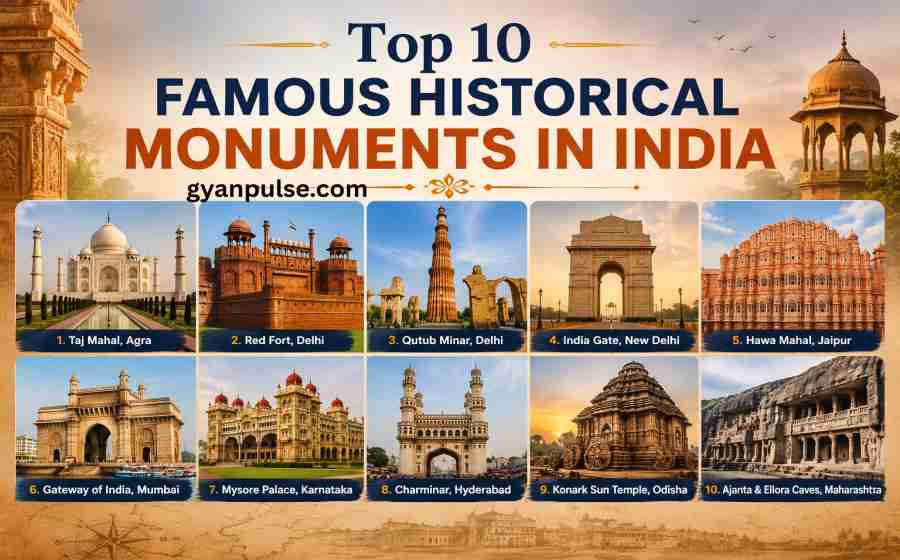
Top 10 Famous Historical Monuments in India – Heritage and History
Explore the Top 10 Famous Historical Monuments in India, showcasing rich history, stunning architecture, cultural heritage and iconic tourist attractions.
Top 10 Famous Historical Monuments in India
India is a land of history, culture, and heritage. With its long and diverse past, the country is home to countless forts, temples, palaces, and tombs that narrate the story of ancient dynasties and empires. These monuments are not only symbols of architectural excellence but also attract millions of tourists every year. Here is a list of the Top 10 Famous Historical Monuments in India that showcase the nation’s glorious past.
Table of Contents
List of Historical Monuments in India
1. Taj Mahal, Agra
The Taj Mahal, one of the Seven Wonders of the World, was built by Mughal emperor Shah Jahan in memory of his wife Mumtaz Mahal. This white marble masterpiece is admired globally for its beauty and symmetry. Situated on the banks of the Yamuna River, it is a UNESCO World Heritage Site and a symbol of eternal love.
2. Red Fort, Delhi
The Red Fort, also known as Lal Qila, was constructed by Shah Jahan in 1648. Made from striking red sandstone, this grand fort was home to the Mughal emperors for nearly two centuries. The fort is famous for its grand walls, Diwan-i-Khas, and Diwan-i-Aam. Every year on Independence Day, the Prime Minister hoists the national flag from its ramparts.
3. Qutub Minar, Delhi
Qutub Minar, rising 73 meters high, is the tallest brick minaret in the world. Built in 1193 by Qutb-ud-din Aibak, it marks the beginning of Delhi’s Sultanate rule. This UNESCO World Heritage Site is surrounded by historical monuments like the Iron Pillar and Quwwat-ul-Islam Mosque, making it an important landmark.
4. India Gate, New Delhi
India Gate is a war memorial dedicated to 82,000 soldiers of the Indian Army who died during World War I. Designed by Sir Edwin Lutyens, this 42-meter-high monument is one of the most visited sites in the capital. The eternal flame of Amar Jawan Jyoti was added later to honor the soldiers who gave their lives in the 1971 war.
5. Hawa Mahal, Jaipur
The Hawa Mahal, or the Palace of Winds, is an iconic pink sandstone structure built in 1799 by Maharaja Sawai Pratap Singh. Its unique honeycomb design with 953 windows (jharokhas) allowed royal women to observe street festivities without being seen. It is one of the finest examples of Rajput architecture.
6. Gateway of India, Mumbai
The Gateway of India, built in 1924, was made to honor the visit of King George V and Queen Mary and is now a major landmark in Mumbai. It is a mix of Indo-Saracenic, Islamic, and Hindu architectural styles. It also marks the historic spot where the last British troops left India in 1948.
7. Mysore Palace, Karnataka
Mysore Palace is one of the most magnificent royal palaces in India. Designed in the Indo-Saracenic style, this palace was once the royal home of the Wadiyar dynasty. Known for its grand Durbar Hall, intricate paintings, and annual Dussehra celebrations, the palace attracts millions of visitors every year.
8. Charminar, Hyderabad
Charminar, built in 1591 by Muhammad Quli Qutb Shah, is the symbol of Hyderabad. The monument has four grand arches and minarets, each rising to 48.7 meters. Located in the heart of the old city, it is surrounded by bustling bazaars famous for pearls, bangles, and Hyderabadi cuisine.
9. Konark Sun Temple, Odisha
The Konark Sun Temple, built in the 13th century by King Narasimhadeva I, is today a UNESCO World Heritage Site. Designed in the shape of a giant chariot dedicated to the Sun God, it is famous for its intricate stone carvings. Known as the Black Pagoda, it remains one of India’s greatest architectural marvels.
10. Ajanta and Ellora Caves, Maharashtra
These famous rock-cut caves showcase temples and monasteries of Buddhism, Hinduism, and Jainism. The Ajanta caves, dating back to the 2nd century BC, are known for their beautiful ancient paintings and sculptures. Ellora is best known for the Kailasa temple, which is carved from a single massive rock. Both sites are recognized together as a UNESCO World Heritage Site.
Importance of Historical Monuments in India
Historical monuments in India are more than just tourist attractions; they are living symbols of the country’s rich heritage and cultural diversity. From majestic forts and royal palaces to ancient temples and memorials, these monuments reflect the artistic brilliance and architectural skills of different dynasties and empires. They help students, travelers, and history enthusiasts understand India’s glorious past while preserving traditions and stories that continue to inspire future generations.
Summary
The top 10 famous historical monuments in India represent the grandeur of ancient dynasties, the brilliance of Indian architecture, and the cultural diversity of the country. These monuments not only attract tourists but also serve as reminders of India’s glorious past. Visiting them is like walking through history itself.
Also Check: General Knowledge