Sri Lanka – History, Culture, Sports and Facts about the Island Nation
Explore Sri Lanka’s history, culture, sports, geography, economy and key facts. Learn what makes this beautiful island nation unique and globally significant.
Sri Lanka
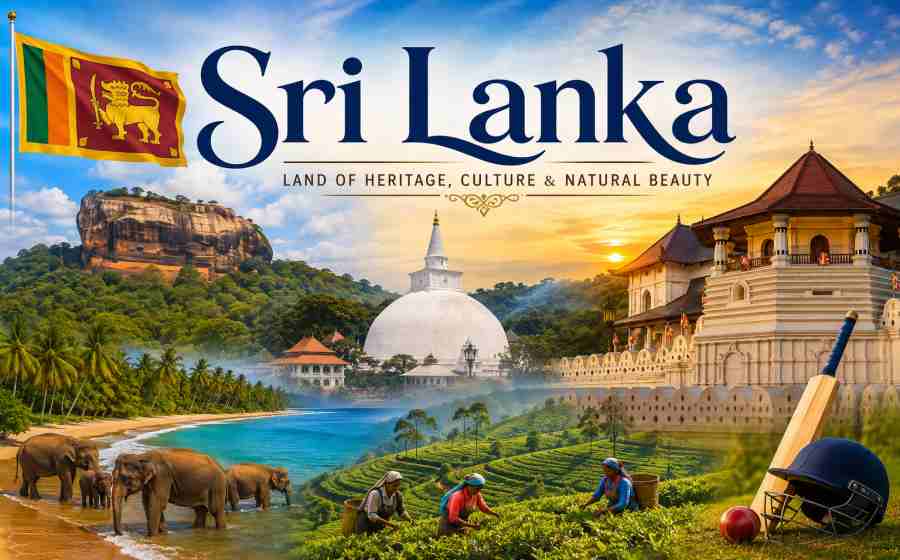
Sri Lanka is a beautiful island nation located in South Asia, surrounded by the Indian Ocean. Known for its rich history, diverse culture, stunning landscapes, and sporting achievements, Sri Lanka has long been a significant center of trade, religion, and civilization. The country attracts millions of visitors every year with its ancient heritage sites, tropical beaches, lush tea plantations, and vibrant traditions.
Table of Contents
Introduction to Sri Lanka
Sri Lanka lies southeast of India and is often called the “Pearl of the Indian Ocean” due to its natural beauty and strategic location. The country covers an area of approximately 65,610 square kilometers and has a population of over 22 million people. Its capital city is Sri Jayawardenepura Kotte, while Colombo serves as the country’s commercial and financial center.
Sri Lanka is a democratic republic with a diverse population consisting mainly of Sinhalese, Tamils, Moors, and other ethnic communities. Sinhala and Tamil are the official languages, while English is widely used in business and education.
History of Sri Lanka
Sri Lanka has a history that spans more than 2,500 years. Ancient chronicles such as the Mahavamsa provide detailed accounts of the island’s early kingdoms and rulers. The earliest known settlements date back thousands of years. Around the 5th century BCE, Prince Vijaya is believed to have established the first Sinhalese kingdom. Over the centuries, powerful kingdoms such as Anuradhapura and Polonnaruwa flourished, developing advanced irrigation systems, architecture, and Buddhist culture.
Buddhism arrived in Sri Lanka during the 3rd century BCE through Mahinda, the son of Emperor Ashoka of India. The religion became deeply rooted in Sri Lankan society and remains a major influence today. During the colonial era, the Portuguese arrived in 1505, followed by the Dutch in the 17th century and the British in 1796. Under British rule, Sri Lanka, then known as Ceylon, became an important producer of tea, coffee, and rubber.
SriLanka gained independence from Britain on February 4, 1948. Since independence, the nation has experienced political and economic changes while continuing to preserve its rich cultural heritage.
Culture of SriLanka
SriLankan culture is a unique blend of ancient traditions, religious values, and modern influences. Buddhism plays a central role in the lives of many Sri Lankans, but Hinduism, Islam, and Christianity are also widely practiced.
Festivals and Celebrations
SriLanka celebrates numerous festivals throughout the year. Some of the most important include:
- Sinhala and Tamil New Year
- Vesak Festival
- Deepavali
- Christmas
- Eid celebrations
The Vesak Festival commemorates the birth, enlightenment, and passing of Buddha and is marked by colorful lanterns, decorations, and religious activities.
Traditional Dance and Music
Traditional SriLankan dance forms, especially Kandyan dancing, are famous worldwide. Performers wear elaborate costumes and perform energetic routines accompanied by drums and traditional instruments.
Music and folk arts remain important aspects of cultural life, reflecting the country’s historical and regional diversity.
Cuisine
SriLankan cuisine is known for its rich flavors and spices. Popular dishes include:
- Rice and curry
- Hoppers
- Kottu roti
- String hoppers
- Fish curry
Coconut, chili, and aromatic spices are commonly used in local cooking.
Geography and Natural Beauty
SriLanka offers remarkable geographical diversity despite its relatively small size.
The country features:
- Tropical beaches
- Mountain ranges
- Rainforests
- Waterfalls
- National parks
The central highlands are home to famous tea-growing regions such as Nuwara Eliya. SriLanka is also known for its biodiversity, with many endemic species of plants and animals.
National parks like Yala and Wilpattu provide habitats for elephants, leopards, deer, crocodiles, and hundreds of bird species.
Economy of SriLanka
Agriculture, tourism, manufacturing, and services contribute significantly to SriLanka’s economy.
Key exports include:
- Tea
- Rubber
- Coconut products
- Textiles and garments
- Spices
SriLankan tea is particularly renowned worldwide for its quality and flavor. Tourism also plays a major role, attracting visitors interested in cultural heritage, wildlife, beaches, and adventure activities.
Sports in Sri Lanka
Sports are an important part of SriLankan society, with cricket being the most popular sport in the country.
Cricket
Sri Lanka has achieved significant success in international cricket. The national team won the 1996 Cricket World Cup, one of the greatest achievements in the nation’s sporting history.
Legendary Sri Lankan cricketers include:
- Aravinda de Silva
- Muttiah Muralitharan
- Kumar Sangakkara
- Mahela Jayawardene
- Sanath Jayasuriya
Cricket matches attract massive audiences and unite people across the country.
Other Popular Sports
Besides cricket, Sri Lankans actively participate in:
- Football
- Rugby
- Athletics
- Volleyball
- Badminton
Volleyball is recognized as the national sport of SriLanka.
Education and Literacy
SriLanka is widely recognized for its strong education system. The country has one of the highest literacy rates in South Asia, largely due to free education policies introduced during the 20th century.
Universities and educational institutions continue to contribute to national development by producing skilled professionals in various fields.
Tourism in Sri Lanka
Tourism is one of SriLanka’s most important industries. Visitors come to experience its cultural landmarks, scenic beauty, and wildlife.
Major attractions include:
- Sigiriya Rock Fortress
- Temple of the Tooth Relic
- Galle Fort
- Ella
- Yala National Park
- Mirissa Beach
These destinations showcase the country’s historical, cultural, and natural treasures.
Key Facts About SriLanka
- Official Name: Democratic Socialist Republic of Sri Lanka
- Capital: Sri Jayawardenepura Kotte
- Commercial Capital: Colombo
- Population: Over 22 million
- Official Languages: Sinhala and Tamil
- Currency: Sri Lankan Rupee (LKR)
- National Sport: Volleyball
- Major Religion: Buddhism
- Independence Day: February 4, 1948
- Famous Export: Ceylon Tea
Summary
SriLanka is a nation rich in history, culture, and natural beauty. From ancient kingdoms and sacred Buddhist sites to world-famous tea plantations and sporting achievements, the country offers a fascinating blend of tradition and modernity. Its welcoming people, diverse landscapes, and vibrant heritage continue to make SriLanka one of the most remarkable countries in South Asia. Whether viewed through its historical legacy, cultural traditions, or sporting successes, SriLanka remains a unique and inspiring nation on the global stage.
Also Check: General Knowledge