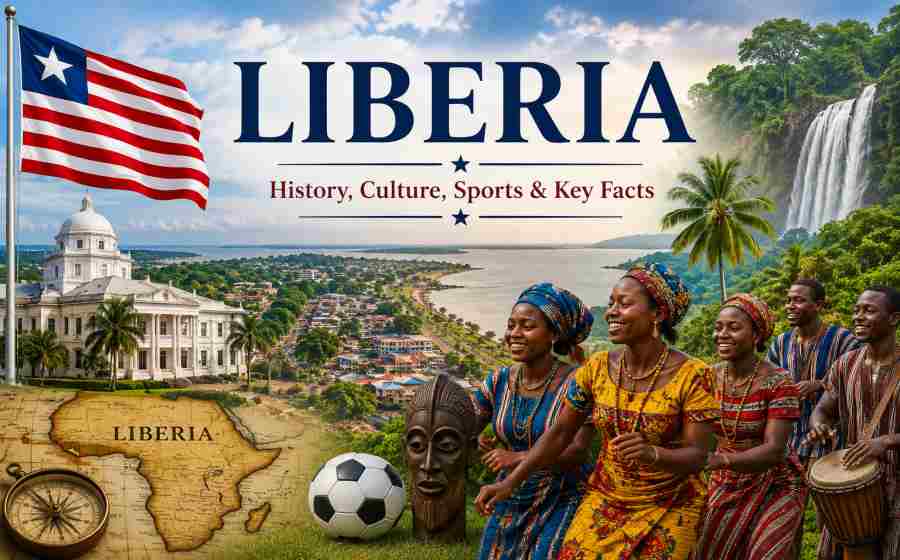
Liberia – History, Culture, Tourist Attractions, Sports, Geography and Key Facts
Discover Liberia, its history, culture, sports, geography, economy and key facts. Learn about Africa’s oldest republic and its rich cultural heritage.
Liberia
Liberia is a fascinating country located on the western coast of Africa. It is widely recognized as Africa’s oldest republic and one of the few African nations that was never formally colonized by European powers. Liberia has a rich cultural heritage, beautiful landscapes, abundant natural resources, and a unique history closely connected with formerly enslaved African Americans who settled there during the 19th century.
Although Liberia has faced significant challenges, including civil wars and economic difficulties, it continues to rebuild and strengthen its democracy. Today, the country is known for its friendly people, diverse traditions, and growing opportunities in education, tourism, and sports.
Table of Contents
Location and Geography
Liberia is situated along the Atlantic Ocean in West Africa. It shares borders with:
- Sierra Leone to the northwest
- Guinea to the north
- Côte d’Ivoire to the east
- Atlantic Ocean to the southwest
The country covers approximately 111,369 square kilometers, making it one of the medium-sized nations in West Africa.
Liberia’s geography includes:
- Tropical rainforests
- Rivers and wetlands
- Mountainous regions in the north
- Long Atlantic coastline with sandy beaches
The climate is tropical, featuring a rainy season from May to October and a dry season from November to April.
Capital and Major Cities
Monrovia is Liberia’s capital and largest city. Named after U.S. President James Monroe, it serves as the country’s political, economic, and cultural center.
Other important cities include:
- Buchanan
- Gbarnga
- Kakata
- Harper
- Zwedru
These cities contribute to trade, agriculture, and regional development.
History of Liberia
Liberia has one of the most distinctive histories in Africa. Before European contact, various indigenous communities lived peacefully across the region. During the 15th century, Portuguese explorers arrived along the coast, which became known as the Pepper Coast because of the valuable grains of paradise spice traded there.
In the early 1800s, the American Colonization Society (ACS) helped resettle freed African Americans in West Africa. In 1822, the first settlers established a colony that eventually became Liberia.
On July 26, 1847, Liberia declared independence, becoming Africa’s first independent republic. The settlers, known as Americo-Liberians, played a dominant political role for more than a century. In the late 20th century, Liberia experienced two devastating civil wars between 1989–1997 and 1999–2003, causing widespread destruction and loss of life.
Following the wars, the country entered a period of peace and reconstruction. In 2005, Liberia elected Ellen Johnson Sirleaf, Africa’s first democratically elected female president, marking an important milestone in African political history.
Government and Politics
Liberia is a constitutional republic with democratic elections. The government consists of:
- President
- Legislature
- Independent judiciary
The nation follows a constitution inspired by that of the United States.
Political stability has steadily improved since the end of the civil wars, although economic and social development remain ongoing priorities.
People and Culture
Liberia is home to more than 20 ethnic groups, each contributing unique customs and traditions.
Major ethnic communities include:
- Kpelle
- Bassa
- Gio
- Kru
- Grebo
- Mano
- Lorma
English is the official language, but numerous indigenous languages are spoken throughout the country. Liberians are well known for their hospitality, strong community values, and respect for family traditions. Traditional ceremonies, storytelling, music, and dance continue to play an important role in everyday life.
Traditions
Traditional Dress
Traditional clothing varies among ethnic groups but often features colorful fabrics with handcrafted patterns.
On special occasions such as weddings, festivals, and national celebrations, people wear beautifully designed traditional garments that reflect their cultural identity.
Music and Dance
Music is deeply connected to Liberian culture. Popular musical styles include:
- Traditional drum performances
- Gospel music
- Afrobeat
- Hip-hop
- Highlife
Traditional dances are performed during festivals, ceremonies, and celebrations to honor ancestors, mark important events, and strengthen community bonds.
Cuisine
Liberian cuisine is flavorful and heavily influenced by local ingredients. Popular dishes include:
- Jollof rice
- Cassava leaf stew
- Palm butter
- Fufu
- Fried plantains
- Pepper soup
- Rice with fish or chicken
Rice is considered the country’s staple food and is eaten almost every day.
Economy
Liberia’s economy depends on:
- Agriculture
- Mining
- Forestry
- Rubber production
- Fishing
Major exports include:
- Rubber
- Iron ore
- Gold
- Diamonds
- Palm oil
- Timber
The country possesses rich natural resources, but economic development continues to face challenges related to infrastructure and investment.
Education
Liberia has been working to improve access to education since the end of the civil wars. Schools and universities are expanding, although challenges such as limited resources and teacher shortages still exist in some areas. Education remains an important priority for national development.
Sports in Liberia
Football (soccer) is by far the most popular sport in Liberia. Children and adults enthusiastically play football in schools, villages, and cities across the country.
Liberia’s greatest sporting icon is George Weah, one of Africa’s most celebrated footballers. He became the first African player to win the FIFA World Player of the Year and later served as the President of Liberia.
Other popular sports include:
- Basketball
- Athletics
- Volleyball
- Boxing
The government and sports organizations continue promoting youth participation in athletics.
Wildlife and Nature
Liberia contains one of West Africa’s largest remaining tropical rainforests.
Wildlife includes:
- Forest elephants
- Chimpanzees
- Pygmy hippos
- Leopards
- Crocodiles
- Colorful birds
Protected national parks help conserve biodiversity and attract eco-tourism.
Tourist Attractions
Visitors to Liberia can explore several natural and historical attractions:
- Sapo National Park
- Providence Island
- Robertsport beaches
- Kpatawee Waterfalls
- Monrovia National Museum
- Lake Piso
These destinations showcase Liberia’s natural beauty and historical significance.
Interesting Facts About Liberia
- Liberia is Africa’s oldest independent republic.
- It declared independence on July 26, 1847.
- Monrovia is named after U.S. President James Monroe.
- English is the official language.
- Liberia’s flag resembles the flag of the United States.
- The country has one of Africa’s largest rubber industries.
- George Weah is both a football legend and a former President of Liberia.
- Liberia was one of the founding members of the United Nations.
- Tropical rainforests cover a significant portion of the country.
- The nation has a coastline stretching over 560 kilometers along the Atlantic Ocean.
Summary
Liberia is a nation with a remarkable history, rich cultural diversity, and resilient people. From becoming Africa’s first independent republic to producing one of the world’s greatest footballers, the country has made a lasting impact on the continent and beyond. Its lush rainforests, vibrant traditions, expanding education system, and abundant natural resources continue to shape its future. As Liberia progresses through development and peace-building, it remains an inspiring example of resilience, cultural pride, and hope for generations to come.
Also Check: General Knowledge