Mali – The Ancient Land of Empires, Culture and Enduring Heritage
Discover Mali’s rich history, culture, sports, geography, economy and key facts. Explore the heritage and traditions that make Mali unique.
Mali
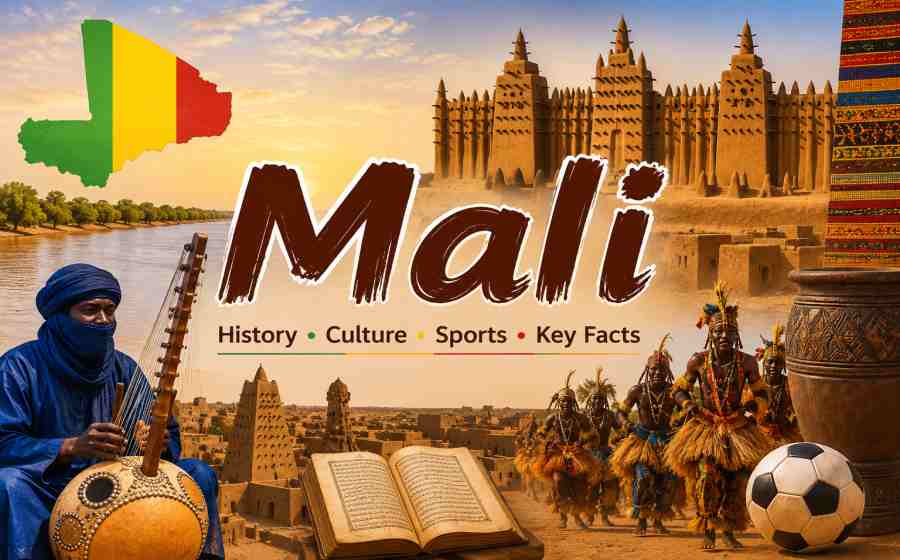
Mali is a landlocked country located in West Africa. Known for its rich history, ancient civilizations, and vibrant cultural traditions, Mali has played a significant role in African history for centuries. The country was once home to some of the world’s wealthiest and most influential empires, making it a center of trade, education, and culture.
Today, Mali is recognized for its diverse ethnic communities, traditional music, historic cities, and resilient people. Despite facing various challenges, the nation continues to preserve its remarkable heritage and cultural identity.
Table of Contents
History of Mali
Mali’s history dates back thousands of years, but it became globally famous through the powerful Mali Empire, which flourished between the 13th and 16th centuries. The empire was founded by Sundiata Keita, who united several kingdoms and established one of Africa’s greatest empires. Mali became a major center of trade, particularly in gold and salt, which were highly valuable commodities.
One of the most famous rulers of Mali was Mansa Musa. He is often considered one of the wealthiest individuals in history. His pilgrimage to Mecca in 1324 attracted worldwide attention because of the enormous wealth he displayed during the journey.
During this period, cities such as Timbuktu became important centers of learning and Islamic scholarship. Scholars and traders from different parts of Africa and the Middle East visited the city.
In the late 19th century, Mali came under French colonial rule and became part of French Sudan. After years of political movements and negotiations, Mali gained independence from France on September 22, 1960.
Geography of Mali
Mali covers approximately 1.24 million square kilometers, making it one of the largest countries in Africa.
Key Geographic Features
- Located in West Africa
- Shares borders with Algeria, Niger, Burkina Faso, Côte d’Ivoire, Guinea, Senegal, and Mauritania
- Capital city: Bamako
- The Niger River is the country’s most important river
- Large portions of northern Mali lie within the Sahara Desert
The climate varies from desert conditions in the north to savanna regions in the south, where agriculture is more common.
Culture and Traditions of Mali
Mali is home to numerous ethnic groups, including the Bambara, Fulani, Dogon, Songhai, Tuareg, and Malinke peoples. Each group contributes unique customs, languages, and traditions.
Languages
French is the official language, but many local languages are widely spoken, including:
- Bambara
- Fula
- Songhai
- Tamasheq
- Soninke
Music
Malian music is famous worldwide. Traditional instruments include:
- Kora
- Balafon
- Ngoni
Many international musicians have drawn inspiration from Mali’s musical traditions. Music plays an important role in ceremonies, storytelling, and social gatherings.
Festivals
Traditional festivals celebrate local customs, history, and religious events. Music, dance, colorful clothing, and storytelling are often central features of these celebrations.
Economy of Mali
Agriculture remains the backbone of Mali’s economy.
Major Economic Activities
- Farming
- Livestock raising
- Fishing
- Gold mining
Mali is among Africa’s leading gold producers. Cotton is another important export crop and provides income for many rural communities.
The Niger River supports agriculture and fishing activities, helping sustain millions of people.
Education and Heritage
Mali has a proud intellectual history. During the medieval period, Timbuktu was one of the world’s most respected centers of learning.
Ancient manuscripts preserved in the city contain valuable knowledge about science, mathematics, religion, law, and history. These manuscripts continue to attract scholars from around the world.
The country also contains several historic mosques and architectural landmarks built from mud-brick designs that reflect traditional African construction methods.
Sports in Mali
Football (soccer) is the most popular sport in Mali.
Children and adults across the country passionately follow local and international football competitions. The national football team has represented Mali in numerous African tournaments and has produced talented players who have competed internationally.
Popular Sports in Mali
- Football
- Basketball
- Athletics
- Wrestling
- Cycling
Football clubs and youth academies play an important role in developing future athletes.
Food of Mali
Malian cuisine reflects local ingredients and cultural influences.
Common Foods
- Millet
- Rice
- Sorghum
- Maize
- Fish
- Meat stews
Popular dishes often include rice served with sauces made from vegetables, peanuts, or meat.
Tea is also an important part of social life and hospitality.
Wildlife and Natural Environment
Mali’s diverse landscapes support a variety of wildlife.
Animals Found in Mali
- Elephants
- Antelopes
- Lions
- Hippos
- Crocodiles
- Various bird species
Several protected areas help conserve biodiversity and natural habitats.
However, desertification and climate change remain significant environmental challenges.
Government and Society
Mali is a republic with a president and governmental institutions responsible for national administration. The country’s population is young and culturally diverse. Family ties, community cooperation, and respect for elders remain important values in many regions.
Religious life also plays a major role, with Islam being the dominant faith practiced by the majority of the population.
Interesting Facts About Mali
- Mali is one of Africa’s largest countries by land area.
- Timbuktu was once a world-famous center of education and trade.
- Mansa Musa is often regarded as one of the richest people in history.
- The Niger River is essential for transportation, farming, and fishing.
- Mali is one of Africa’s leading gold-producing nations.
- Traditional Malian music has influenced artists worldwide.
- Ancient manuscripts in Timbuktu preserve centuries of knowledge.
- Much of northern Mali lies within the Sahara Desert.
- Cotton is one of the country’s major exports.
- Mali gained independence from France in 1960.
Summary
Mali is a nation with a remarkable legacy shaped by powerful empires, rich cultural traditions, and historic achievements. From the legendary wealth of Mansa Musa and the scholarly importance of Timbuktu to its vibrant music, diverse communities, and passion for sports, Mali continues to hold a unique place in African and world history. Understanding Mali’s history, culture, and key facts provides valuable insight into one of West Africa’s most fascinating countries.
Also Check: General Knowledge