
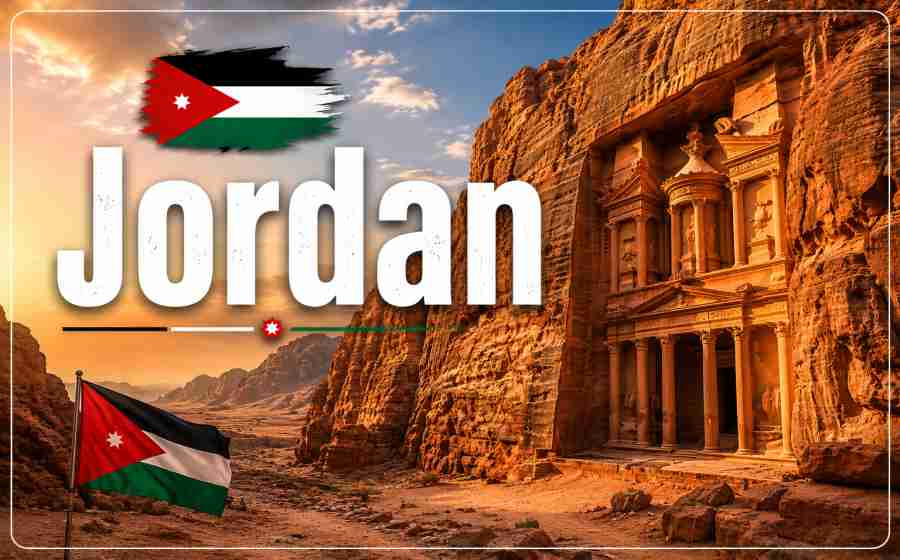
Jordan – History, Culture, Sports, Wildlife, Nature and Fascinating Facts
Discover Jordan through its rich history, vibrant culture, famous landmarks, popular sports, traditions, economy and key facts about this remarkable nation.
Jordan
Jordan is one of the most historically significant countries in the Middle East. Officially known as the Hashemite Kingdom of Jordan, it is located at the crossroads of Asia, Africa, and Europe. Despite its relatively small size, Jordan has played an important role in world history for thousands of years. It is famous for its ancient city of Petra, welcoming people, stunning deserts, and rich cultural traditions.
Jordan is considered one of the most stable countries in the Middle East and attracts millions of tourists every year who come to explore its archaeological treasures, biblical sites, and breathtaking natural landscapes.
Table of Contents
Geography of Jordan
Jordan shares borders with Saudi Arabia, Iraq, Syria, Israel, and the Palestinian territories. It also has a short coastline along the Gulf of Aqaba, providing access to the Red Sea.
Some of its major geographical features include:
- The Dead Sea (lowest land point on Earth)
- Wadi Rum Desert
- Jordan Valley
- Highlands of Amman
- Red Sea coastline
Although much of Jordan is desert, fertile valleys support agriculture and settlements.
Capital: Amman
Largest City: Amman
Official Language: Arabic
Currency: Jordanian Dinar (JOD)
History of Jordan
Jordan has been inhabited since prehistoric times. Archaeological discoveries show evidence of human civilization dating back thousands of years.
Ancient Civilizations
The region was home to many ancient kingdoms including:
- Edom
- Moab
- Ammon
- Nabataean Kingdom
The Nabataeans built the magnificent city of Petra, one of the world’s greatest archaeological wonders.
Roman Era
Jordan later became part of the Roman Empire. Cities like Jerash flourished with temples, theaters, roads, and markets.
Islamic Period
During the 7th century, Jordan became part of the rapidly expanding Islamic Caliphates. Many important Islamic historical sites were established during this era.
Ottoman Rule
For nearly 400 years, Jordan remained under Ottoman control until the end of World War I.
Modern Jordan
In 1946, Jordan gained independence from Britain and became the Hashemite Kingdom of Jordan. Today, Jordan is ruled by King Abdullah II and is known for political stability and regional diplomacy.
Culture of Jordan and Religion
Jordanian culture reflects Arab traditions combined with centuries of historical influences. Family plays a central role in society. Respect for elders, hospitality, and generosity are deeply valued. Visitors often experience warm welcomes, traditional coffee ceremonies, and generous hospitality.
Traditional clothing remains popular during festivals and rural celebrations, although modern clothing is common in cities.
Religion
Islam is the official religion, with the majority of Jordanians being Sunni Muslims. Jordan also has Christian communities that have lived in the country for centuries. Religious harmony is one of Jordan’s notable characteristics.
Languages
Arabic is the official language.
English is widely spoken, especially in:
- Business
- Tourism
- Higher education
- Government
This makes Jordan one of the easiest Middle Eastern countries for international visitors.
Famous Tourist Attractions
Jordan offers some of the world’s most spectacular historical and natural destinations.
Petra
Known as the “Rose City,” Petra was carved directly into pink sandstone cliffs over 2,000 years ago.
It is recognized as one of the New Seven Wonders of the World.
Wadi Rum
This vast desert features dramatic sandstone mountains, red dunes, and unique rock formations.
It has been used as a filming location for many Hollywood movies.
Dead Sea
The Dead Sea is famous for:
- Extremely salty water
- Floating effortlessly
- Mineral-rich mud
- Wellness tourism
It is the lowest exposed point on Earth.
Jerash
Jerash contains some of the best-preserved Roman ruins outside Italy.
Visitors can explore:
- Ancient theaters
- Temples
- Colonnaded streets
- Public squares
Aqaba
Jordan’s only coastal city is famous for:
- Coral reefs
- Diving
- Beaches
- Marine life
Traditional Food
Jordanian cuisine is flavorful and reflects Middle Eastern culinary traditions. Popular dishes include:
- Mansaf (national dish)
- Falafel
- Hummus
- Shawarma
- Maqluba
- Kanafeh
Arabic coffee and mint tea are important parts of Jordanian hospitality.
Festivals and Celebrations
Jordan celebrates various cultural and national festivals throughout the year. Popular events include:
- Independence Day
- Jerash Festival of Culture and Arts
- Eid al-Fitr
- Eid al-Adha
- Religious celebrations
- Cultural music festivals
These events showcase traditional music, dance, poetry, and crafts.
Sports in Jordan
Football (soccer) is the most popular sport in Jordan. Other widely played sports include:
- Basketball
- Taekwondo
- Karate
- Volleyball
- Athletics
- Swimming
Jordan has achieved international recognition in martial arts, especially taekwondo. Sports participation has increased significantly among women in recent years.
Economy
Jordan has a developing economy based on:
- Tourism
- Services
- Mining
- Manufacturing
- Information technology
- Agriculture
Major exports include:
- Phosphate
- Potash
- Fertilizers
- Chemicals
- Textiles
Tourism remains one of Jordan’s largest sources of national income.
Education
Jordan has one of the strongest education systems in the Arab world. The country has:
- High literacy rates
- Modern universities
- Strong emphasis on science and technology
- Growing research institutions
Many international students also pursue higher education in Jordan.
Wildlife and Nature
Despite its desert climate, Jordan has diverse ecosystems.
Wildlife includes:
- Arabian oryx
- Desert foxes
- Gazelles
- Eagles
- Migratory birds
- Reptiles
Several protected nature reserves help conserve biodiversity.
Government
Jordan is a constitutional monarchy.
The King serves as the head of state, while the Prime Minister leads the government.
The country has a parliament that participates in the legislative process.
Jordan is recognized internationally for its diplomatic role in promoting peace and regional cooperation.
Interesting Facts About Jordan
- Jordan’s official name is the Hashemite Kingdom of Jordan.
- Petra is a UNESCO World Heritage Site and one of the New Seven Wonders of the World.
- The Dead Sea is the lowest exposed point on Earth.
- Jordan is one of the safest and most stable countries in the Middle East.
- Wadi Rum is often called the “Valley of the Moon.”
- The Jordan River holds great religious significance in Christianity.
- Jordan has very limited freshwater resources and actively promotes water conservation.
- Amman is among the oldest continuously inhabited cities in the world.
- Hospitality is one of the most respected values in Jordanian society.
- The Jordanian Dinar is considered one of the strongest currencies in the region.
Summary
Jordan is a country where ancient history and modern development coexist in remarkable harmony. From the breathtaking beauty of Petra and the surreal experience of floating in the Dead Sea to the warm hospitality of its people and its rich cultural traditions, Jordan offers a unique glimpse into the heart of the Middle East. Its stable governance, strong educational system, vibrant heritage, and growing tourism industry continue to make it an important nation on the global stage. Whether admired for its archaeological wonders, natural landscapes, or cultural legacy, Jordan remains a fascinating destination and an essential topic for anyone interested in world geography and general knowledge.
Also Check: General Knowledge